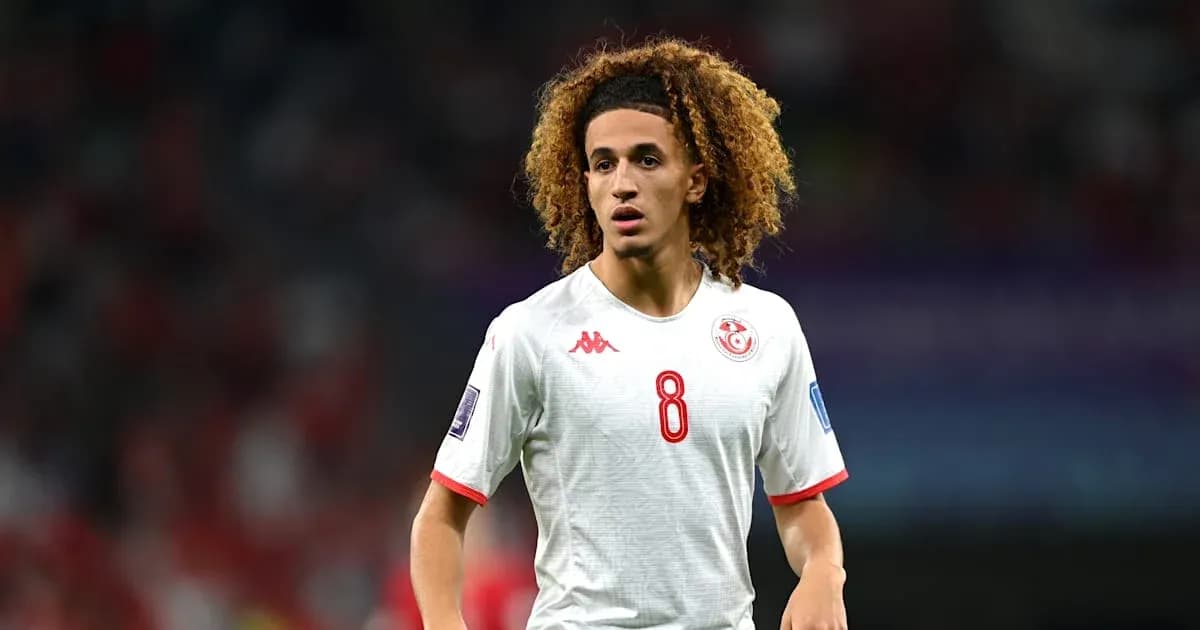
Hannibal Mejbri: From La Banane to World Cup Hope
The boy named for a general who crossed the Alps now carries a nation’s hopes over its own footballing mountain.
Hannibal Mejbri, 23 and already the beating heart of Tunisia’s midfield, leads the Eagles of Carthage into the 2026 FIFA World Cup with a nickname that drips with history and a story that starts far from North Africa’s shores.
From La Banane to the world
His journey begins in Paris’ 20th arrondissement, a dense, working-class corner of the capital where football is the quickest route out and the surest common ground. Tunisians, Algerians, Moroccans, Senegalese, Malians – a mosaic of backgrounds, one game.
In the middle of it all stands La Banane, a curved block of flats that lent its nickname to the area and its backdrop to a childhood shaped by concrete pitches and streetlights.
“Instead of going straight up to my house, I used to stay out and play football until night fell,” Mejbri recalls in the series World at Their Feet, which follows emerging talents on the road to the 2026 World Cup. No grand design. No carefully mapped pathway. Just a kid, his friends, and a ball.
He insists he was “a normal boy” with “no master plan”. The neighbourhood remembers it differently.
Childhood friend Hubert Mbuyi paints the picture of a kid you simply couldn’t miss. The talent, yes, but also the image: big hair, big blonde hair, the kind that made you look twice and then expect something special. “Where you could find a pitch and a ball, you will find Hannibal,” Mbuyi says.
On those cages and scraps of grass around La Banane, the future Tunisia international learned to compete, to scrap, to demand the ball. The technique was obvious. The edge even more so.
Paris, Monaco, Manchester: a fast climb
The formal journey began early. At six, Mejbri joined the academy at Paris FC, the first professional structure to frame the raw energy from the streets. Seven years there, then a short spell at Boulogne-Billancourt, and suddenly the wider football world started to pay attention.
In 2018, Monaco stepped in, paying €1 million to bring the 15-year-old into one of France’s most renowned youth systems. For a boy from the 20th arrondissement, the contrast was stark.
“I could feel the richness of Monaco,” he says. A new world. Different surroundings, different expectations. “It was a little bit of a shift, a little dream, and I learned a lot there.”
The experience itself was not perfect. He did not settle as he might have hoped. Yet his ceiling remained impossible to ignore. Bayern Munich, Paris Saint-Germain, Barcelona – some of Europe’s most powerful clubs hovered.
He chose Manchester United.
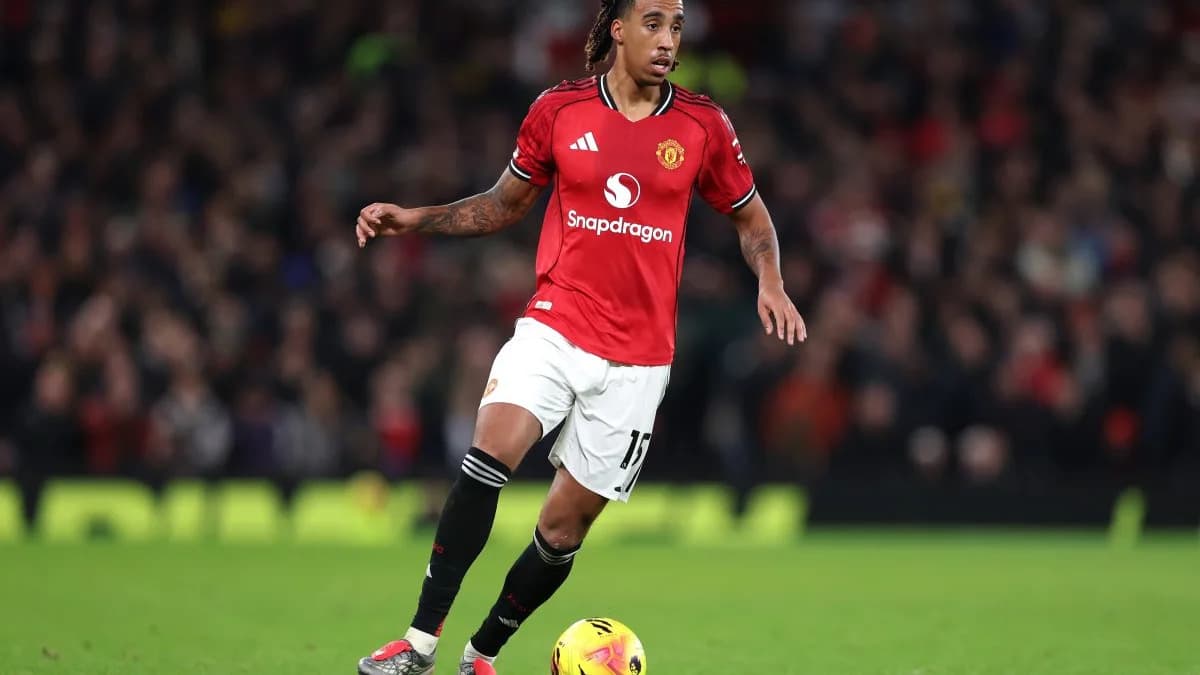
In August 2019, at just 16, Mejbri signed for the three-time Champions League winners. Old Trafford has seen its share of prodigies, but the Paris-born midfielder moved quickly through the ranks. By 2021, he had his Premier League debut. By September 2023, he had his first league goal, a fierce strike in a 3–1 home defeat to Brighton.
The scoreline made the moment unusual. United were 3–0 down when he scored. The celebration told its own story.
“I still get chills,” he admits. He knows the optics: celebrating at 3–1 in a losing cause. But the emotion was uncontrollable. “You can see in my celebration that I had a certain rage in me and that I let go of everything when I scored.”
It was less about the scoreboard, more about a boy from La Banane stamping his name on one of football’s most famous stages.
A choice of flag, made with the heart
On the international stage, Mejbri had options. Born and raised in France, he represented Les Bleus at under-16 and under-17 level. The French system knew his value. The pathway to the senior side was there.
He turned another way.
In 2021, when Tunisia called, he committed to the country of his parents. The decision, he insists, was emotional rather than strategic.
“I joined Tunisia because I chose with my heart,” he says. The affection for France remains, he stresses. It is the country that raised him, the place that shaped his early years. “Even though I lived in France, it doesn't take away the love I have for France. But I find that the love I have for Tunisia is greater.”
Tunisia embraced him in turn. At just 23, he already has 44 caps and has twice been named African Revelation of the Year at the Africa d’Or awards. The numbers underline his rapid rise, but they don’t quite capture what he represents.
Every time he pulls on the red of Tunisia, he carries more than a flag.
“When I represent my country, I also represent my neighbourhood,” he says. La Banane is stitched into his sense of identity. “Because I know that I will represent them, and so all of that, it's a bit related to pride.”
Back home, they feel it. Mbuyi speaks for a community that sees one of its own on the global stage. “All Tunisians are proud of him,” he says, “because in the end, he's a kid from the neighbourhood. When he plays matches, everyone focuses on the match. We're all watching Hannibal's hair on the pitch. We try to spot him every time.”
The big blonde curls that once made him stand out on a local cage now make him instantly recognisable on World Cup broadcasts.
Giving back to La Banane
Fame has not cut the cord. Every summer, Mejbri returns to La Banane and stages a football tournament for the community that raised him. It is not a symbolic drop-in. He brings shirts, time, presence.
Last year alone, he handed out around 100 shirts. “You can just walk around here and find two or three people wearing his shirt,” Mbuyi says. The image is striking: a neighbourhood where the local hero’s name is not just shouted at the TV, but printed across the backs of kids chasing their own dreams on the same concrete he once did.
For those kids, Mejbri is no longer just the boy with the wild hair from the next block. He is proof of concept.
“Hannibal is a great example of what the people look for in this area,” Mbuyi says. Because of him, the boundaries of what is possible have shifted. “Because of him, the young kids can dream.”
Now the dreams have grown. Tunisia have never gone beyond the group stage at a World Cup. The Eagles of Carthage have flown close, only to be turned back at the last ridge.
Two thousand years after another Hannibal rode elephants towards Rome, this one heads into 2026 with a different kind of army behind him: a nation, a neighbourhood, and a generation of kids staring up at La Banane and wondering how far they might go.