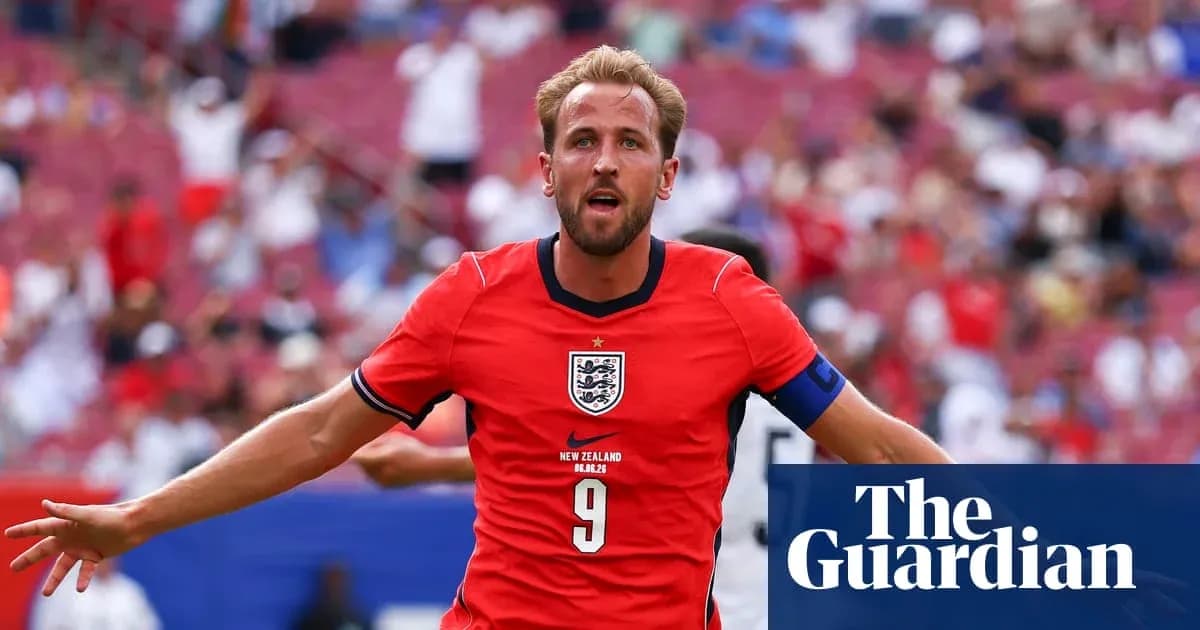
Harry Kane: Bayern Munich's Best Transfer Ever
Uli Hoeness has never been shy of a grand statement. The Bayern Munich president has spent a lifetime dealing in absolutes, in sweeping judgments and big emotions. So when he walked out of the DFB-Pokal final and declared Harry Kane “the best transfer the club has ever made” after the Englishman’s hat-trick in a 3-0 win, it sounded like another flourish from a man who loves a headline.
A month on, the dust settled, the adrenaline gone, the line still stands. Inside Bayern, they no longer treat it as hyperbole. “He absolutely is the best we’ve had,” comes the cool internal verdict.
From doubted finisher to global figurehead
The striking thing about Kane’s Bayern story is how quietly he has conquered not only the club, but the wider football conversation. There has been no circus around him, no grand rebrand, just a relentless accumulation of goals, trophies and respect.
Not long ago, the narrative was very different. Euro 2024 painted Kane as a man stuck in a loop: brilliant numbers, no medals. The endless talk of his “trophy drought” created the impression of a player on the downslope. His Golden Boot at Russia 2018 was picked apart as if it were a technicality, Le Journal du Dimanche sniffing at the fact he failed to score beyond the quarter-finals. Six peak years at Tottenham threatened to be remembered as a heroic but ultimately futile slog.
Now look at the company he keeps. When Time assembled the modern faces of the game for its World Cup edition – Lionel Messi, Cristiano Ronaldo, Neymar, Kylian Mbappé, Lamine Yamal, Jude Bellingham – Kane stood among them. No longer the nearly man. A fully-fledged leading actor.
Hoeness knows exactly what that image represents for Bayern. “When we bought him for more than €100m, that was new territory for us and a crazy risk,” he said. “But he’s paid back every single euro. Not just because he scores so many goals, but because he is a role model in the dressing room.”
The quiet leader in a foreign land
Hoeness loves to tell the stories. Kane with an arm around a nervous youngster. Kane offering a word to a fringe player. Kane, the newcomer, behaving like a captain without a band. The language barrier? Barely a factor. His contract obliges him to take German lessons and he does, but Bayern’s core – and Vincent Kompany’s dressing room – operate largely in English.
What Hoeness sees, he recognises from his own playing days. The punishment Kane takes in the Bundesliga, the constant buffeting from defenders, and the way he simply gets up and goes again. “I think you’d have to cut off his head or his arm to stop him playing,” Hoeness says, only half-joking.
Inside the club, they talk about influence. Only Manuel Neuer and Thomas Müller, deep into their careers, have had this kind of gravitational pull on a dressing room. Both are Bayern lifers. Kane walked in from London and, within two seasons, sits in that same conversation.
The stereotype of the British player abroad – homesick, baffled by the culture, counting the days until a return – has not stuck. When the Kane family initially delayed a full relocation, some rolled their eyes and remembered the old Ian Rush line about Italy being “like living in a foreign country”, even if he never actually said it. The reality is very different.
Kane and his wife, Kate, have settled into a rural home once owned by Lucas Hernández, just outside plush Grünwald. Talk to Kane about life off the pitch and it is his family that dominates the picture: Kate and the children – Ivy, Vivienne, Louis and Henry – leaning into Bavarian life, skiing in winter while he, contractually grounded, watches from the sidelines and enjoys Alpine trips to Garmisch.
He has thrown himself into the local rituals, too. At a fan day in Kirchweidach, a village of 2,000 near the Austrian border, he seasoned soup as Bavarian wedding couples traditionally do, a symbolic union with his new home, and played skittles using litre beer steins. He called it “a bit crazy” with classic English understatement. He stayed, smiled and played along with all of it.
A striker reborn – and then some
Bayern knew they were signing a world-class centre-forward. They did not quite expect this.
Since finally snapping his personal trophy drought with the 2025 Bundesliga title – the first of two league crowns and a DFB-Pokal so far – Kane has somehow gone up a gear. Leaner. Sharper. Quicker over the ground. More ruthless and more complete.
The catalogue of goals is already long. One stands out: a Champions League strike against Atalanta, a drag-back and swivel that deleted two defenders before the inevitable, low, ruthless finish. Another, though, says more about his evolution. In the DFB-Pokal final, his second goal on 80 minutes effectively killed the game. Kane curled a vicious effort from outside the box that smashed off the bar. As the ball dropped, he didn’t snatch. He dragged it back, turned away from pressure and picked his spot. A poacher’s instinct married to a playmaker’s composure.
The numbers are absurd. With 61 goals for Bayern, he sits alone among players in Europe’s major leagues in matching the scoring volume of Messi and Ronaldo in their pomp, with only Erling Haaland even in the frame. Ronaldo once hit 66 in a season without a summer tournament; Messi reached 73. Kane, after Saturday’s match against New Zealand in Tampa, stands on 67.
And he is not simply waiting in the box. At Bayern he frequently drops into a No 6 pocket when they are out of possession, collecting the ball, dictating tempo, launching moves. His passing range, showcased in his assist for Luis Díaz in the Champions League semi-final first leg against Paris Saint-Germain, is almost as dangerous as his finishing. Thomas Tuchel’s blueprint for the World Cup leans heavily on that duality.
From afterthought to Ballon d’Or contender
At Tottenham, Kane’s Ballon d’Or candidacy was a theoretical debate, not a serious campaign. Too few trophies, too many early exits. Now, with deep runs in the Champions League and medals finally in the cabinet, he has forced his way into the conversation. The World Cup will decide how loud that conversation becomes.
You can feel a larger story forming around him. At 32, Kane looks less like a player reaching the end of his arc and more like someone heading towards the central scene. The slow starter who has finally arrived at the summit. In football’s fable, he is the tortoise, not the hare – unflashy, relentless, always moving forward.
Those who knew him as a teenager still sound slightly incredulous. Spurs youth coaches remember a boy who, by elite standards, carried too much weight, lacked pace and wasn’t the most naturally gifted. “You would never have thought that he would be what he is now,” one of them says. The turning point came at 14: a growth spurt, sharper technique, the first glimpses of that clean, heavy strike. Instructions stuck instantly. Tell him something once – about gym work, about finishing, about movement – and it stayed.
The road from there was anything but smooth. A grim loan at Norwich left scars. A glaring miss on his debut against West Ham, an FA Cup humiliation at Luton that saw him hauled off at half-time, then a spell with the under-21s where he wasn’t even trusted with penalties. At Leicester, he started both legs of the 2013 Championship playoff semi-final against Watford on the bench, alongside Jamie Vardy. It was hardly the résumé of a future global superstar.
Even at Spurs, the belief was not universal. In 2014, after an unimpressive pre-season, Mauricio Pochettino looked at the body-fat readings and saw Kane top of the list at around 18%. The manager called him in, told him he wasn’t working hard enough, that the standards had to change. Then came the line that stayed with Kane: “You can be the best striker in the world.”
Back then, it sounded like motivational exaggeration. Just as Hoeness’s verdict did after that cup final in Berlin. Both men seemed to be reaching for the superlative.
Now, with Kane tearing through seasons at Bayern and carrying the weight of a World Cup campaign on his shoulders, those old words feel less like flattery and more like prophecy. The question is no longer whether he belongs at football’s top table.
It is how long he intends to stay there.