Harry Kane's Longevity and Future in Football
Harry Kane has spent a decade living with expectation. Another four years will not change that.
By the summer of 2028, the plan is clear. The England captain who dragged his country to third place at the 2026 World Cup is expected to stride out at a home European Championship as the standard-bearer once again, still the focal point of a side built around his reliability and ruthlessness.
By then, the numbers should be bordering on the absurd. Kane is already England’s record goalscorer, sitting on 85 international goals, and he is closing in on Peter Shilton’s all-time appearance mark. Just four more caps will pull him level with Shilton’s 125. That record, like so many others in his career, feels destined to fall.
At Bayern Munich, Thomas Tuchel continues to lean heavily on him. The German champions are not exactly awash with orthodox No.9s, and Kane’s role as the spearhead is non-negotiable. He turned 33 recently, though, and even for the most elite strikers, the clock eventually wins.
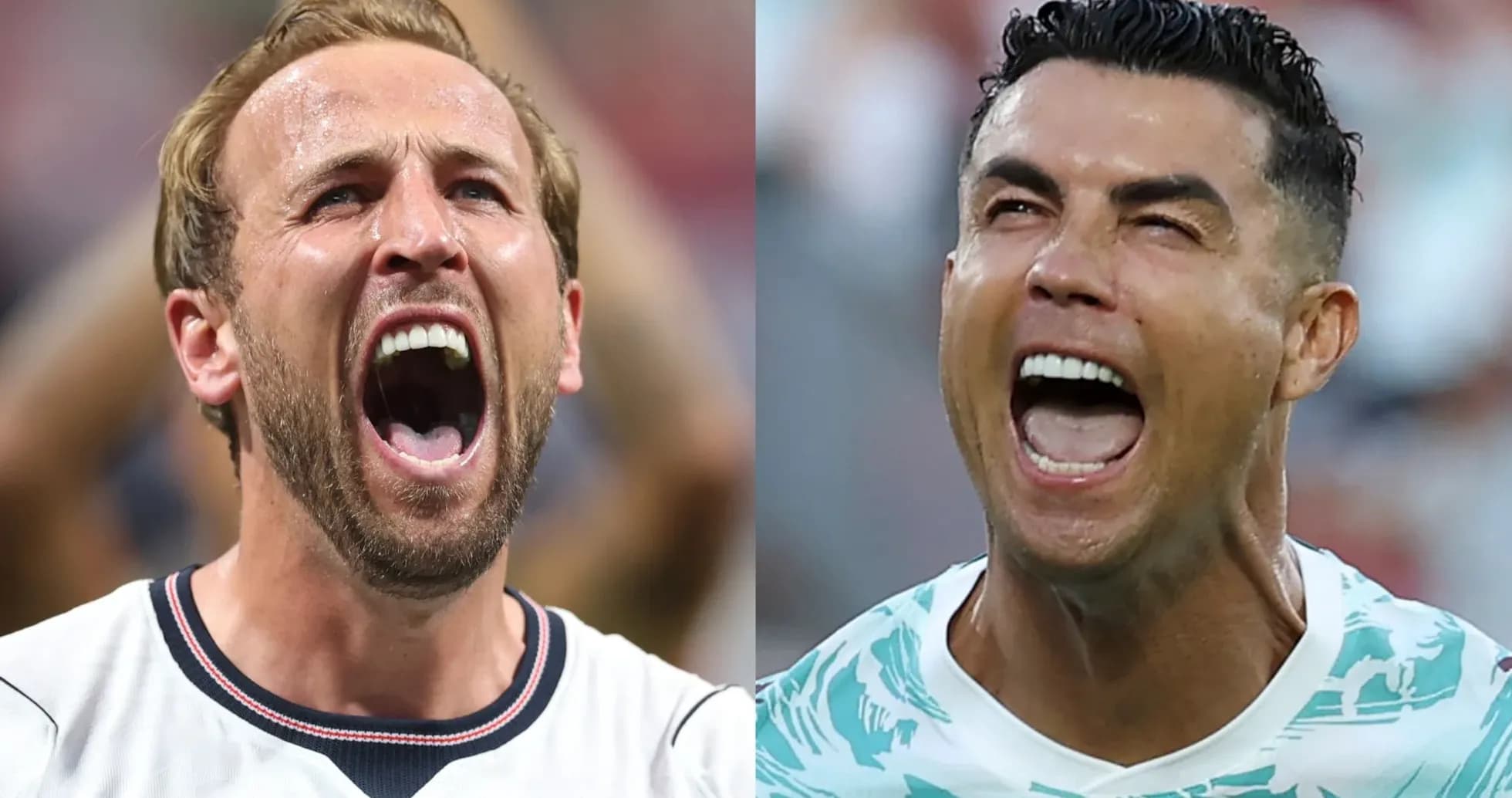
Cristiano Ronaldo and Lionel Messi pushed that clock back further than almost anyone. They arrived at the last World Cup aged 41 and 39 respectively, still commanding the stage, still dictating headlines. They are the outliers. The question now hangs over Kane: can he stretch his peak into that same rare air, or will the demands of club and country finally drag him down a level sooner?
Chris Waddle has seen careers rise and fade at close quarters. The former England winger, speaking to GOAL in association with BetBrain, did not dodge the issue when the prospect of Kane at another World Cup was raised.
“Fitness is a great thing to have,” Waddle said. “Some players develop, get better as they get older. Some find it easier. Not easier, but easy.”
That nuance matters. Some players grow into their footballing brain as their legs slow; others simply cannot bridge the gap once physical sharpness ebbs away. Waddle believes the next two years will be telling.
“We'll see how his legs are in two years' time, at the Euros even. People will be questioning that,” he added. “The thing with Harry's advantage is he's a fit lad, we know that. He doesn't rely on pace. He's got a great football brain.”
That point cuts to the heart of Kane’s longevity. His game has never been built on blistering acceleration or constant sprints in behind. He drops off, links play, dictates tempo, then arrives in the box at the right moment. It is a style that, in theory, should age well.
Yet even the greats have their limit. Waddle reached for the most obvious modern examples.
“Sometimes you see players in tournaments and you think, ‘His legs are going there’,” he said. “I'm looking at Ronaldo as an example. I watched Portugal play in the World Cup and his legs were gone in my eyes for that level of football. Lionel Messi still had bits of brilliance until the rest of his team-mates decided to try and kick everybody out of the country.”
The image is vivid: Messi still producing flashes of genius while chaos erupts around him; Ronaldo fighting the inevitable decline under the harshest spotlight of all. Both adjusted by stepping into leagues where the pace and intensity suited their stage of career.
“So I think there's a time and a place where you've actually got to think, ‘Yeah, he can still play, and he can still play like Messi does in Miami, a good level for him’,” Waddle continued. “You know, Ronaldo in Saudi can still handle it. And Harry, eventually he'll come to a time where you think the Bundesliga is too quick. Where do you go from there?”
That is the crux for Kane. The Bundesliga, with its relentless transitions and high defensive lines, demands serious physical output from a centre-forward. Right now, he is handling it, thriving even. But projecting that same output across another full World Cup cycle is a different matter entirely.
“The next World Cup, it's a big ask for him, I think, to play in that tournament,” Waddle admitted. “I think some of these players can think, ‘Yeah, I'm still playing football, but that level's out of me now, and I've enjoyed it’.”
The warning is clear. Too many greats have clung on a fraction too long at international level, their final memories in a national shirt coloured by frustration rather than glory.
“I think some of these players try and play too long and it doesn't look great on them,” Waddle said. “But I'm sure Harry will know when the time's right to say, ‘No, I can't play for England anymore’.”
For now, that moment feels distant. Kane remains England’s reference point, Bayern’s finisher, the man managers build around rather than phase out. Records are still there to be broken, tournaments still there to be tilted by his goals.
The real drama lies in what comes after: not whether he can still score, but when one of England’s greatest ever decides he has given enough.