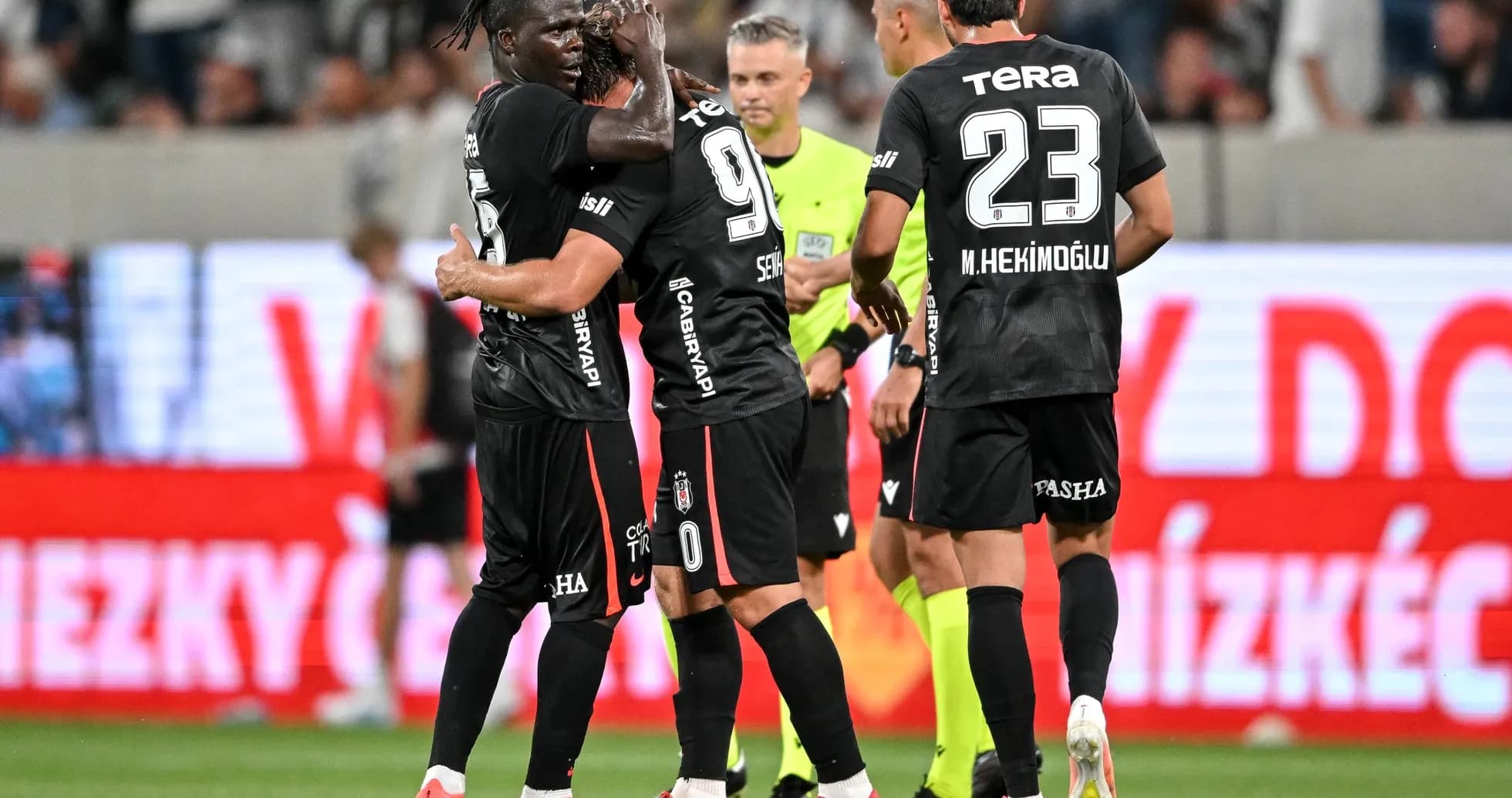
Hradec Králové vs Beşiktaş: Tactical Analysis of Europa League Qualifier
Hradec Králové’s 3-4-2-1 and Beşiktaş’s 4-1-4-1 produced a tightly contested Europa League qualifier in the “Malsovicka arena”, decided by a single late strike but underpinned by clear structural contrasts. The hosts built a high-energy, wing‑back driven game that generated volume and territorial pressure, while Beşiktaş relied on their four‑man back line, a single pivot and superior individual quality between the lines to manage the game and then punish in transition, even after going down to ten men.
David Horejs set Hradec Králové up with three centre-backs – F. Cech, F. Cihak and J. Uhrincat – behind a flat four across midfield. J. Kucera and D. Horak worked as nominal wing-backs, with V. Darida and S. Dancak inside, and a narrow, mobile front three of T. Sloncik, M. van Buren and O. Mihalik. The structure aimed to overload wide channels and then attack the box with numbers, which is reflected in their 9 shots on goal and 8 corner kicks. The three-at-the-back platform allowed the wing-backs to push high early, but it also demanded aggressive defending in wide isolation, contributing to two early yellow cards for Mick van Buren and Jakub Uhrinčať as Hradec tried to lock Beşiktaş in.
In possession, Hradec built primarily through Darida as the central organiser, using van Buren and Sloncik to pin Beşiktaş’s full-backs and half-spaces. The absence of blocked shots (0) suggests that many of their 9 efforts on target came from relatively clean looks created by these positional rotations and crosses rather than speculative, crowded-area shooting. Their 48% possession underscores a fairly even territorial battle; they were not purely reactive, and the 8 corners indicate sustained pressure phases, especially either side of half-time.
The substitutions from Horejs were clearly aimed at sustaining tempo and freshening the front and flanks rather than changing the shape. At 42', D. Ludvicek (IN) came on for J. Kucera (OUT), refreshing the right side while maintaining the wing-back role. On 59', M. Valenta (IN) replaced S. Dancak (OUT), injecting new legs in central midfield to keep pressing intensity high. Simultaneously, A. Umar (IN) came on for M. van Buren (OUT), adding vertical running against a Beşiktaş back line that would later be reduced to ten. At 81', D. Trubac (IN) replaced T. Sloncik (OUT), another like-for-like attacking change, signalling Hradec’s intention to chase the game late. The structure stayed 3-4-2-1 throughout; the tactical gamble was to win through attrition and pressure rather than systemic surprise.
Beşiktaş Formation
Beşiktaş, under Vincenzo Italiano, lined up in a 4-1-4-1 with A. Nubel in goal, a back four of K. Ouattara, E. Topcu, T. Djalo and M. Murillo, S. Ozcan as the single pivot, and a line of four attacking midfielders – I. Fakili, O. Kokcu, J. Olaitan and Václav Černý – supporting lone striker Oh Hyeon-Gyu. Their 52% possession and 16 total attempts (5 on goal, 11 off goal) point to a side comfortable circulating the ball and taking more speculative efforts. The 6 blocked shots show Hradec’s back three often defending deep and compact, getting bodies in the way as Beşiktaş probed around the box.
The disciplinary pattern heavily shaped the second half. Beşiktaş committed only 6 fouls but collected 3 yellow cards and 1 red, all on the visitors’ side, compared with 10 fouls and 2 yellows for Hradec. The turning point came with Kassoum Ouattara’s bookings at 65' and 71', followed immediately by his red card at 71'. Until then, the 4-1-4-1 had offered good width and rest defence against Hradec’s wing-backs; after the dismissal, Italiano had to rebalance his side without sacrificing the threat on the break.
His triple substitution at 76' was the key adjustment: W. Ndidi (IN) came on for O. Kokcu (OUT), R. Yilmaz (IN) for I. Fakili (OUT), and S. Kilicsoy (IN) for Václav Černý (OUT). Ndidi’s introduction gave Beşiktaş a more robust double-pivot feel alongside Ozcan, shoring up the central corridor in a de facto 4-4-1. R. Yilmaz added defensive stability at the back, while Kilicsoy offered fresh pace and directness as the advanced outlet. This reconfiguration was explicitly transitional: defend deeper with two screening midfielders and spring quickly through Kilicsoy and Oh.
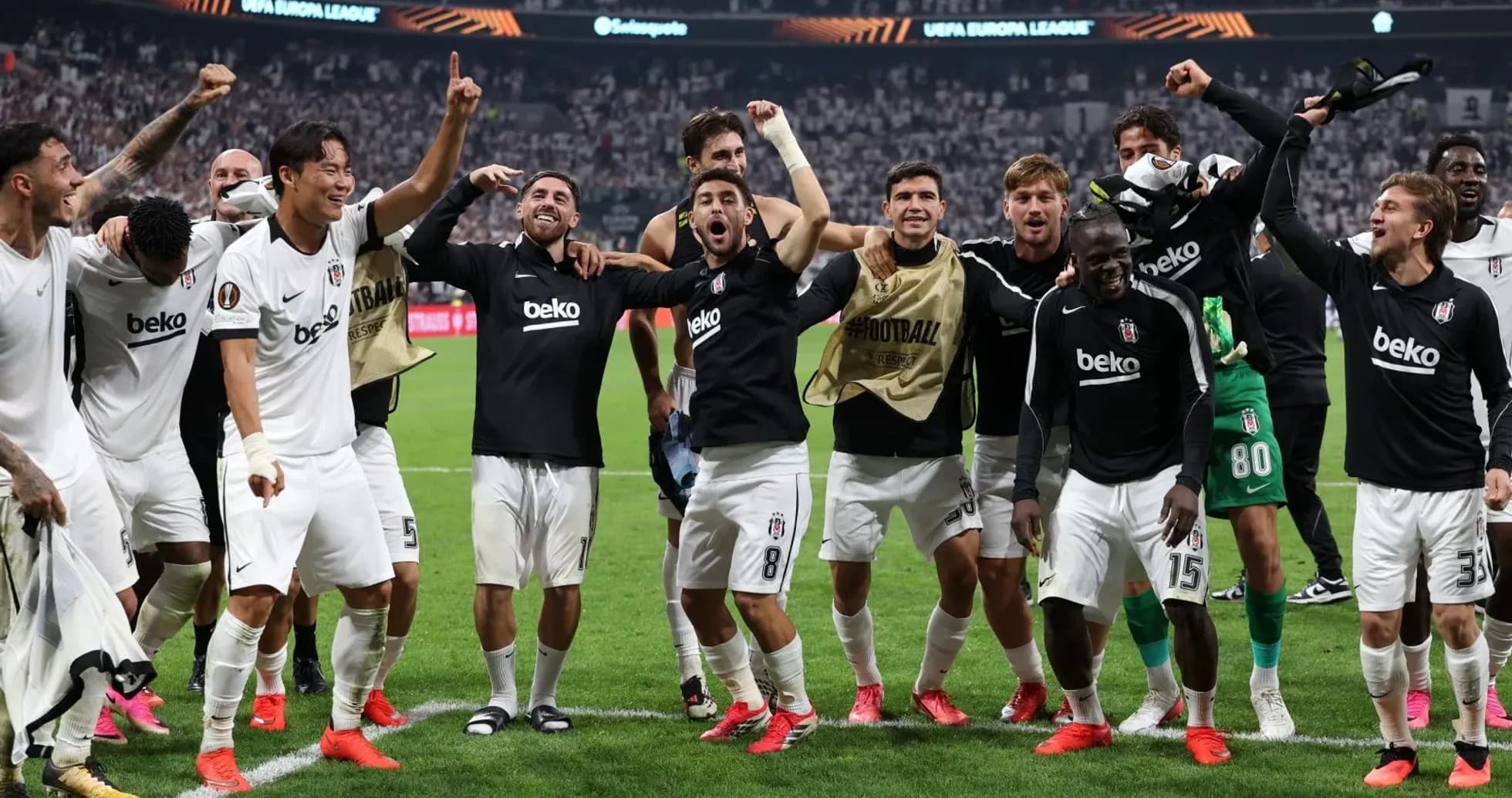
The plan worked perfectly on 80', when S. Kilicsoy struck the decisive goal for Beşiktaş to make it 0-1. Coming just nine minutes after the red card, the goal illustrated the visitors’ efficiency: despite being outshot on target (5 vs 9) and down a man, they leveraged their structural compactness and the fresh legs of their substitutes to exploit space as Hradec committed more bodies forward.
Further Beşiktaş changes at 88' – E. Agbadou (IN) for S. Ozcan (OUT) and M. Hekimoglu (IN) for Oh Hyeon-Gyu (OUT) – locked the team into an even more defensive posture, prioritising aerial presence and defensive duels to see out the result. By then, Hradec’s attacking pattern had become more direct, with crosses and second balls rather than the earlier, more measured build-up. Yet, for all their pressure, they could not convert their 8 corners and 9 shots on goal into an equaliser.
Statistically, the match reads as a classic case of territorial and shot volume not translating into goals. Hradec Králové produced more shots on goal, more corners, and forced Beşiktaş into a higher card count and a red card, but they lacked the final-third precision and perhaps the individual quality to turn those advantages into a tangible lead. Beşiktaş, with slightly more possession and a higher number of blocked shots, showed better control of shot quality and penalty-box defending. Their ability to reorganise quickly after the dismissal, combined with the decisive impact of S. Kilicsoy from the bench, underpinned a tactically disciplined away win that leaves Hradec needing to find greater cutting edge in the second leg despite a structurally solid base.