Italy's World Cup Hopes Depend on Iran's Withdrawal
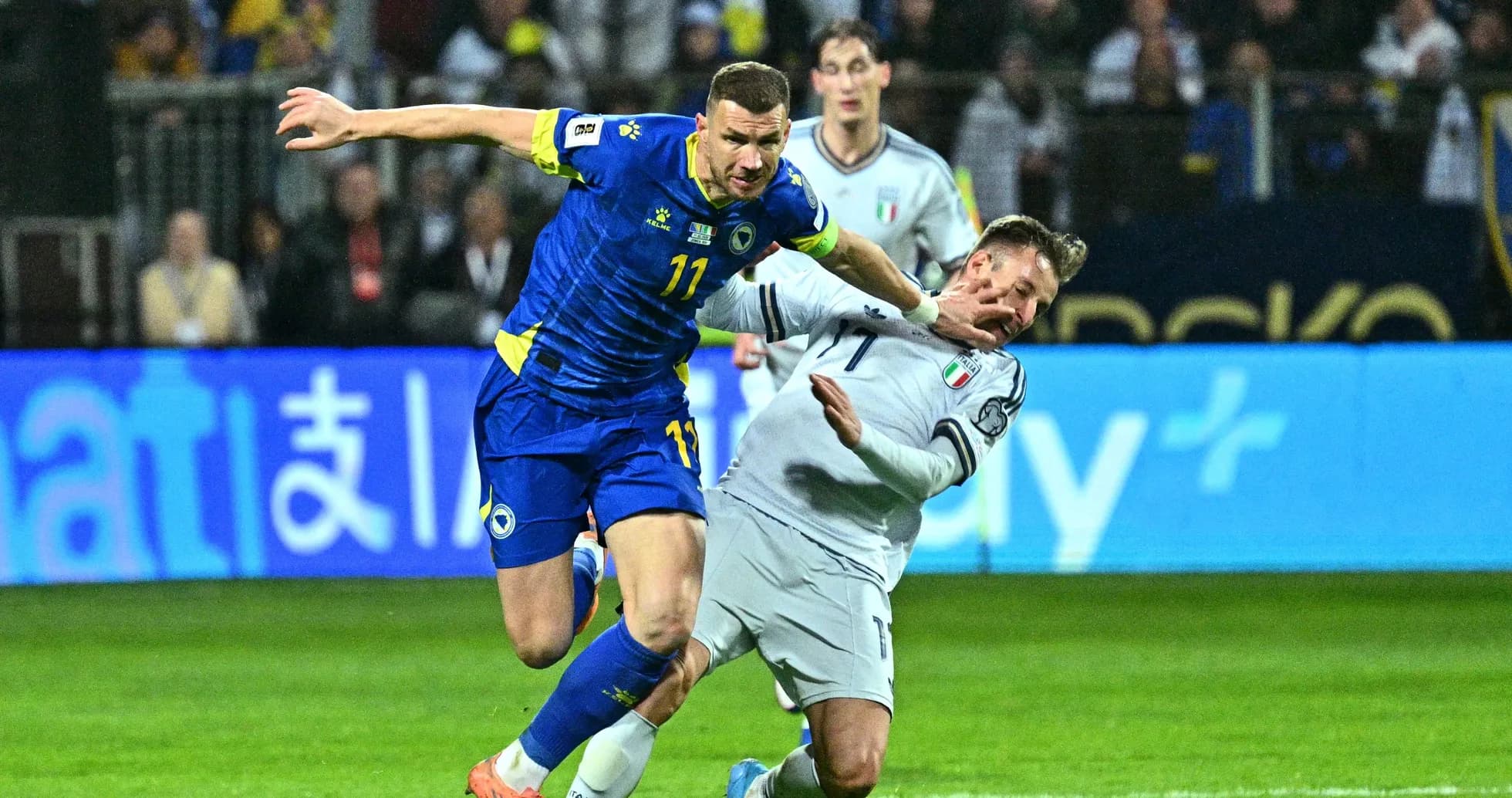
For Italy, the road to the 2026 World Cup is closed. Locked, bolted, and officially sealed. The only crack in the door lies thousands of kilometres away, in Tehran.
As it stands, the Azzurri’s sole theoretical route into next summer’s tournament depends on Iran withdrawing from the competition. Not losing their place on sporting grounds, not through a FIFA sanction, but by choice – or by political decree – in the middle of a geopolitical storm with the United States, one of the host nations.
It is a scenario so fragile it barely qualifies as hope. Yet in Italy, some fans have started to whisper about it.
Italian hopes pinned on a technicality
RMC Sport reports that a pocket of Italian supporters has begun to dream of what they call a “technical qualification”: if Iran were to pull out, perhaps FIFA might turn to the highest-ranked team that failed to qualify. That team is Italy.
In that fantasy, the four-time world champions would be dropped straight into Group G alongside Belgium, New Zealand and Egypt, restoring a traditional powerhouse to the global stage after another painful failure in qualifying.
On paper, it sounds simple. In reality, it is anything but.
Iran earned their place on the pitch through the AFC qualifiers. Their position in the tournament remains intact. The national team still plans to travel, still expects to walk out under the lights next June, and still prepares as if nothing will change.
And crucially, FIFA has no intention – at least for now – of changing that.
Politics, missiles and a minister’s warning
The football story cannot be separated from the wider crisis. In February, the United States and what the article describes as the Zionist entity carried out a joint missile strike on Iran, killing Supreme Leader Ayatollah Ali Khamenei.
From that moment, the World Cup stopped being just a sporting issue for Tehran.
Iran’s Minister of Sport publicly cast doubt on the country’s ability to participate, saying Iran “does not have the capacity to participate”. The message was clear: security, politics and logistics had fused into a single, heavy question mark over the national team’s presence at a tournament partly hosted by its declared enemy.
In Washington, the rhetoric sharpened. US President Donald Trump called on Iran to withdraw “for its own safety”, writing on Truth Social that the Iranian team was welcome, but that he did not believe it was appropriate for them to take part.
Tehran fired back. Officials insisted Iran “cannot be excluded” and even suggested that, if anyone should step aside, it should be the United States.
Then came the statement that truly rattled the football world: Iran’s Ministry of Sport announced a ban on all national sports teams and delegations travelling to countries classified as “hostile”, until further notice.
On the surface, that decree collides directly with a World Cup staged partly in the United States.
FIFA stands firm – for now
Despite the noise, FIFA has stayed on its line: Iran is in. Full stop.
Gianni Infantino has held talks with the Iranian delegation and, according to FIFA, the plan remains unchanged. Iran will participate. Iran will play its matches in the United States. There is no alternative blueprint hidden in a drawer in Zurich.
Infantino reiterated that stance on Tuesday on the sidelines of a friendly between Iran and Costa Rica in Turkey. He stated that the Asian side will take part in the tournament and that there is no backup plan.
Ideas floated in some quarters – such as moving Iran’s matches to Mexico – are not on the table. The schedule stands as drawn.
Iran are set to open their World Cup on 16 June against New Zealand. Then comes Belgium in California, followed by Egypt at Lumen Field in Seattle. The calendar is written, the venues assigned, the logistics in motion.
Italy, at this stage, are nowhere near that picture.
The contingency nobody wants
The real tension lies in the unknown: what happens if Iran withdraws late? Days before the tournament. Or even weeks.
RMC Sport outlines the nightmare scenario for FIFA: an organisational and logistical crisis with stadiums, tickets, broadcasters and sponsors all locked into fixtures that suddenly lose a team.
Inside that chaos, some Italian fans see opportunity. But the reality of how FIFA thinks about the World Cup points elsewhere.
The governing body’s priority is not romance; it is balance. Continental balance. Political balance. The distribution of places has always been a sensitive, heavily negotiated process, and 2026 is no exception.
The prevailing view, according to RMC Sport, is that if Iran pull out, they would be replaced by another Asian team. Not a European one. That would preserve the continental quotas and avoid reopening a debate that stretches far beyond a single group.
FIFA’s regulations do not explicitly force such a solution, yet it remains the most logical and least explosive option.
Why Italy almost certainly stay at home
Reinstating Italy would mean handing Europe an extra place. In a tournament where UEFA already sends 16 teams out of 55 associations, that would be a hard sell to the rest of the world.
Asia, Africa, South America and CONCACAF would all have grounds to object. After years of negotiation over expanded slots and regional representation, parachuting a European giant into the competition because of a political crisis in Asia would cut across the very logic FIFA publicly defends.
That is why, when the speculation starts, another name surfaces: UAE.
After Iraq claimed a spot via the intercontinental play-off by beating Bolivia 2-1, the United Arab Emirates emerged as the best Asian team not to qualify. In a scenario where FIFA looks to keep the Asian quota intact, UAE would stand as one of the leading candidates to step in for Iran.
On sporting and political grounds, that path makes far more sense than reviving Italy’s campaign.
A tiny opening, and a long wait
For now, everything hangs on developments in Iran and on FIFA’s final stance if the situation escalates. The Iranian team remains qualified. FIFA remains committed to their participation. The fixtures remain in place.
Yet the ban on travel to “hostile” countries still exists. The tensions with the United States still simmer. The possibility of a late withdrawal cannot be entirely dismissed.
In that narrow space between certainty and crisis, several teams lurk in the background – UAE among them, and yes, even Italy. But for the Azzurri, the door is not just barely ajar; it is practically shut.
If this World Cup is to be reshaped at the last minute, it will almost certainly be done to protect a fragile global balance, not to rescue a fallen European giant.