Jamshedpur FC Exits Indian Super League: A Major Shift in Indian Football
Jamshedpur FC, the club that turned a steel city into one of Indian football’s most vibrant outposts, is walking away from the Indian Super League.
Nine years after Tata Steel secured the Jamshedpur franchise and helped reshape the ISL map, the company has pulled its senior team out of the country’s top tier. When the new ISL season kicks off in October, the 2021-22 league champions will be missing from the fixture list. The Furnace will fall silent on league nights.
The announcement came on Friday, low on detail but heavy with consequence.
“Jamshedpur FC would like to confirm that it will not be participating in ISL from 2026-27 season onwards,” the club said in a statement, confirming what had been whispered in corridors for weeks. The statement stressed that JFSPL remains “committed, in other capacities, to the continued growth and development of football in India,” with a promise to keep pushing grassroots work and talent identification across the country.
It did not say why a club with a title on its CV and a loyal fan base had chosen to step away.
Behind the scenes, the picture is less diplomatic. Sources indicated that rising losses had become a serious concern, with some stakeholders also questioning the long-term sustainability of the league model. Jamshedpur have already informed the All India Football Federation of their decision, drawing a hard line under their ISL chapter even as the competition moves into a new, club-led era.
Inside the club, the news landed like a hammer blow. CEO Mukul Choudhari called a staff meeting and told employees that the senior team would no longer continue. Close to 50 members of the administrative and technical staff — spread across the first team, youth setup and grassroots programmes — were left staring at an uncertain future.
For the ISL, this is more than a simple change of cast. It is a jolt at a delicate moment. The league has just shifted to a structure in which clubs collectively operate the competition through a dedicated entity, while the federation retains a 10% stake. Losing a founding modern-era force like Jamshedpur undercuts the narrative of stability just as the clubs were supposed to be taking firmer control.
The footballing loose ends are equally messy. Jamshedpur still have at least 12 senior players tied down on long-term contracts. Owen Coyle, the coach who led them to the league title in 2021-22, remains under contract as well. No clarity has emerged on how those deals will be resolved, or what comes next for a squad built to compete, not to vanish.
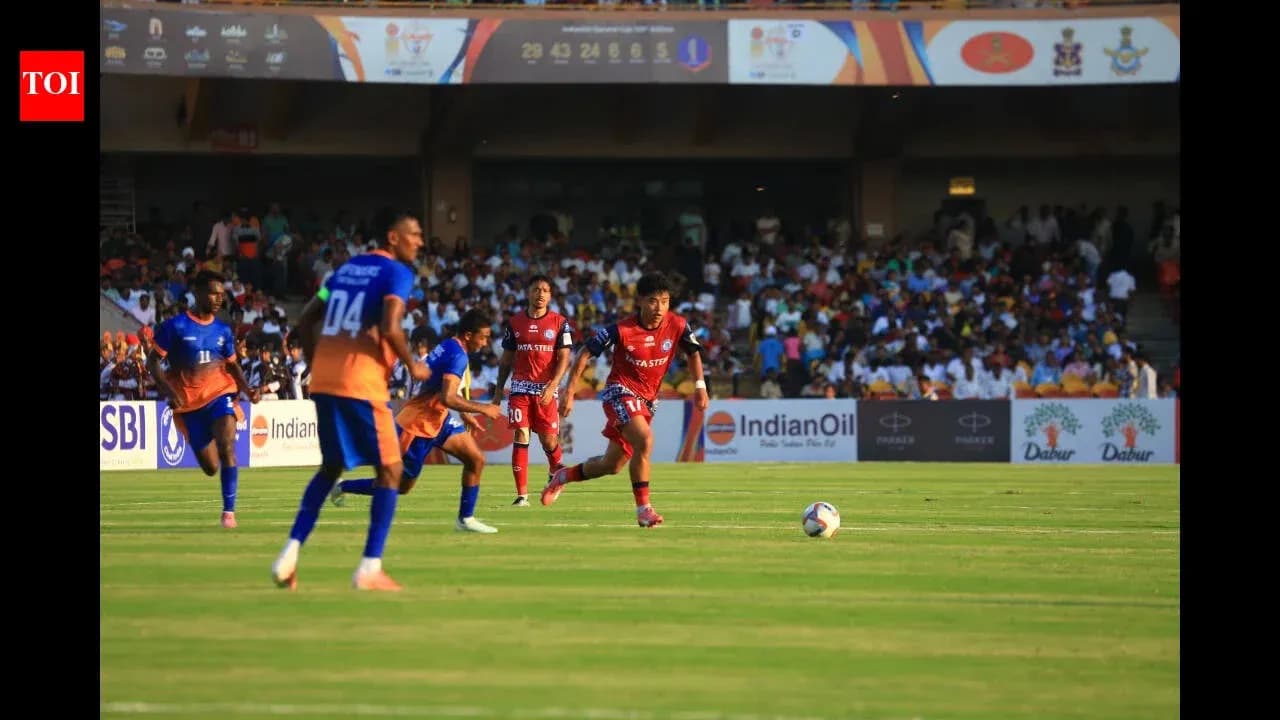
On top of that, six players signed specifically for this season’s Durand Cup — former India midfielder Raynier Fernandes, Abhishek Ambekar, Aman CK, Devendra Murgaokar, Leewan Castanha and Provat Lakra — are on short-term deals. They came in for a tournament that now doubles as an epilogue for the senior team. Jamshedpur’s first XI continues to play in the Durand Cup, even as the club’s ISL future has already been written off.
The contrast is stark. On the pitch, a team still fighting for results. Off it, a project being quietly wound down.
For Tata Group, the decision cuts across a relationship with Indian football that stretches back decades. Long before the ISL, Tata’s Mumbai-based side lifted the Durand Cup, IFA Shield and Rovers Cup. The company built one of the country’s most influential residential academies, a conveyor belt that has produced close to 150 players for various Indian teams over nearly 30 years. Tata Steel also played host to global heavyweights, bringing clubs like PSV Eindhoven and Sao Paulo to India for friendlies, raising standards and expectations.
Jamshedpur FC was the modern expression of that legacy — a purpose-built football town, a packed JRD Tata Sports Complex, a fan base that embraced the “Furnace” identity and gave the ISL some of its most atmospheric nights. The 2021-22 title win under Coyle felt like validation of the model: a serious academy, a clear plan, a club punching at the top end of the table.
Now, that chapter closes with more questions than answers. What happens to the pipeline of talent that ran through Jamshedpur? How will the ISL absorb the loss of a champion club at a time when it is trying to project strength?
For the league, and for Indian football’s evolving ecosystem, the exit of Jamshedpur FC is not just a line in a press release. It is a warning shot about cost, commitment and what it really takes to stay the course at the top.