Japan's World Cup Journey: Overcoming Injuries and Challenges
Hajime Moriyasu stood on the brink of another World Cup knockout berth and pointed not to a star, not to a system, but to something far more basic: a squad that can bend without breaking.
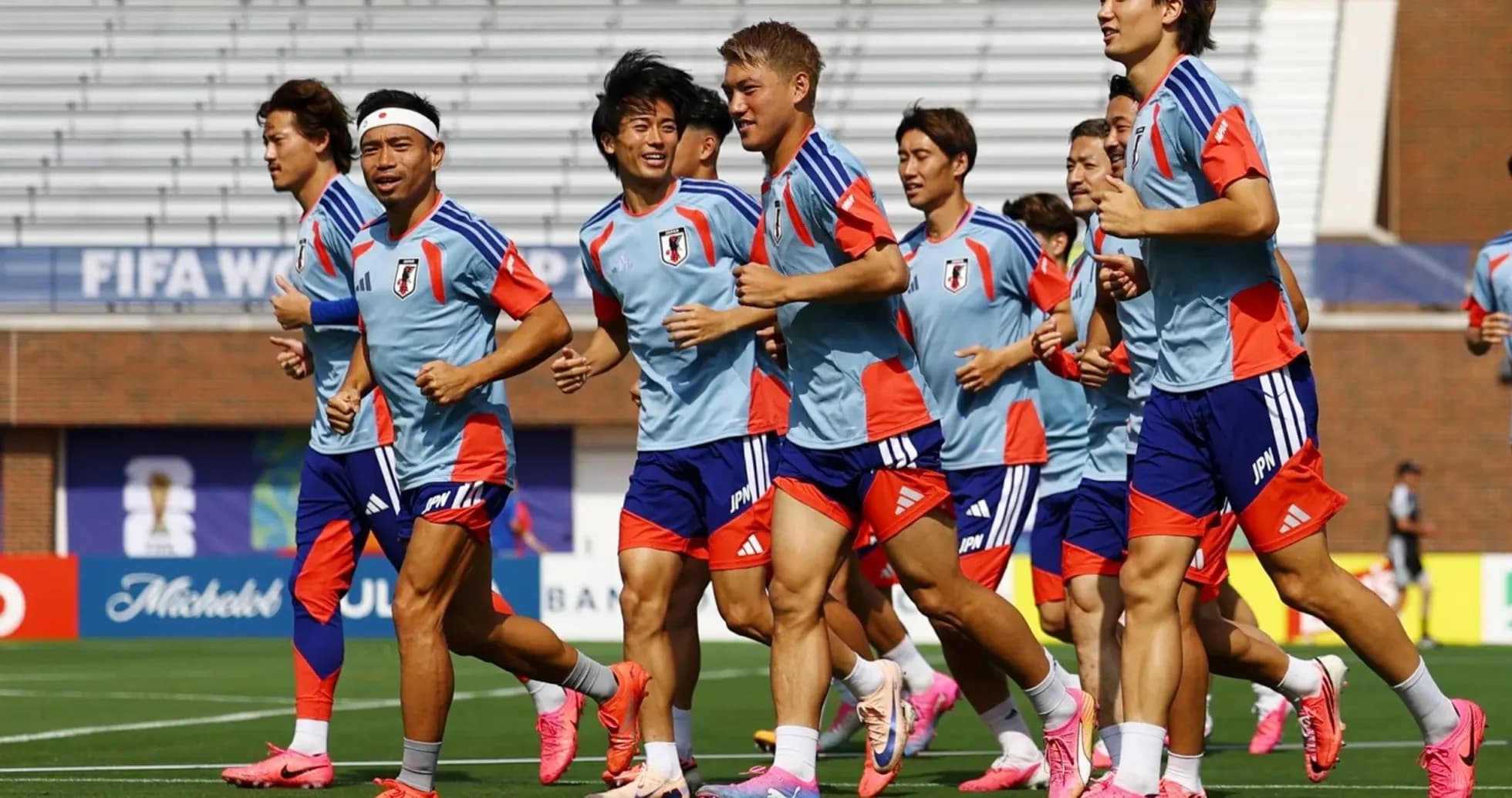
Japan arrive at their final Group F game against Sweden on Thursday battered by injuries yet brimming with belief, four points on the board and one foot already nudging the door of the last 32. They have done it the hard way. Twice they trailed the Netherlands and twice they hauled themselves level in a breathless 2-2 draw. Then came Tunisia, swept aside 4-0 with a ruthless, almost cold efficiency.
All of it without several of the players Moriyasu had expected to build his team around.
Takefusa Kubo, the creative livewire, is set to miss the Sweden clash after suffering a knee problem against the Dutch. Wataru Endo, the former captain and heartbeat in midfield, never made it to the tournament. Kaoru Mitoma, the winger who stretches defences, and Takumi Minamino, the playmaker who stitches attacks together, are also out.
This should have been a crisis. Instead, it has become a calling card.
“Anyone can play with anyone else, that’s the readiness we wanted to ensure,” Moriyasu said, underlining the theme that has carried Japan through the first two games. It sounds simple. He knows it is not.
“When there’s a change over in the team, it’s not that simple or easy to play with different players and achieve good results or be successful,” he admitted. The churn of line-ups, the constant tweaks, usually fray the edges of a side. Japan have gone the other way.
Moriyasu credits the work done long before the first whistle of this World Cup.
“I’m very grateful that the other coaches and the players have been developing themselves towards such a great achievement,” he said. In those few words lies a picture of a squad drilled to step in, step up and slot into a collective idea, rather than wait behind a fixed first XI.
Across the opening two matches, that idea has held. “In the last two matches the team has functioned tactically and with the teamwork they are developing and increasing their readiness,” Moriyasu said. Japan have looked cohesive, compact and sharp in transition, even as personnel have shifted.
The table reflects that work. Four points from two games leaves Japan in a strong position. Even defeat against Sweden might not be enough to deny them a place in the last 32. That safety net does not interest their head coach.
“We are basically thinking of winning, that’s what’s in our mind,” he said, brushing aside talk of permutations. He wants the top of Group F, and he wants it on Japan’s terms.
“If possible we would like to advance on top of the group by scoring as many goals,” Moriyasu continued. The ambition is clear. So is the line he will not cross. “But distorting the balance of the team is more of a risk. We will see.”
That tension will define his selection and approach. Push too hard for goals and Japan could open doors for a Sweden side that can punish any lapse. Stay too cautious and they might let first place slip away. Moriyasu will not gamble with the structure that has carried them this far.
He also refuses to look too far ahead in terms of opponents.
“We don’t know what kind of team we will come up against in the next round,” he said. There is no attempt to engineer a supposedly favourable draw, no talk of dodging giants. The priority is internal. “What’s important is that we are solid and that we play against a team that we are able to deal with no matter what appears.”
So the focus turns back to Thursday, to Japan’s own performance and nothing else.
“First we want to think about ourselves and how we play tomorrow,” Moriyasu said. “In terms of our target we would like to win and qualify for the knockout stage on top of the table.”
Standing in their way is a Sweden side that has already shown both faces in this tournament. A 5-1 demolition of Tunisia suggested a free-scoring machine. A 5-1 defeat to the Netherlands in the very next game exposed a soft underbelly and left their campaign lurching from one extreme to the other.
Yet they still carry danger, especially up front. Alexander Isak and Viktor Gyokeres give Sweden a pair of forwards capable of turning any half-chance into a problem.
“They’re world class, wonderful strikers so I would like us to enjoy facing these players,” Moriyasu said. Enjoy is an unusual word for a coach preparing his defence to face such firepower, but it fits his broader outlook. This, he insists, is an opportunity, not a threat. “It’s going to be a good opportunity for our players to develop themselves further.”
Japan have already proved they can absorb setbacks and keep moving. One more test of that adaptability now stands between them and the top of Group F. The injuries have not gone away. The margin for error has narrowed. But the belief in a team that can “play with anyone else” has never looked stronger.