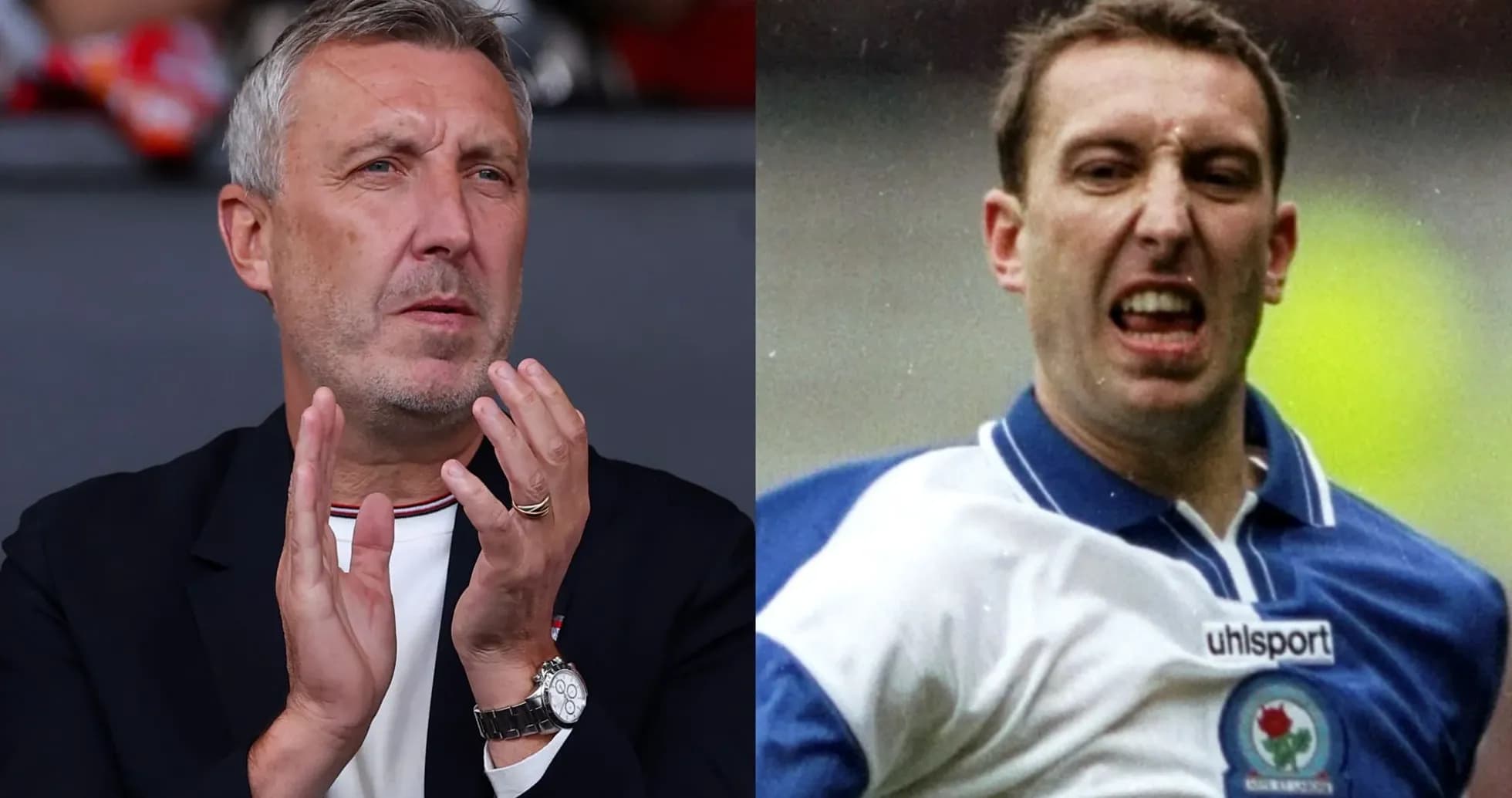
Jason Wilcox: From Player to Director of Football at Manchester United
Jason Wilcox always looked like a football man. Nobody, though, really saw this version coming.
The Bolton-born winger came through Blackburn Rovers’ youth ranks and grew into a mainstay of a title-winning side. More than 270 senior appearances, a decade in the first team, and a crucial role in that thunderous 1994-95 Premier League triumph. Three England caps, too. A proper career, built on consistency rather than noise.
Then he walked away.
After spells with Leeds, Leicester and Blackpool, Wilcox retired in 2006 and stepped off the carousel. No rush into punditry, no scramble for a touchline. For a while, he simply disappeared from the weekly conversation.
The game, though, has a way of pulling people back in.
In 2012, Wilcox returned quietly, slipping into the academy coaching staff at Manchester City. From there he climbed, step by step, into a director’s role at a club that became the model for modern football structures. His reputation grew in boardrooms rather than dressing rooms.
Southampton noticed. They took him to St Mary’s in January 2023 as their director of football, and his standing only strengthened. The work was smart, the noise around him increasingly positive. That was enough for Manchester United.
Initially hired as technical director in April 2024, Wilcox has since moved into the role of director of football at Old Trafford. At 55, he now sits at the heart of one of the most scrutinised rebuilds in world football, with a major say in who plays for United – and who manages them. Michael Carrick’s appointment to replace Ruben Amorim underlined how much weight his voice carries.
To thrive there, you need more than a sharp eye for a player. You need a thick skin.
So what kind of character is Jason Wilcox?
Colin Hendry, who shared a dressing room with him at Blackburn, paints a vivid picture. Speaking to GOAL in association with IvyBet, the former Rovers defender didn’t hesitate.
"He's obviously a very clever character. He was a clever footballer," Hendry said, before rolling back the years to that title-winning side.
“Jason was good. Jason was very effective as a winger, with Jason on the left, Stuart Ripley on the right. And when you've got two strikers, Alan Shearer and Chris Sutton, just feeding off what they provided, that's why these lads more or less won Blackburn the Premiership. But it was supply as well.”
Those flanks, those crosses, that relentlessness – it all fed into Blackburn’s surge to the summit. Yet Hendry admits he never imagined Wilcox would end up shaping clubs from upstairs.
“Jason's position, I would have never thought, to be fair, that may have happened, that he would have ended up in that position,” he said. “But then he did do well after his career. He did a business and then he was at Man City academy, grew at the Man City Academy to the head of the Academy, got headhunted off to Southampton and from Southampton all the way along, he's been doing really well.
“And that doesn't surprise me because he was a clever footballer. Sometimes good, great footballers don't make great coaches and great managers. But then Jason's gone down a different path.”
That path has taken him from private business to one of the most powerful seats at Old Trafford. Hendry remembers the personality behind it all.
“I'm sure he had a good private business going on in his life and he ended up at City and growing, coming through the ranks there at Man City academy as a coach and then fulfilling all these different things.
“He's a funny guy though. Jason was very sharp, very quick witted. He did a really good take on Ray Harford and Kenny [Dalglish]. He did a couple of good takes on the Gaffer and Ray, God rest his soul. And even Tony Parkes as well, God rest his soul. Jason was a comedian, if I'm being honest.”
The comedian is now the decision-maker. At United, Wilcox helps dictate transfer policy and long-term planning in a role that has become both fashionable and controversial. Supporters and managers alike have often bristled at the power of sporting directors, especially when key calls are made above the dugout.
Hendry understands how complex the job has become.
“The game's moved on. So the recruitment, that's a job in itself,” he said. The modern process runs far beyond a quick scouting trip and a gut feeling.
“To a layman, you're thinking of all these different things, criteria that players have got, and they go into everything these days at the top level, they go into everything - they go on about their social aspects, their upbringing, they go so far back into things. And I do understand, but I don't know how much of that really affects that individual as a footballer.”
Data, background checks, character profiles – Wilcox operates in that world now. Yet Hendry still believes one voice must never be drowned out.
“I do think that the manager, the coach, the man, the guy that's picking the team on the Saturday to play that game should have an input into who they have in the squad,” he said. “And I know that's not always the case because there's funding and everything else, you've got so many different things to think about.
“And what I mean by funding is what the budget is they've got to spend, the wages, and everything else, all that's going to be taken into consideration because the club's got to be run properly. I understand that as well as, but I do think the main man should have a bit of an influence as to what he's looking to bring into his squad.”
That balance – between the man in the dugout and the man upstairs – will define United’s next era. Wilcox, once the supply line for Shearer and Sutton, now supplies the players and coaches for one of football’s biggest institutions.
The stakes could hardly be higher.