José Mourinho's Return: A New Era Begins at Real Madrid
José Mourinho stayed seated.
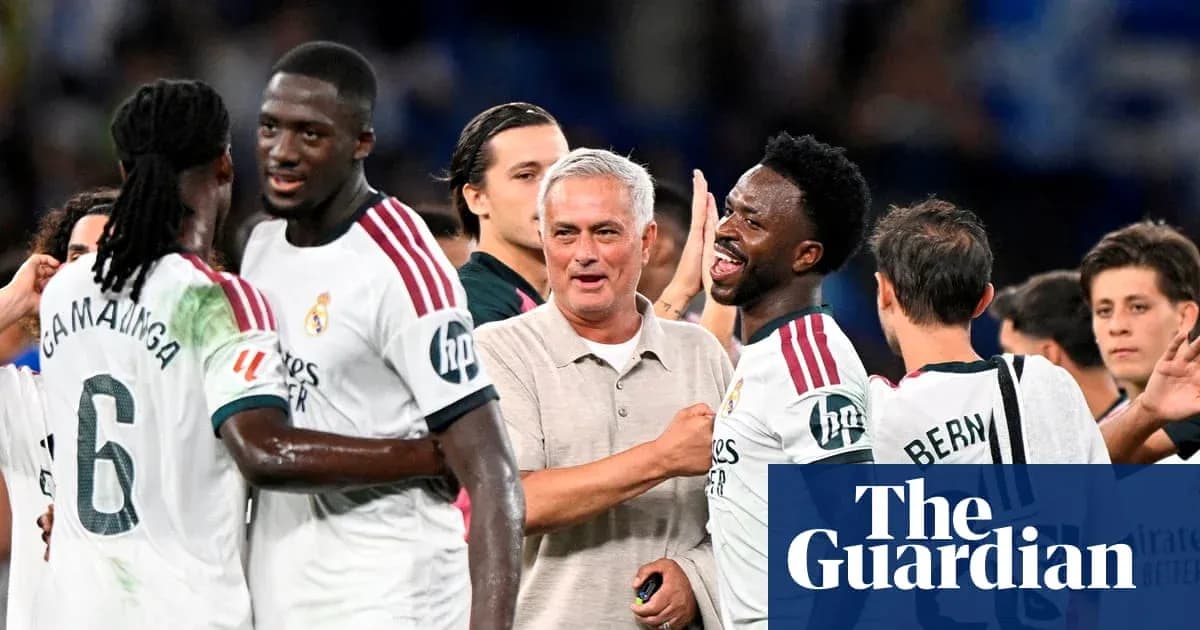
As the Real Madrid bench exploded past him, substitutes and staff sprinting down the touchline to the corner flag, he rose slowly, clenched his fists and walked. No charge, no famous knee-slide. Just a measured stride along the technical area, eyes fixed on the pile of white shirts engulfing Carlos Espí. On the way, he stopped Fede Valverde for a quiet word. After 4,380 days, after all the noise and nostalgia around his return, Madrid had finally found a 90th‑minute winner for him. It felt, above all, like relief.
A new hero from nowhere
The script said this season would be about Kylian Mbappé, Vinícius Júnior and Jude Bellingham. About how Mourinho might weld three global superstars into a coherent, ruthless front line. About Yan Diomande, the most expensive signing in the club’s history, reshaping the spine of the team.
Instead, the night belonged to a 21‑year‑old striker who was almost anonymous six months ago.
Carlos Espí, plucked from Levante after dragging them clear of relegation with his goals, was signed to give Madrid something they had lacked: a classic No 9, a penalty‑box presence, a striker who lives in the chaos of the six‑yard area. He now lives at Valdebebas, just like his coach. They share breakfast. They share early mornings. On this night, they shared a lifeline.
When a scruffy, fragmented attack broke loose in the area and the ball slipped away from Mbappé, Espí was exactly where Mourinho wanted him. He crashed it over the line, the sort of ugly, essential goal that wins titles in March and saves coaches in August. He might also have forced a question Mourinho will not be able to dodge for long: does this team actually need his profile on the pitch more often, not just as a late option?
On this occasion, the answer was obvious.
The return, 13 years in the making
Mourinho’s first Madrid game since a 4-2 win over Osasuna in May 2013 began like an event, not a fixture. Before kick-off, photographers abandoned their usual spots behind the goal and formed a ring around the visiting bench. They knew where the story was.
By the end, after a narrow win over Espanyol, the scene was very different. Mourinho embraced Manolo González, high‑fived the referee and disappeared down the tunnel. The noise around his comeback had met the reality of a tight, awkward league match. He had warned that Espanyol were a good side. They proved it. Madrid created more, but Manolo’s team managed, for long spells, to restrict them.
Old flaws resurfaced. Defensive lapses. Sudden drops in intensity. A sense that control can still slip from their grasp too easily. It is only the opening day, but the doubts that lingered last season have not vanished overnight. The win eased them, it did not erase them. Harder nights will come. So will sterner tests of Mourinho’s patience.
When Madrid faced Benfica in the spring, Mourinho had described his previous spell here as “three hard, intense, sometimes violent years”. Time has a way of softening edges. The bad fades, the good lingers. He insists he is not a man who “misses anything” and says he carries “regrets” more than nostalgia. Others at the club felt differently. Florentino Pérez most of all.
In a world where presidents often treat managers as a necessary evil, Mourinho has been the exception for Pérez, the one coach he truly liked. The president had long clung to the belief that the six Champions League titles in 11 years after Mourinho’s departure still bore his fingerprints. Mourinho had laid the foundations, set the standards, shown the way. That was the story they told each other.
On the eve of this game, Mourinho revealed that after every trophy Madrid won, Pérez would call him. “I always said no, no, no, it was nothing to do with me,” Mourinho smiled. Which, of course, was another way of saying it had quite a lot to do with him. Pérez has said much the same in public. It took him 13 years to act on the urge, but here they were again, together.
And why not? The last men to return – Zinedine Zidane and Carlo Ancelotti – had delivered. Those who came from outside, without that emotional thread, had largely failed. At the end of his anecdote, Mourinho listed the trophies as belonging to Zidane and Ancelotti and then, almost innocently, checked that they were the only coaches to have won anything. The implication was clear: the club needed his diagnosis again.
Madrid had fallen behind Barcelona. Two years without a major title. For Pérez and Mourinho, that was not just a football problem. It was a cultural one.
Demands, non-negotiables and a new dressing room
Effort alone will not fix Madrid, but Mourinho has made it the baseline. “We have to try not to negotiate things that are non-negotiable,” he said. “Commitment can’t be missing.” He has the authority, the personality and the backing from above to insist on that. For now, at least.
Training has changed. Or, perhaps more accurately, the players’ attitude to it has. Sessions feel sharper. Standards have been raised. Diomande even said he was ready to “die” for Mourinho. The coach brushed that off as just a phrase, but he did not hide his satisfaction.
There are other reasons for optimism. Vinícius’s future is no longer a running soap opera, his status no longer a source of tension. The World Cup is out of the way, with no immediate distractions on the horizon. The stage belongs to club football again.
Mourinho pointed out that Brazil, France and England had all found ways to maximise Vinícius, Mbappé and Bellingham individually. Doing it all at once, in one club side, is a different puzzle. “I don’t think they’re incompatible,” he insisted. Last season, at times, it looked exactly that. Bellingham admitted they often drifted into the same areas.
Here, all three started. Bellingham in the No 10 role, close to the forwards. Vinícius hugging the touchline. “For me this is his [Jude’s] position: the connection with the forwards, he can score goals. He has to play close to the goal. Playing at 6 or 8 we’re losing his closeness to the goal,” Mourinho explained.
He did not have to wait long to see the plan work.
Bellingham strikes, then the drop
Nine minutes into Mourinho’s second era, Madrid led. Vinícius was fouled on the left – something that already looked like becoming a theme. Alex Calatrava had earlier caught him with a kick in the back, prompting Mourinho to throw his arms in the air. From the free-kick, Arda Guler curled in a superb delivery. Bellingham rose above everyone and powered his header past Marko Dimitrovic.
Mourinho barely reacted. Sitting at the left end of the bench, he stood up, slid his hands into his pockets and walked the length of the technical area to the far side, where the overflow of his sizeable staff sat in the stand. He shook hands with Sami Khedira, his in-house assistant, and Roberto Merella, the analyst. That was all.
For a few minutes, it felt like the gulf between the teams might be too big to bridge. Madrid pressed high, suffocating Espanyol’s attempts to play out. This, they might have thought, was a glimpse of the future: aggressive, organised, relentless.
Then the intensity sagged.
When Dean Huijsen needed treatment for a cut, Madrid’s players drifted over to Mourinho for instructions. The game, though, was already starting to slip. Espanyol edged forward, grew braver, and Madrid’s control evaporated.
Thibaut Courtois saved from Riedel, but Roberto Fernández could not keep his follow-up down. Moments later, a slick move sliced through Madrid. Tuy Dolan and Javi Hernández combined neatly and Calatrava swept in the equaliser. Mourinho sat almost motionless, watching it unfold.
Misses, woodwork and a late rescue
After the break, the game opened up. It also exposed Madrid’s wastefulness.
From a Guler corner, Bellingham climbed again and thumped a header against the bar, Dimitrovic’s fingertips just diverting it. The rebound fell to Mbappé at the back post, almost on the line. Somehow, astonishingly, he turned it wide.
Valverde smacked a shot against the post. Mbappé dragged another effort off target. The chances came, and they went. Espanyol hung on, stubborn and organised, sensing a point that would have felt like a statement.
On the touchline, Mourinho started to reach for his bench. Cucurella. Diomande. Camavinga. Alexander-Arnold. Espí. One by one, he called for more energy, more risk, more presence in the box.
Eventually, it was the 21‑year‑old from Levante who made the difference. When the ball ricocheted loose in the area and Mbappé lost control, Espí reacted faster than anyone else. He forced it over the line and set off towards the corner, swallowed almost instantly by his teammates.
This time, the rest of the bench went wild. Mourinho did not. He walked behind them, calm on the outside, knowing how thin the margins had been on his return.
Afterwards, he allowed himself a hint of balance. “I think we deserved to win, but Espanyol didn’t deserve to lose,” he said.
It sounded like a verdict on more than just one game.