Jude Bellingham's World Cup Heartbreak and Fury
Jude Bellingham’s World Cup ended not just in heartbreak, but in a flash of fury that is now under FIFA’s microscope.
Fresh footage circulating online has shed new light on the incident that saw the England midfielder slap Valentin Barco on the back of the head in the chaotic aftermath of the 2-1 semi-final defeat to Argentina at Mercedes-Benz Stadium.
Flashpoint after the final whistle
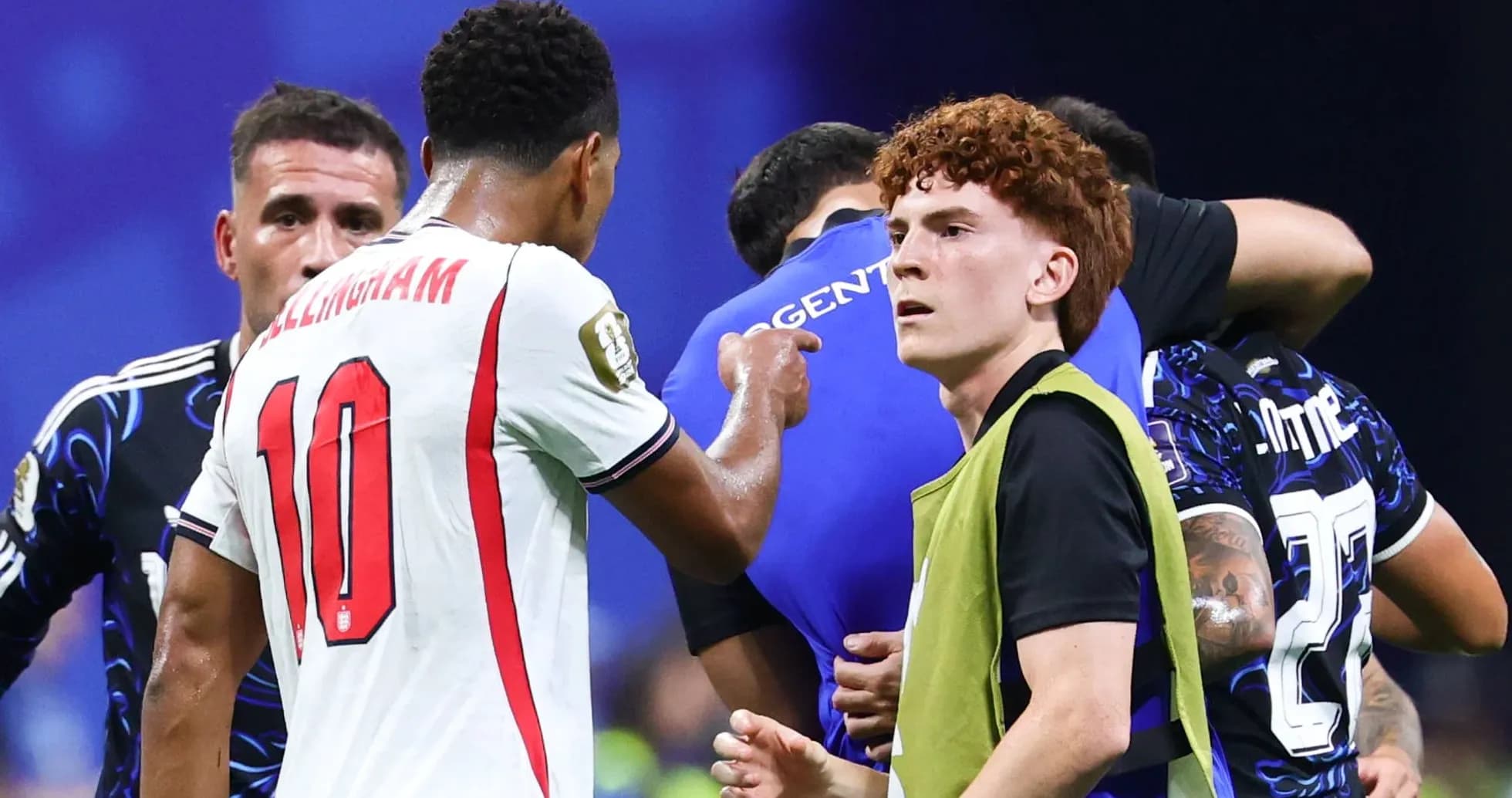
Bellingham, already seething after England’s late collapse, was seen near the halfway line shaking hands with an Argentina reserve goalkeeper when Barco stepped into the frame. The Strasbourg youngster, set to join Chelsea this summer, appeared to say something within earshot.
The reaction was instant. Bellingham, fluent in Spanish from his time in La Liga, spun and struck Barco on the back of the head.
Barco shoved him back. Tempers spiked. Nicolas Otamendi, never one to miss a confrontation, charged in as the situation threatened to spill completely out of control.
From the England ranks, goalkeepers James Trafford and Dean Henderson moved quickly to separate the players, while Ollie Watkins grabbed hold of a furious Bellingham and dragged him away from the melee.
The Argentina substitute hadn’t played a minute of the semi-final, but he had already made himself a central figure in England’s anger. Footage from the stands showed Barco sprinting onto the pitch after Enzo Fernandez’s equaliser, celebrating directly in the faces of the England players as blue-and-white shirts swarmed around them.
A night of needle
This was not an isolated flash of temper. The tension had been simmering all evening.
Argentina targeted Bellingham physically and verbally. Leandro Paredes escaped a booking for a heavy challenge on the 23-year-old, a tackle that drew howls from the England bench. Cristian Romero, in classic Spurs-and-Argentina fashion, celebrated a simple clearance right in front of Bellingham, roaring in his face as if he had scored.
Each small jab, each shove, each smirk built the pressure. By the time the final whistle confirmed England’s exit, the fuse was already burning.
The moment with Barco simply lit it.
Tactical gamble that cost England
Behind the flashpoints lay a deeper frustration: England felt they had thrown this away.
Anthony Gordon had put the Three Lions in front, a goal that seemed to tilt the semi-final in their favour. At that point, England looked composed, confident, close to ending a 60-year wait for another World Cup final appearance.
Then came the turning point. Thomas Tuchel, seeking to lock down the lead, switched to a defensive back five to protect the advantage. The change invited Argentina on. It changed the whole feel of the game.
England sank deeper. Passes became safer. Attacks thinned out. Argentina sensed weakness and surged forward.
The pressure eventually told. Fernandez levelled, sparking those wild celebrations and Barco’s taunts, and in stoppage time Lautaro Martinez rose to head in the winner, ripping England’s hopes away at the death.
Tuchel did not hide from his role in the collapse, admitting the switch had made his side “passive” at the very moment they felt they had everything to lose.
Bellingham’s anguish – and a looming ban
Bellingham carried that weight heavily. Speaking after the game, he laid bare the pain of another near-miss for a generation of England fans who have heard the same story for decades.
“I think we can take a lot of experience from this, but it is so gutting. I wanted to be a part of an England squad that finally done it and got it over the line. To be here, telling the fans the same things they've heard for years, it's really gutting,” he said, the words landing like an admission and an apology rolled into one.
Now, his anguish may be compounded by disciplinary trouble.
The match officials missed the clash with Barco in real time, but the clarity of the new video leaves little room for ambiguity. FIFA can intervene retrospectively, and a fine or suspension is firmly on the table.
If a ban arrives before Saturday, England could head into the third-place play-off against France in Miami without their talisman and standout performer of the tournament. For a side chasing their best World Cup finish since 1966, it would be a brutal loss.
Bellingham has illuminated this World Cup with his football. The risk now is that, for many, the enduring image of his campaign becomes not a driving run or a decisive goal, but a split-second swing of the hand on a night when England’s composure, and their dreams, slipped away.