Jurgen Klopp Takes Charge as Germany's Head Coach
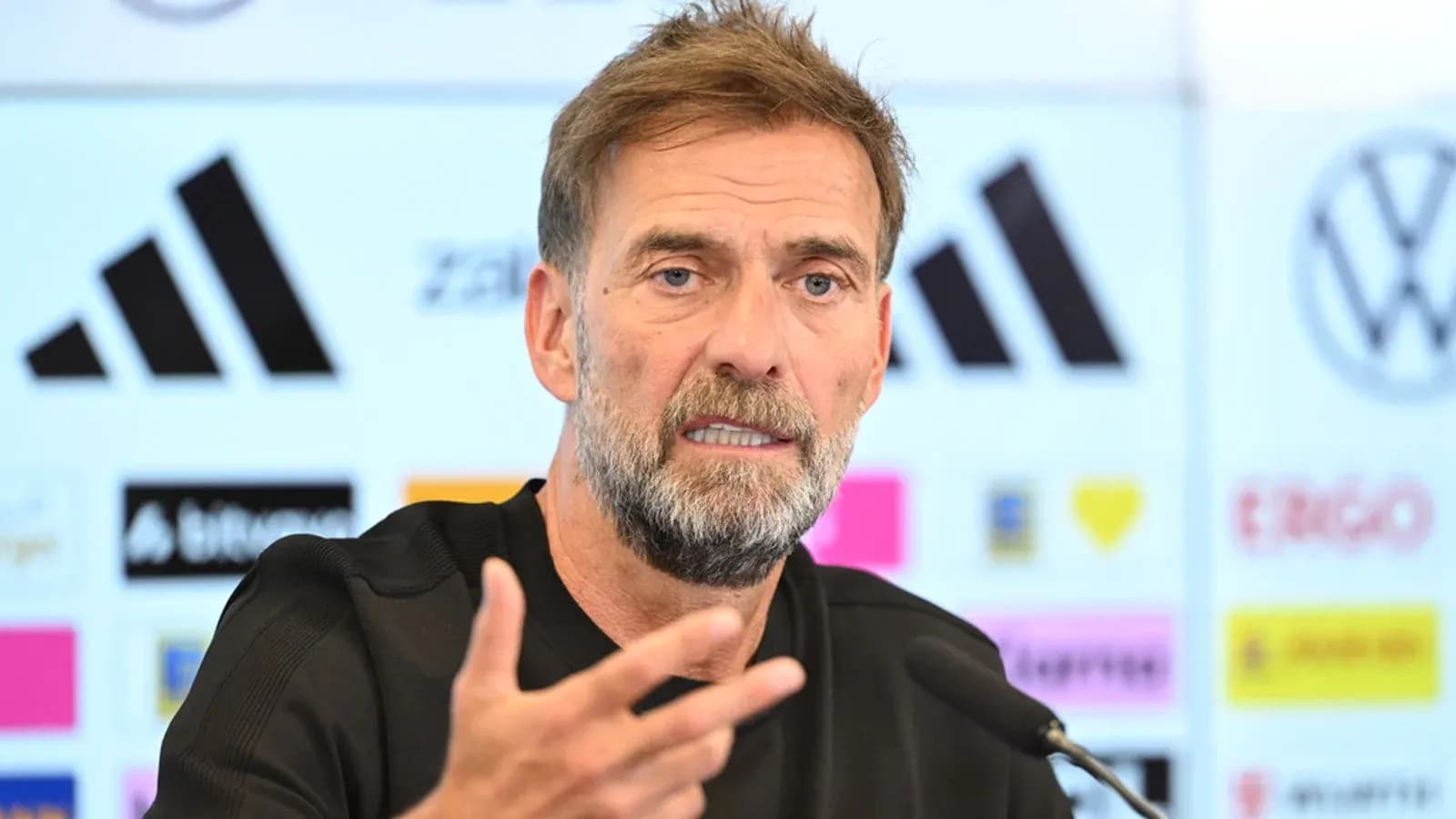
Jurgen Klopp has walked back into the dugout – and straight into the hottest seat in German football.
The former Liverpool manager has been appointed head coach of Germany on a deal running through to the end of the 2030 World Cup, a seismic move for a national team still searching for its identity after years of underachievement.
From burnout to the “pinnacle”
Klopp left Liverpool in 2024 saying he was “running out of energy” after a ferocious nine-year spell that brought six major trophies, including the Champions League, Premier League, Club World Cup, FA Cup and two League Cups. He stepped away, recharged, and re-emerged in a very different role: head of global soccer for Red Bull.
He made it clear then he had no interest in returning to the week‑to‑week grind of club management. International football, though, is a different proposition. On Friday, the 59-year-old was unveiled as Germany’s new head coach and made it plain this is his last great job.
“Jurgen Klopp is not going to have any ‘career’ after the national team,” he said. “This is the pinnacle, the high point of my footballing career as a coach. I will give everything I've got, and I have the best possible assistant coaching team.”
This is his endgame. No safety net, no next project. Just Germany.
A warning shot to critics
If the appointment felt like a homecoming, the tone of his first public address was anything but sentimental. Klopp arrived smiling, but he did not come to be a national mascot.
He issued an unmistakable warning: cross the line with him or his family and he will walk.
“I will be remunerated very graciously and if tomorrow Jurgen Klopp is s***, I will be gone,” he said. “But if the DFB says let us discontinue the job, then that's it. And if you behave badly and don't let my family in peace, I'll be gone. I'll just turn away. I know there are other countries where national team head coaches are treated even worse. I love this job but I am also ready to call it quits if needs be.”
This was not the language of a man easing himself gently into the role. It was a line in the sand. Respect, or he’s out.
Still, he framed the job as a mission, not a vanity project.
“It is my mission to make the national team squad a better team and hope the pool for me to choose from will be bigger, but it is not something I am doing against you, I am doing it for you. It is an honour,” he said.
Resetting Germany’s expectations
Klopp also moved quickly to puncture the idea that his mere presence guarantees a return to the summit of world football. The badge and the coach’s name no longer win games on their own.
“Jurgen Klopp being in the job doesn't automatically mean we're going to be world champions,” he said. “Success is performance vs expectations. We need a new set of expectations.”
Germany’s recent record demands that kind of realism. He referenced the current benchmark nations and the talent they can call upon.
“Many people have asked themselves, are we as good as France? If the answer is no, then that is not necessarily true. If the question is, do we have players like Dembele, Barcola, Mbappe? Then the answer is no, we don't, but we can still beat them.”
That is classic Klopp: acknowledge the gap, attack it anyway.
He made clear he will not copy anyone else’s blueprint.
“We don't want to play like Argentina, Spain, England or France. We want to play like Germany, do it the German way but very intense. Are we the number one team at the moment? No, we aren't; I accept that. Would we be happy to be the number two team? Then people would say we aren't number one.
“At the moment, we have 11 teams ahead of us. Yes, we can beat them, but for this to happen, you need to play very good, intense football.”
So the promise is not instant glory. It is identity, intensity, and a fight to close that gap.
DFB turns to its first choice
The German FA did not hesitate. Klopp was the first man they approached after Julian Nagelsmann resigned, his tenure broken by a disappointing World Cup that ended in the last 32 with a penalty shoot-out defeat to Paraguay.
They have now handed the reins to a coach whose name still carries enormous weight in dressing rooms across Europe, but who has chosen the less forgiving, more exposed life of a national team boss. No transfer market, no daily training ground culture to lean on. Just windows, camps, and tournaments.
His first test comes quickly enough: a Nations League clash with the Netherlands on September 24. It will not define his era, but it will show the first outlines of what “Germany, the German way but very intense” actually looks like.
Familiar faces in the dugout
Klopp will not be alone. The staff around him is heavy with shared history and fresh authority.
Former Liverpool assistants Pep Lijnders and Peter Krawietz are on board, reunited with the man they helped drive to the top of European football. Lijnders arrives after a spell at Manchester City following Pep Guardiola’s departure, a rare coaching link between two modern superpowers now feeding directly into the national setup.
Sven Bender, who played under Klopp at Borussia Dortmund and understands his demands from inside the dressing room, also joins the staff. On the structural side, Per Mertesacker will become Germany’s sporting director in January, stepping in for Andreas Rettig after eight years running Arsenal’s academy.
It is a backroom team built on trust, shared battles and a clear idea of how a high-intensity side should function.
Klopp has already called this job the pinnacle. The question now is simple: can he turn a fallen giant into a relentless tournament machine again, or will this be the one project his energy and ideas cannot quite drag back to the top?