Jürgen Klopp Appointed Germany’s New Head Coach for National Rebuild
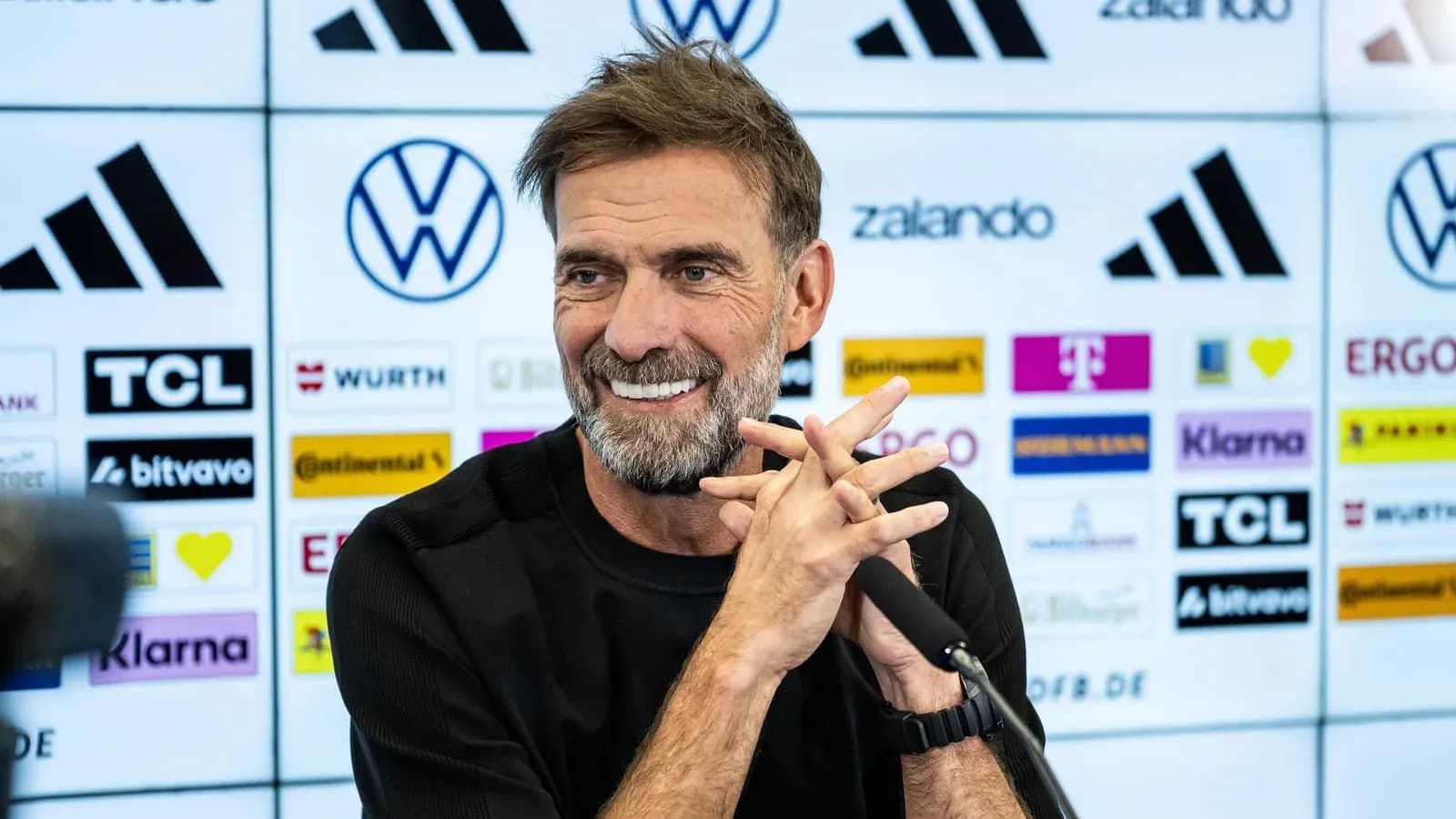
Jürgen Klopp has been confirmed as Germany’s new head coach on a four-year deal, dragging one of the game’s most charismatic figures back from the boardroom to the dugout and into the heart of a national rebuild.
The German Football Association (DFB) unveiled Klopp at its Frankfurt campus on Friday morning, ending weeks of expectation with the appointment they always wanted and never really hid.
From New York studio to Germany’s hot seat
When Julian Nagelsmann walked away after Germany’s World Cup collapse – a last‑32 exit on penalties to Paraguay – the DFB did not cast a wide net. It went straight for Klopp.
Talks began in New York, where the former Liverpool manager was working as a television pundit while the World Cup was still unfolding. On 11 July, the DFB announced it had reached an agreement in principle. The final confirmation has now arrived: a contract that runs through to the 2030 World Cup and hands Klopp the job many in Germany have long seen as his destiny.
This is not a short stop. It is a four-year commitment, with a clear target at the end of it.
A familiar inner circle
Klopp rarely travels alone, and the national team will be no different.
Former Liverpool assistants Pep Lijnders and Peter Krawietz are expected to join him in the Germany setup. Lijnders, who recently left Manchester City after Pep Guardiola’s departure, is in line to reprise his role as Klopp’s trusted lieutenant, while Krawietz – the long-time analyst and assistant from Mainz, Dortmund and Liverpool days – is also set to be part of the backroom team.
Reports also point to Sven Bender, who played under Klopp at Borussia Dortmund, taking a place on the staff. The pattern is clear: Klopp is surrounding himself with voices he knows, trusts and has already won with.
From “running out of energy” to leading a nation
Klopp’s return to the touchline comes just two years after he walked away from Liverpool, closing a nine-year spell that reshaped the club and his own reputation.
At Anfield he collected the Champions League, Premier League, FIFA Club World Cup, FA Cup and two League Cups, ending a 30-year title drought and restoring Liverpool to the elite. When he left in 2024, he spoke openly about “running out of energy”, insisting he needed distance from the relentless grind of club football.
He took that break. For six months he stayed out of management before resurfacing as Red Bull’s head of global soccer, a strategic role that allowed him to influence projects without the daily strain of training pitches and touchlines. From there he publicly ruled out a return to club management.
What he never ruled out was this: the chance to lead his country.
A costly release, a clear statement
To prise Klopp away from Red Bull, the DFB reached for its wallet and its conscience. The association has donated €1 million to Wings for Life, Red Bull’s non-profit foundation, as part of the agreement to secure his release.
It is an unusual detail in a coaching appointment, and a revealing one. Germany have not only invested in a coach; they have signalled how far they are prepared to go to reset the direction of the national team.
Klopp now walks into a job loaded with expectation, history and scrutiny. He inherits a side bruised by tournament failure, a federation under pressure, and a fanbase desperate for a team that looks and feels like Germany again.
He has four years to deliver it.