Kano Pillars Dominate Doma United in NPFL Clash
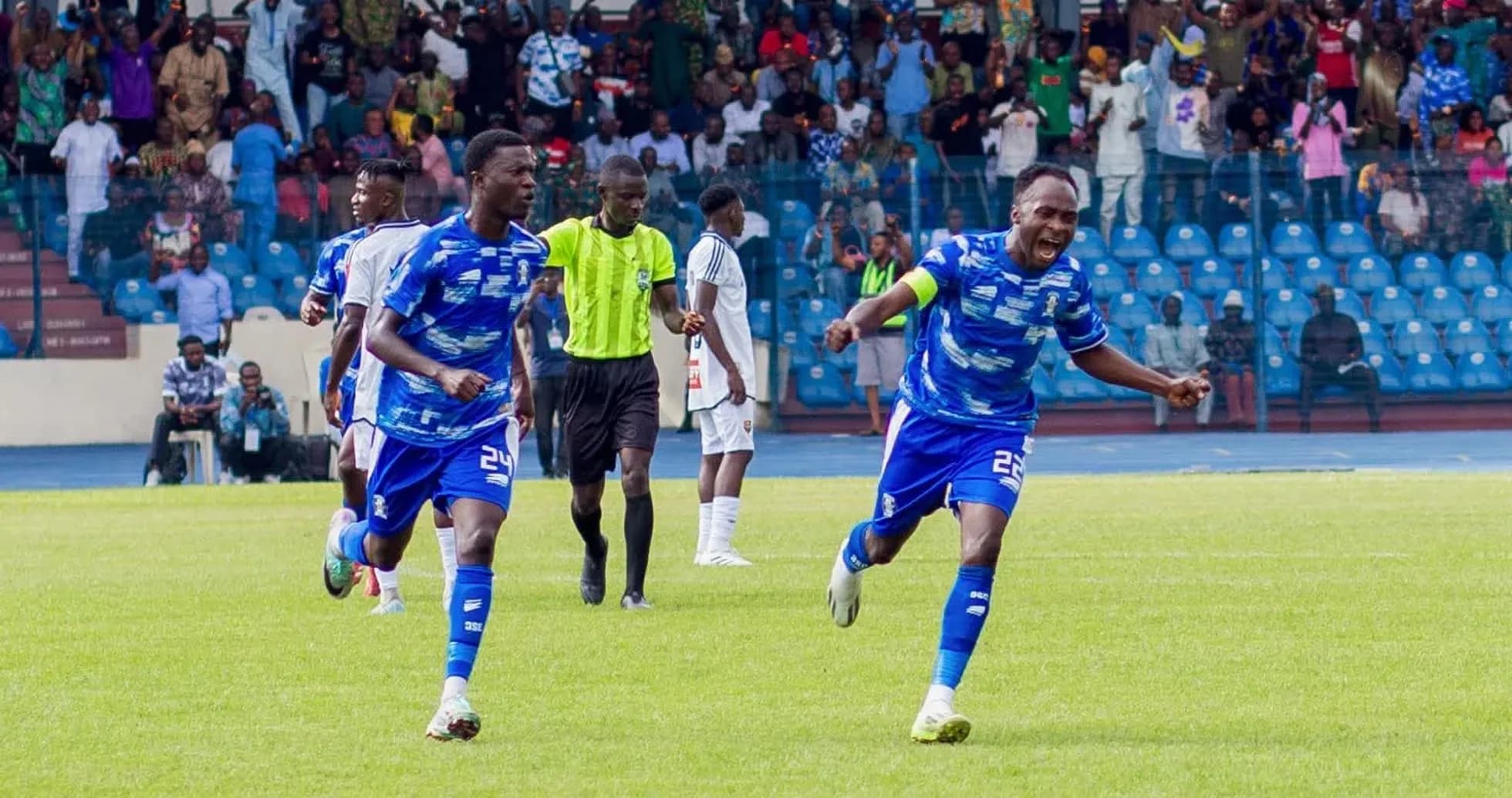
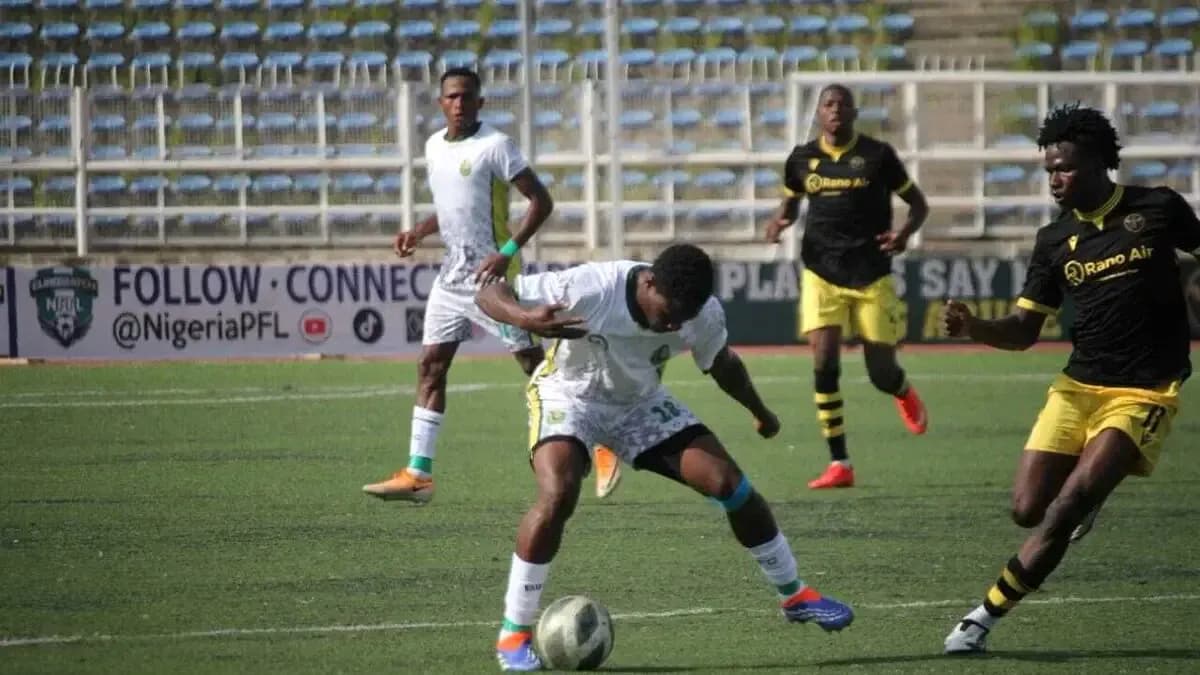
Under the harsh Kano sun at Sani Abacha Stadium, this Regular Season - 4 clash in the NPFL felt less like an early‑season skirmish and more like a statement game. League leaders Doma United arrived with nine points and a reputation for control, but left on the wrong end of a 4–1 defeat, overwhelmed by a Kano Pillars side that turned their attacking potential into a full-throttle demonstration.
Heading into this game, Kano Pillars were already one of the league’s most entertaining sides. Overall this campaign they had scored 9 goals and conceded 5 across 3 matches, with a goal difference of +4. At home they had been devastating: 7 goals for and 3 against in just 2 matches, an average of 3.5 goals scored and 1.5 conceded at Sani Abacha Stadium. They had yet to lose anywhere, and they had not failed to score in any match.
Doma United, by contrast, came in as a more balanced machine. Overall they had 6 goals for and 4 against from 4 games, a goal difference of +2, built on a perfect home record and a pragmatic approach on their travels. At home they had been flawless defensively with 4 goals scored and none conceded, while away they had been more fragile: 2 goals scored and 4 conceded, averaging 1.0 goal for and 2.0 against on their travels. The warning signs were there: a 4–1 away defeat already sat in their record as the one dark mark on an otherwise strong start.
First Half
The first half in Kano confirmed every suspicion about the matchup. Kano Pillars, with their aggressive, veteran-led front line, surged into a 2–0 lead by half-time. Without formal formation data, the structure had to be read from personnel and tendencies: a back line anchored by F. Maduabuchi, A. Musa (shirt 5), and A. Abdullahi, a midfield core with Z. Musa and F. Usman, and a creative, experienced attacking unit of A. Musa (shirt 7), club icon R. Ali, the direct runner F. Ubong, and the sharp A. Shola.
The tactical story revolved around that attacking quartet. R. Ali, wearing 10, functioned as the rhythm-setter, dropping between the lines to connect play and drag Doma’s midfield out of shape. To his sides, F. Ubong and A. Musa (7) stretched the game horizontally, constantly asking questions of H. Abutu and M. Adegbite in the wide areas. A. Shola, nominally a forward, played on the shoulder of Doma’s central pair B. Philimon and C. Uzoagara, exploiting every gap left when Doma tried to step up.
Doma United’s starting structure was more conservative. I. Pius in goal sat behind a back line featuring A. Umar, S. Collins, B. Philimon and C. Uzoagara, shielded by H. Abubakar and N. Agu. Ahead of them, the creativity and direct threat of M. Adegbite, S. Ulunwa and R. Sadiq was meant to link with the movement of the front line. But the problem was not individual quality; it was the collective strain of facing one of the league’s most relentless home attacks.
Overall this season, Doma United had built their identity on defensive control: 3 clean sheets in 4 matches, and no failures to score themselves. Yet that solidity had been almost entirely a home phenomenon. On their travels, they had already conceded 4 goals in 2 games before arriving in Kano, and this match followed the same pattern: once the first goal went in, the structure frayed.
Kano Pillars, for their part, are not a side that shuts games down. Overall they concede 1.7 goals per match, with 5 allowed in 3 fixtures, and at home they allow 1.5 per game. But they compensate by constantly turning matches into open, chaotic contests where their attacking depth can decide the outcome. That was clear again here: even at 2–0, they did not retreat into a low block. Instead, they kept feeding the ball into R. Ali’s feet, encouraging A. Musa (7) and F. Ubong to run at tired legs.
The bench options underlined their capacity to change gears. With players like R. Ayemwenre, S. Agu, and the energetic A. Samson waiting among the substitutes, Kano Pillars had the tools to either reinforce the midfield or double down on transitions. Doma United’s bench — featuring the likes of A. Edwin, J. Omah, and J. Abah — offered fresh legs, but not the same level of proven attacking punch, especially once the game state tilted heavily against them.
Discipline also formed a subtle but important subplot. Overall this campaign, Doma United’s yellow cards have clustered late: 42.86% of their cautions arrive between 76–90 minutes, with another 28.57% between 61–75. That late-game accumulation speaks to a team that often ends matches under pressure, forced into recovery tackles as lines stretch. Kano Pillars, by contrast, have a smaller card sample but a clear pattern: 50.00% of their yellows come between 61–75 minutes and 50.00% between 76–90, reflecting how their high-tempo approach can spill into fouls as intensity stays high to the final whistle.
One quieter but telling detail in Kano’s season profile is their penalty record: 1 penalty awarded overall, none converted, with 1 missed and a 0% success rate. Even in a 4–1 win, that fragility from the spot will remain a concern in tighter contests later in the campaign.
Following this result, the tactical verdict is clear. Kano Pillars are evolving into the league’s great entertainers and one of its most dangerous home sides: they have never failed to score this season, they average 3.5 goals at home, and they turn Sani Abacha Stadium into a place where even the league leaders can be overwhelmed. Doma United remain a formidable force, particularly at home where they have yet to concede, but on their travels they must solve a recurring structural problem: once their first defensive line is broken, the back four is exposed, and against sides with the experience and fluidity of R. Ali, A. Musa, and F. Ubong, that vulnerability can quickly become a flood.
In narrative terms, this was more than just three points for Kano Pillars. It was a tactical statement: in a league where Doma United had set the early pace, the side from Kano showed they have both the firepower and the squad depth to challenge seriously for the top, especially if they can tighten a defence that still concedes more than a contender would like.