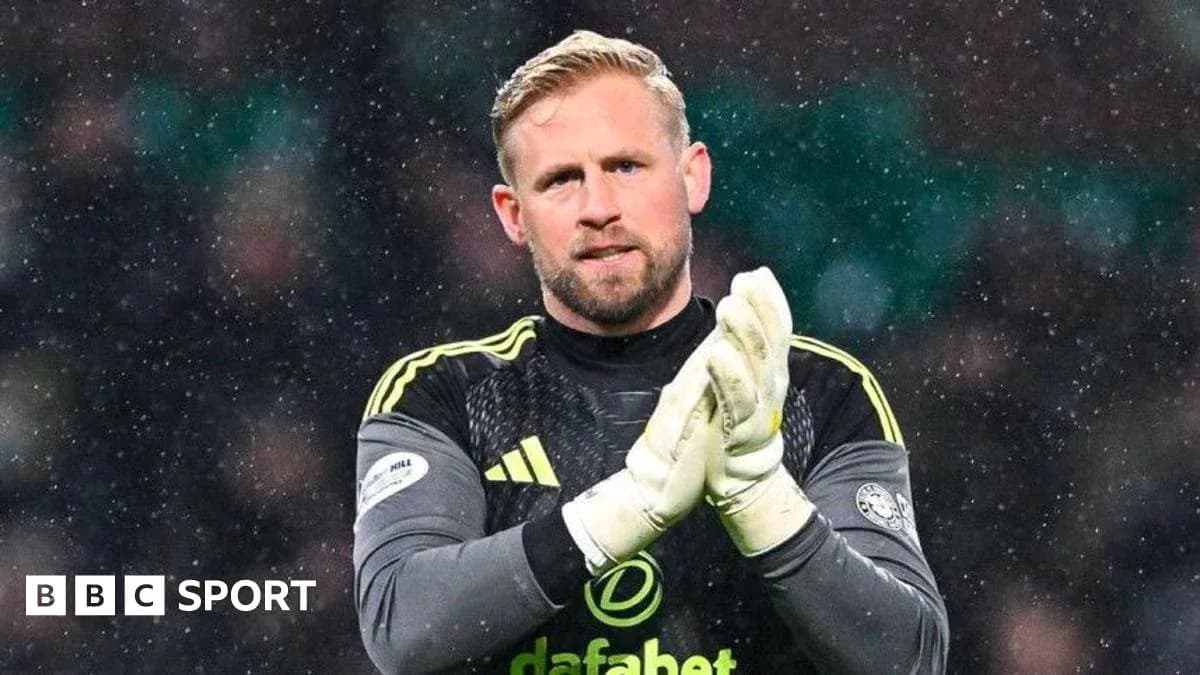
Kasper Schmeichel Retires: A Career Ended by Injury
Kasper Schmeichel never wanted it to end like this. Few great goalkeepers do. They imagine one last save, one last roar, one last lap of honour. Instead, at 39, the Celtic and Denmark goalkeeper has been forced to stop by a damaged shoulder that simply would not heal, no matter how stubborn the will behind it.
After months on the sidelines and a series of medical consultations, Schmeichel has called time on a career that stretched from Manchester City’s academy to Premier League glory with Leicester City, World Cups with Denmark and, most recently, a title-winning spell in Glasgow.
“I believe that now is the right time,” he told TV2, the words carrying the weight of someone who had tried every possible route back and found only one door left open.
A shoulder that would not forgive
The end began in March 2025, in a Nations League quarter-final against Portugal. Denmark had used all their substitutes when Schmeichel suffered a serious shoulder injury. He stayed on. Of course he did. This is the goalkeeper who built a reputation on resilience, on playing through pain, on refusing to step aside.
He finished the match that night, but the damage lingered. Eleven months later, in a Europa League tie for Celtic against Stuttgart, the shoulder gave way again. This time, there was no hiding from it.
“I didn't realise how bad it was back in March,” he admitted. “It's been a long process. When I landed on it in February, I could tell straight away that something was seriously wrong.”
Surgeons and specialists delivered the verdict no elite athlete wants to hear: do not expect to return to top-flight football. Schmeichel had been prepared to commit to up to a year of rehabilitation, to grind his way back for one more season, one more campaign. The body refused.
“This is a decision that has been made for me,” he said. The fighter in goal, undone not by a mistake or a rival, but by anatomy.
From Manchester to immortality in Leicester
Schmeichel’s story began at Manchester City, in the shadow of his father Peter’s legend at Manchester United, yet he carved out his own path with a different club, in a different way.
It was at Leicester City that his career exploded into folklore. Across 10 seasons, he became the spine of a team that stunned the world. The 2015-16 Premier League title remains one of football’s great miracles, and Schmeichel was at the heart of it – commanding, relentless, defiant when the pressure rose.
He stayed long enough to add the FA Cup in 2021, another landmark in the club’s history. While others moved on, Leicester’s No 1 remained a constant presence, a leader in the dressing room and a symbol of the club’s rise.
Spells at Nice and Anderlecht followed, a late-career tour that underlined his appetite to keep competing at the highest level. Then came Celtic, and another chapter of success.
Glasgow’s final act
In Scotland, Schmeichel found a new home and another set of supporters to win over. He featured 39 times for Celtic this season, steadying the side and adding authority to the back line. By the end of the campaign, he had collected a second Premiership winners’ medal in his two years in Glasgow.
His contract was running down. The injury, and the verdict that followed, arrived at the worst possible time. Instead of debating extensions and next steps, he was weighing up surgeons’ warnings and the reality of life after playing.
He had wanted more. The shoulder said no.
A Denmark great in his own right
For Denmark, Schmeichel was far more than the son of a legend. He won 120 caps, becoming a pillar of the national team across more than a decade. He played at the 2018 and 2022 World Cups and stood in goal during Denmark’s stirring run to the semi-finals of Euro 2020, a tournament heavy with emotion and resilience.
He will be remembered in Danish colours for his presence in big moments, his composure when the stakes rose, and his refusal to let the weight of his surname define him. He built his own legacy, brick by brick, save by save.
No perfect goodbye, but no regrets
“I think everyone dreams of saying goodbye on the field, but you don't always get what you want,” Schmeichel said. It is a brutally honest line from a player who has spent his career dealing with the unforgiving nature of elite sport.
“I've had so much else along the way, so football doesn't owe me anything. I've had so many opportunities, so many experiences.
“What stands out most are the friendships and connections I've made. The moments I've shared with them – for better or worse.”
No farewell appearance. No staged substitution. Just a decision, made in a consulting room rather than a stadium, that one of the defining goalkeepers of his generation has reached the end.
He leaves with titles in England and Scotland, a historic Premier League medal, an FA Cup, 120 caps for his country and a place in Danish football history that is entirely his own. The gloves come off not by choice, but on his own terms in every way that still matters: with clarity, with dignity, and with a career that never needed a perfect goodbye to be complete.