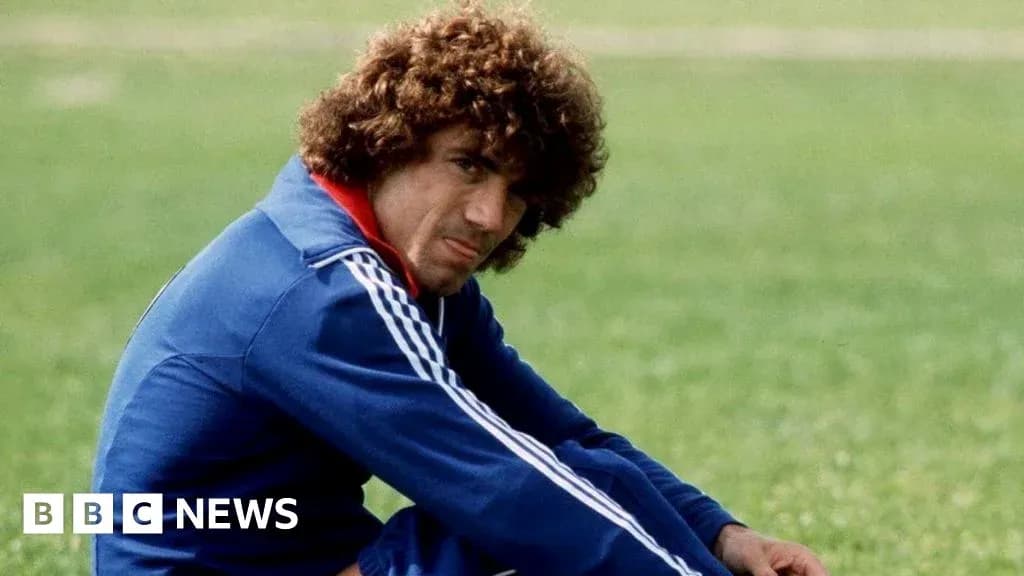
Kevin Keegan: The Little Man Who Linked Liverpool and Hamburg
Kevin Keegan did not just leave Liverpool for Hamburg in 1977. He crossed a border and, in the process, tied two cities together for nearly half a century.
This week, as news of his death at 75 reverberated across Europe, that bond was put into words. In a heartfelt letter to Hamburg’s mayor, Liverpool City Region Mayor Steve Rotheram described Keegan as “a bridge between two great cities” – a footballer whose influence reached far beyond the pitch.
From Anfield idol to Hamburg icon
Keegan’s move from Liverpool FC to Hamburg SV was a football earthquake at the time: a then-record transfer, a European champion swapping Anfield for the banks of the Elbe. He left on the highest of highs, lifting Liverpool’s first European Cup in his final appearance for the club.
By then he was already one of the most decorated English players of his generation. Two Ballon d’Or awards. Seven major honours with Liverpool. A striker who had become the face of English football, then chose to test himself in the Bundesliga.
Rotheram’s letter, seen by the Local Democracy Reporting Service, makes it clear that the move meant more than a fee and a handshake. “When Kevin left our shores for Germany in 1977, he did more than make a then-record transfer between two football clubs. He built a bridge between two great cities,” he wrote.
Loved on both sides of the rivalry
In Liverpool, Keegan’s status was complicated only by the intensity of the city’s football divide. Rotheram captured it neatly: “For one half of our football-mad city, Kevin was a footballing hero, for the other, a well-respected irritant on derby day.”
That line says everything. Red idol. Blue tormentor. Yet respected by all.
“He was not just a Liverpool FC legend and one of the most beloved figures our city has ever known,” Rotheram added, underlining how Keegan’s appeal spilled into civic pride. His success, the mayor argued, “belonged equally to Liverpool and Hamburg”, where he was both “admired and loved”.
For Rotheram, Keegan personified a simple truth. “To me, he embodied better than anyone else that famous maxim: football is the people’s game.”
A visit that never happened
The latest chapter in that shared story was supposed to be written this year. Keegan had been due to travel with Rotheram to Hamburg’s annual Harbour festival, the Hafengeburtstag, a celebration that would have placed him back at the heart of the city that adopted him.
Then came the diagnosis. Cancer. The trip was cancelled. Keegan, Rotheram revealed, was “unable to travel”.
He was, the mayor said, “devastated not to be attending”. Still, he refused to disappear quietly. Keegan sent a personal note for Rotheram to read on the Liverpool stage by the Elbe, a final message to a city that had once roared his name.
Rotheram recalled that, just a few months earlier, Keegan had also written words for him to deliver at the Liverpool City Region pavilion. Despite what the mayor called his “pidgin German and broad Scouse accent”, the crowd responded warmly. Keegan, absent in body, remained present in spirit.
“Kevin may have left both cities many years ago,” Rotheram wrote, “but he never truly left our hearts.”
A legacy built beyond medals
The connection between Liverpool and Hamburg has not just survived; it has been curated. Keegan’s career now forms part of a special exhibition highlighting the links between the two port cities, a reminder that a football transfer once helped forge a cultural relationship that “remains strong to this day”.
In his letter to Hamburg’s Mayor Dr Peter Tschentscher, Rotheram chose to share Keegan’s own words back with the city that had embraced him. “In Kevin’s words, once again: Forgive my Plattdeutsch, but I love Hamburg.”
The farewell carried the tone of a city speaking to another city about one of their shared sons. “On behalf of the people of Liverpool, we send our deepest condolences to Kevin’s friends, the HSV family and the people of Hamburg. Thank you for loving him as we did. You’ll Never Walk Alone.”
Keegan’s medals sit in cabinets. His goals live in grainy footage. But the bridge he built between Liverpool and Hamburg still stands – and it may yet prove to be the most enduring achievement of all.