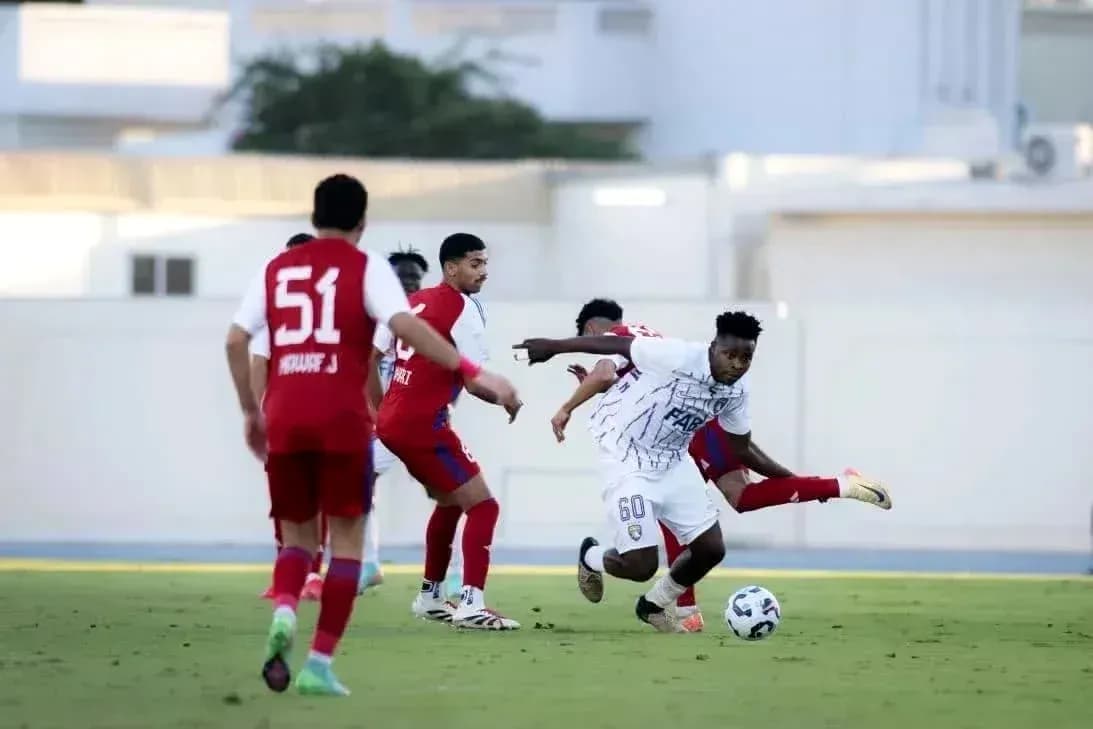
Khorfakkan U23 vs Shabab Al-Ahli Dubai U23: Pro League U23 Clash
Khorfakkan U23 vs Shabab Al-Ahli Dubai U23 arrives in the closing stretch of the Pro League U23 regular season as a meeting of two sides with very different objectives but similarly fragile confidence.
The fixture, scheduled for 24 April 2026 in the United Arab Emirates, pits 14th-placed Khorfakkan U23 against 12th-placed Shabab Al-Ahli Dubai U23 in Round 23 of the 2025 Pro League U23 campaign. There is no cup context or 1/4 final at stake here; the battle is purely about league position, pride, and, for Khorfakkan, damage limitation in a difficult season.
Context and stakes
In the league, Khorfakkan U23 sit bottom of the table in 14th with 11 points from 22 matches, a goal difference of -28 and just two wins all season. Their form line of DLDLL underlines a side that has struggled to turn occasional resilience into victories. With only 23 goals scored and 51 conceded across all phases, they have been outgunned and outplayed more often than not.
Shabab Al-Ahli Dubai U23, by contrast, are 12th with 25 points from 22 games and a goal difference of -7. That is still a negative profile, but significantly more competitive than their hosts: six wins, seven draws and nine defeats, with 32 goals scored and 39 conceded across all phases. Their recent form, however, reads LWLLL, indicating a sharp downturn after what had been a much stronger mid-season run.
For Khorfakkan, this is about clawing back some respectability at home and trying to avoid finishing adrift at the bottom. For Shabab Al-Ahli, it is a chance to arrest a losing streak and reassert the gap in quality that the table and the reverse fixture both suggest.
Tactical overview: styles shaped by numbers
The season statistics paint a clear tactical picture of both sides.
Khorfakkan U23 have been porous defensively and limited going forward. Across all phases they average 1.0 goals for and 2.3 against per game. At home, they are slightly more productive in attack (1.3 goals for per match) but still concede heavily (2.1 per game). Their record at their own ground – 1 win, 3 draws, 6 defeats from 10 – suggests a team that tries to be a bit more front-footed in familiar surroundings but often pays the price in transition and defensive organisation.
The “biggest” metrics underline their volatility: a standout 4-0 home win shows they can put a game together, but a 1-4 home defeat and a 5-0 away loss highlight how quickly things can collapse when the structure breaks. With only two clean sheets all season and nine matches in which they failed to score, Khorfakkan oscillate between occasional sharp performances and long spells where they are simply overmatched.
Shabab Al-Ahli Dubai U23 are more balanced but still flawed. They average 1.4 goals for and 1.8 against across all phases, with a slight shift between home (1.7 scored, 2.0 conceded) and away (1.1 scored, 1.5 conceded). Their away record – 3 wins, 4 draws, 3 defeats from 10 – suggests a side that is more cautious on the road, often doing enough to stay in games and collect points.
Their biggest home win is 3-0 and away 0-2, indicating a team that can control matches when they get ahead. However, a 6-0 away defeat and a 0-3 home loss show that when they are exposed, the defensive line can unravel badly. Three clean sheets and only three matches without scoring point to a team that usually carries an attacking threat but does not always protect leads or manage game states effectively.
Neither side has registered a penalty this season (0 taken, 0 scored, 0 missed for both), so there is no set-piece advantage from the spot to consider.
Head-to-head: a recent one-sided marker
The head-to-head data between these two U23 sides is limited but telling. The only competitive meeting on record in this dataset came in November 2025, when Shabab Al-Ahli Dubai U23 hosted Khorfakkan U23 in the league and ran out 3-0 winners.
That 3-0 result underlines the gap in quality and organisation that the league table also reflects. In the last one competitive head-to-head, Shabab Al-Ahli have 1 win, Khorfakkan 0, and there have been 0 draws. With no friendlies in the data, there is no need to filter further; the direct comparison we have is emphatically in favour of the Dubai side.
Form trajectories and psychological angles
The broader form patterns add nuance to that snapshot. Khorfakkan’s season-long form string (LWLLDLWLLLLDLLLLDLLDLD) is dominated by defeats, with only isolated wins and draws. Their longest losing streak stands at four, and they have never managed back-to-back victories. That points to a side that struggles to build momentum, even after positive results.
Shabab Al-Ahli’s form string (DLWWWWLWLDLDDLLDDLLLWL) is more complex. There is a notable mid-season surge of four consecutive wins, showing their ceiling is significantly higher than Khorfakkan’s. Their biggest winning streak is indeed four matches, compared to Khorfakkan’s single-game streak. But the recent tail of that sequence includes multiple defeats, indicating that confidence has been dented and defensive issues have resurfaced.
Psychologically, Khorfakkan will look at their solitary big 4-0 home win as a template: aggressive pressing, quick transitions, and a willingness to commit numbers forward. Shabab Al-Ahli, meanwhile, will lean on the memory of the 3-0 reverse fixture and the knowledge that their away record is solid enough to support a proactive but controlled approach.
Tactical keys to the match
For Khorfakkan U23:
- Defensive compactness: Conceding 51 goals in 22 matches across all phases, they cannot afford to be stretched. Expect a deeper block than in some of their more open home games, with an emphasis on narrowing central spaces and forcing Shabab Al-Ahli wide.
- Targeting home scoring rhythm: Averaging 1.3 goals for at home, they do find ways to create chances in front of their own supporters. Quick counters and set pieces will be crucial, especially given their lack of penalty opportunities this season.
- Managing game states: When they concede first, their matches often spiral. Keeping the game level into the second half would be a small but important victory, allowing them to grow into the contest.
For Shabab Al-Ahli Dubai U23:
- Controlled possession: With a better goals-for and goals-against profile, they can afford to dominate the ball and probe patiently. Their away average of 1.1 goals for suggests they are used to grinding out results rather than blowing teams away on the road.
- Pressing Khorfakkan’s build-up: Khorfakkan’s defensive errors and heavy defeats hint at vulnerability under pressure. An organised press could force turnovers in dangerous zones, similar to what likely underpinned the 3-0 win in November 2025.
- Protecting against transitions: Despite Khorfakkan’s struggles, their biggest home win (4-0) shows they can be ruthless if given space. Shabab Al-Ahli must avoid overcommitting and ensure their rest defence is well-structured when full-backs advance.
Team news and key individuals
There is no available data on injuries or suspensions for either side, and no published list of top scorers or assist leaders in this dataset. That limits individual profiling, but the structural numbers already tell us that Shabab Al-Ahli possess more consistent attacking contributors, while Khorfakkan rely on collective surges rather than standout stars.
With both teams yet to win or lose a match on penalties this season, and with no penalty-takers highlighted, set pieces from wide areas and open-play combinations will likely decide the game rather than spot-kick specialists.
The verdict
All available indicators point towards Shabab Al-Ahli Dubai U23 holding the edge. They are higher in the league, have scored more and conceded fewer across all phases, possess a stronger away record, and won the only recent head-to-head 3-0.
Khorfakkan U23’s home advantage and slightly better attacking output on their own turf offer them a route into the game, especially if they can keep things tight early on. However, their overall defensive record and inability to string results together make them underdogs.
Logically, this shapes up as a match where Shabab Al-Ahli Dubai U23 should be able to impose their structure, manage the tempo, and exploit Khorfakkan’s defensive frailties. A competitive first half is possible, but over 90 minutes the data suggests the visitors are more likely to emerge with a narrow but deserved away win.