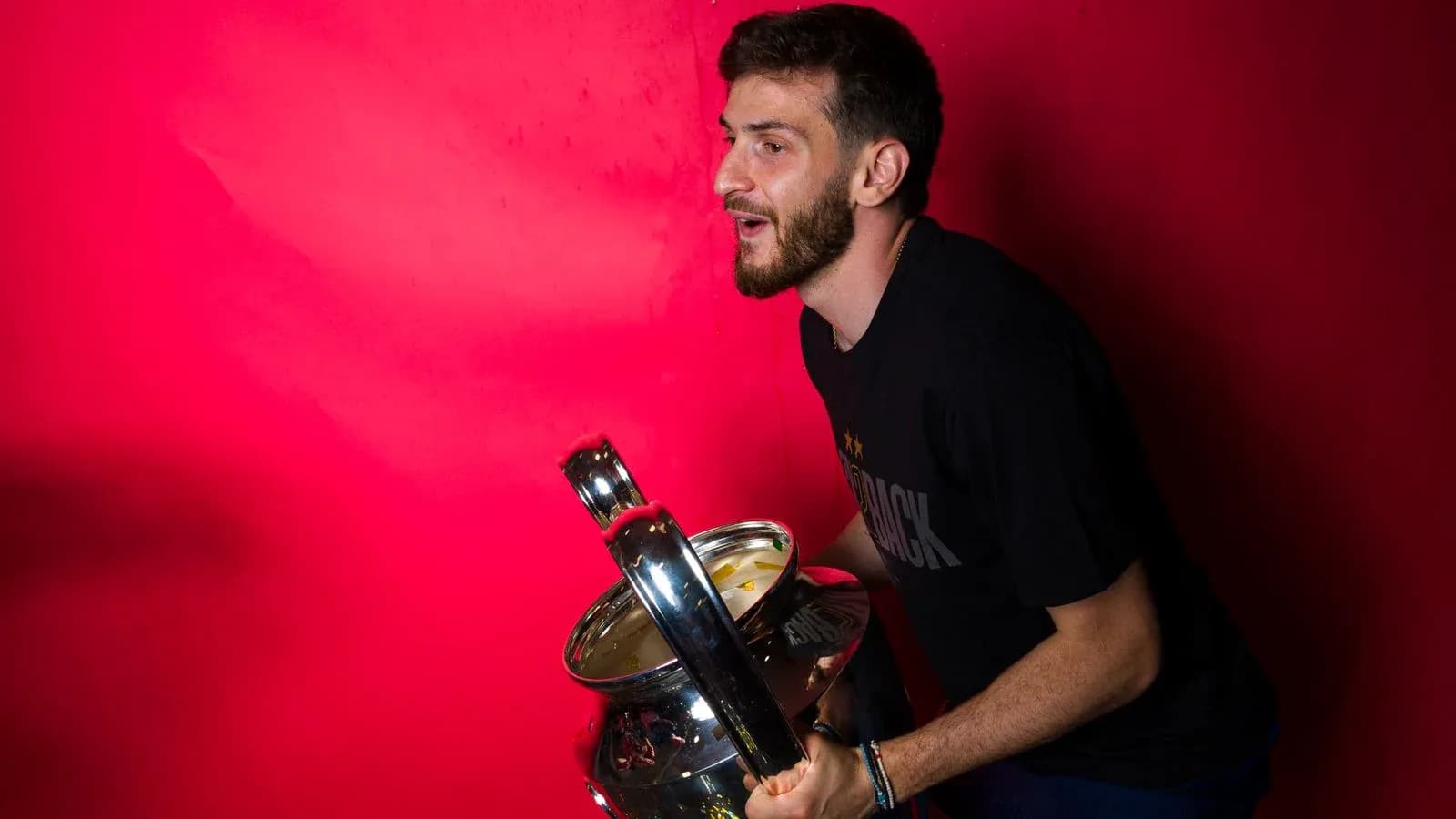
Khvicha Kvaratskhelia: PSG’s Star Ready to Shine Again
The World Cup was billed as the tournament where every star took centre stage. The biggest names did their part, lit up the summer and dominated the headlines. Yet as the club game returns with the UEFA Super Cup in Salzburg, the stage tilts towards a different leading man. This is Khvicha Kvaratskhelia’s chance to drag the spotlight back his way.
The 25-year-old arrives as the reigning Champions League player of the season, the driving force behind Paris Saint-Germain’s successful title defence in May. In August, he goes hunting a threepeat, not just for trophies but for recognition. A reminder that the best player in Europe might not have been at the World Cup at all.
PSG’s recent era has had no shortage of heroes. Marquinhos has hoisted the Champions League trophy twice. Desire Doue and Vitinha walked away with man-of-the-match awards in Munich and Budapest. Ousmane Dembele collected the Ballon d'Or after spearheading that first historic European triumph.
Yet the real shift began when Kvaratskhelia walked through the door.
Signed from Napoli in January last year, he changed PSG almost overnight. Before his arrival, their European campaigns felt strangely flat, short of edge and identity. The talent was there. The spark was not.
Kvaratskhelia supplied it. He turned PSG into a snarling, relentless pressing unit. His all-action style did more than tick Luis Enrique’s tactical boxes. It dragged the standards up around him, forcing the rest of the forward line to match his intensity, his work without the ball, his refusal to coast through games.
Aston Villa, PSG’s opponents in this season’s Super Cup, do not need a scouting report to know what is coming. They have felt it. In the first leg of their 2025 Champions League quarter-final, it was Kvaratskhelia’s dancing feet that shredded Axel Disasi, a tormenting display in what proved to be PSG’s sternest test of that knockout run.
Last season he went up another level when it mattered most. From the play-off round onwards, no player scored more goals in the competition. He also finished with the most Champions League assists from open play. Not stat-padding in group strolls. Decisive actions when the stakes were highest.
The body of work is already imposing. Before Paris, he had already rewritten history in Naples, inspiring Napoli to the title and ending a wait so long it had become wrapped in mythology. The narrative said only Diego Maradona could do that. Kvaratskhelia tore that myth apart, and the “Kvaradona” nickname stuck for a reason.
Part of the fascination with the Georgian winger is how singular he feels. He is an outlier, a one-off. In a sport increasingly built on systems and templates, there is nobody quite like him – not in how he plays, not in how he emerged.
Many of his PSG team-mates are products of a well-oiled machine. French football’s academy conveyor belt churns out polished prospects, honed by years inside elite structures. England followed a similar path, overhauling academies, feeding youngsters into a Premier League that demands and refines excellence. The pipeline explains a lot of the modern stars.
Kvaratskhelia came from a different world.
Leonid Slutsky, his coach at Rubin Kazan, captured it neatly back in 2023. “Nobody knew about him before he came to Italy and that is understandable,” he said, before delivering the line that still echoes around Naples: “I congratulate Napoli because they won the lottery.”
Slutsky spoke of “abnormal thinking” on the pitch, a player who instinctively chooses the option others do not even see. Xisco Munoz, who both played and coached at Kvaratskhelia’s former club Dinamo Tbilisi, links that to his roots.
“In Spain, we stop and pass, maybe learning on a training ground or at school,” he told Sky Sports. “In Georgia, it is street talent. In Georgia, they play their football on the street. They have to fight and have the contact. It is difficult to teach this in school.”
That street edge sits alongside a relentless professionalism. David Webb, who worked with Kvaratskhelia in the Georgian national setup, recalls a player who simply would not leave the training pitch. “He is very process-driven. It is not something that he does for effect. He has done it since day one.” The tricks, the feints, the dribbles – they are not showboating. They are the product of obsession.
All of that throws his absence from the World Cup into a sharper light. Georgia’s failure to qualify cut him out of the game’s biggest shop window. For Kvaratskhelia, it felt like both curse and blessing. He had dragged his country to Euro 2024 and then carried a heavy load at the Club World Cup the previous year. This summer was his first real chance to breathe in years.
Rest might prolong his prime. It might also cost him votes.
The Ballon d'Or has its own logic, and World Cup summers rarely forgive those watching from home. Kevin Keegan did manage to win it in a World Cup year when England stayed away, but that was a different era, when only European players were eligible and Argentina were newly crowned champions.
Now, Kvaratskhelia faces a crowded field. World Cup-winning Spaniards, armed with medals and narrative. Kylian Mbappe and Harry Kane, piling up goals for club and country with numbing regularity. The case for each is strong.
Yet the Super Cup in Salzburg offers something tangible: a live platform, a showpiece, a chance to grab the conversation back. One game, under the lights, against Premier League opposition who already bear the scars of facing him.
PSG remain the benchmark in Europe, and Kvaratskhelia remains their sharpest edge. His individual brilliance does not just decorate their football; it drives it, shapes it, defines how they suffocate opponents and break games open.
Khvicha Kvaratskhelia, last season’s outstanding player in the Champions League and the warrior winger at the heart of Paris Saint-Germain’s dominance, steps into another final with the same intent.
He is not finished. He is coming for the stage again.