Jürgen Klopp and Marc Kosicke: Reshaping Germany's Football Identity
Jürgen Klopp did not walk into the DFB alone. He brought the man who has quietly shaped some of modern football’s most powerful identities.
On Friday, at his official unveiling, Klopp confirmed that Marc Kosicke will become “my assistant coach for strategy, development and innovation” with the German national team. The title is bulky. The meaning is not. Klopp wants to rebuild the DFB from the ground up, and he wants his long‑time confidant at the heart of it.
“It is not enough for only a head coach to come in,” Klopp said. “We have to change a great many things. We want to turn over every stone.”
For Kosicke, that means stepping out of one world and fully into another. To make the move possible, he has already resigned as managing director of his company Projekt Five and ended his advisory work for other coaches. The man long regarded as Klopp’s right‑hand strategist will now devote his energy to one project: reshaping Germany’s football identity alongside the most influential coach the country has produced in a generation.
They know each other inside out. Kosicke has been at Klopp’s side for around two decades, helping guide a career that has run from Mainz to Borussia Dortmund, Liverpool and now the DFB. Within the industry he is often labelled the “inventor” of the modern coach adviser, a role that blends branding, strategy and long‑term planning. Until 2021, he also worked with Julian Nagelsmann, another coach obsessed with detail and structure.
Yet Kosicke’s influence stretches beyond individual benches. It is woven into the fabric of one of Germany’s biggest clubs.
The Werder fan who gave Bayern their battle cry
For all his ties to Klopp and Dortmund, Kosicke is a Bremen native and an avowed Werder supporter. That makes the next part of his story all the more remarkable: he played a central role in turning Bayern Munich’s “Mia san mia” mentality into the club’s official slogan.
The story sounds almost too neat. It began on a plane.
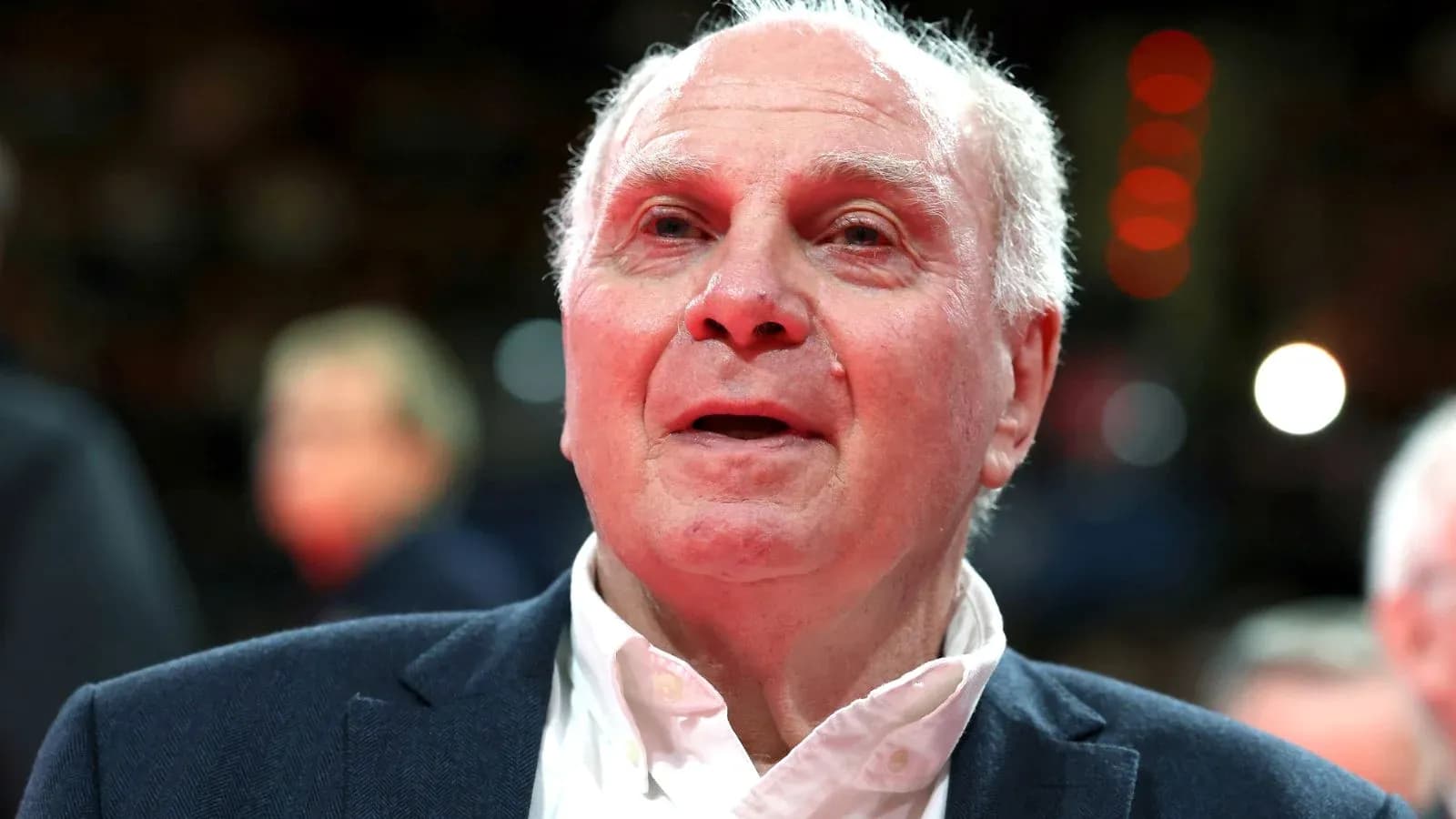
In 2008, Kosicke was flying to a FIFA event in Switzerland with his then business partner Oliver Bierhoff. By chance, Uli Hoeneß was on the same flight. The Bayern strongman was frustrated, complaining about his own players and lamenting that nobody really knew what Bayern Munich stood for.
Kosicke pressed him. What did he think Bayern stood for? Hoeneß, he recalled, could not give a clear answer.
That was the opening.
Kosicke told him about his years with Nike and Adidas, about “company bibles” that spell out values and messages for every employee. Hoeneß listened, then asked a simple question: could he create something like that for Bayern?
“With 100 per cent cluelessness but a lot of self-confidence, I agreed,” Kosicke later said with a laugh in a 2023 interview with SPOX and GOAL, part of a multimedia feature on the history of “Mia san mia” that went on to win the Grand Online Prize 2023 from the Association of German Sports Journalists.
Hoeneß had one condition. He wanted Kosicke himself, not, as he put it, “some Roland Berger tie-wearing troupe.”
So Kosicke built a working group that reflected the club from top to bottom. People from the fan shop and marketing. The kit man. The youth coordinator. Media chief Stefan Mennerich. Chief scout Wolfgang Dremmler. For four weeks they sat together and tried to distil what Bayern really was.
The slogan, though, was already sitting in Kosicke’s head.
From the moment he spoke to Hoeneß on the plane, “Mia san mia” felt fixed to him. He did not reveal it immediately, wary of using his best line too early. Instead, he steered the group towards defining the values that would underpin it.
They ended up with 16 “commandments”. Simple, sharp statements. “We are a family and stand by one another.” “We do not communicate about one another in public.” Codes of behaviour that would live behind the three words on the front.
For the presentation to the Bayern board, Kosicke went for theatre. He had prototype copies of the new “bible” bound in real lederhosen leather. When he unveiled the title, the reaction was instant. Laughter, approval, a sense that the club’s self‑image had finally been caught in one phrase.
Hoeneß, though, spotted a problem. “Great slogan, but this MIR is a space station,” he joked. On the cover, it did not say “Mia san mia” but “Mir san mir”. A Bremen native, Kosicke admitted he was not fully fluent in Bavarian. That was the last tweak. The slogan was set.
His work did not stop at the book. Kosicke also developed a roadmap for how Bayern should embed those values inside the club. With that, his task was done.
When the invoice went out, he made one more decision: he assigned his rights to the slogan to Bayern and promised them he would not parade himself as the grand inventor of “Mia san mia”. “Do not worry,” he assured them, “as someone from Bremen and adviser to Jürgen Klopp, I will not present myself as the great inventor of Mia san mia.”
The plan was clear. Every new arrival at Bayern, from an office employee to a youth player from Fürstenfeldbruck to a star signing like Sadio Mané, would receive this bible as part of their onboarding. The message was blunt: this is who we are, these are the values we live by.
That is the man now stepping into the DFB with Klopp. A Werder fan who helped bottle Bayern’s identity. A behind‑the‑scenes architect who turned three dialect words into a global brand.
If he and Klopp really do start turning over every stone, the question for German football is not whether something will change, but how far they are prepared to let that change go.