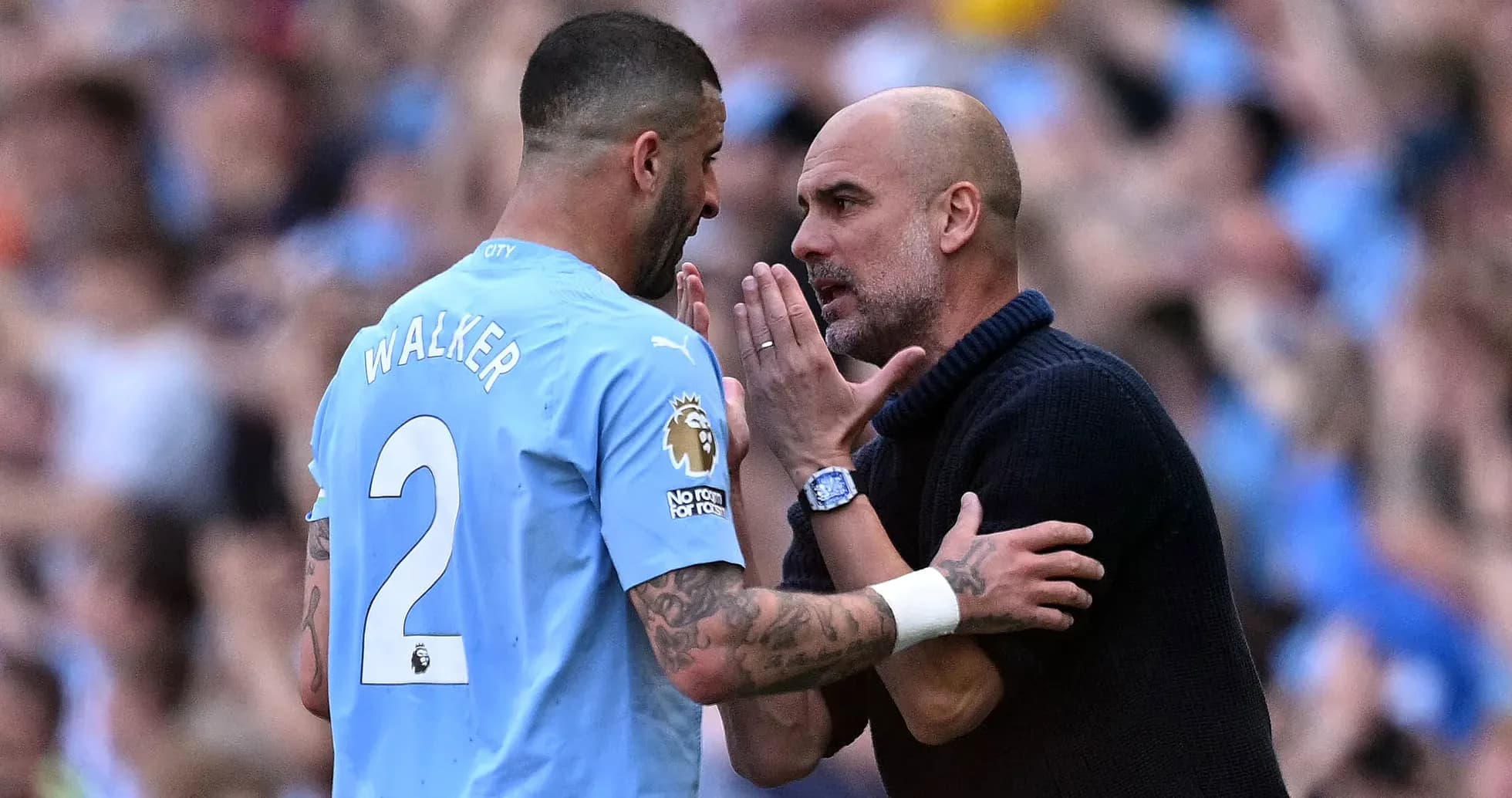
Kyle Walker's Confrontation with Guardiola: A Turning Point for Manchester City
The walls of the Anfield dressing room had barely stopped shaking when Manchester City’s season reached its most volatile moment.
A 2-0 defeat to Liverpool in December 2024 left the champions shell-shocked. Seven games without a win. Six of them defeats. A team that had just made history with four straight Premier League titles suddenly looked fragile, human, drained.
Inside that storm, Kyle Walker snapped.
The new Amazon Prime Video documentary A Beautiful Obsession captures the flashpoint in raw, uncomfortable detail. Walker, one of City’s captains and a senior voice in the squad, turned his anger directly on Pep Guardiola in front of the entire dressing room.
"You keep saying my name, every meeting," he raged. "Every f***ing meeting it’s my name."
This wasn’t a quiet word in a corridor. It was a full-frontal confrontation at the height of a crisis, with cameras rolling and a title-winning dynasty wobbling.
City’s run had collapsed just as Guardiola had chosen to double down on his commitment to the club, signing a new contract and publicly tying his future to this group of players. That context only tightened the emotional screw. The manager was demanding more. One of his captains felt he was being singled out.
Guardiola tried to explain. Walker’s name came up, he said, because he wore the armband, because he was a captain and therefore a reference point in meetings. The intention, in his mind, was leadership, not blame.
The explanation did not land.
"You didn’t want me to be a captain," Walker shot back, questioning Guardiola’s sincerity and the trust between them. He argued he was being turned into a symbol of wider failings, punished for errors that weren’t solely his.
"I’ve reacted to someone else, I’ve lost the ball, you somehow bring my name into it," he said, accusing his manager of using him as the recurring example for tactical breakdowns on the pitch.
The room, already heavy with frustration, shifted again.
What happened next cut through the usual image of Guardiola as a hyper-controlled, relentlessly analytical figure. The documentary shows him visibly emotional, voice cracking, eyes welling up as he addressed the squad. The tension had moved from tactics and team shape to something more personal: trust, loyalty, belief.
"If I am a problem, you have to tell me," a tearful Guardiola told his players. "I won’t stay here for the money or just for the fact of staying. I extended the contract because I want to be with you, I want to fight in that position."
This was not a manager protecting his ego. It was a man asking if he was still the right leader for a group he had driven to historic heights.
"I don’t want you to feel like I’m leaving and running away from you. I don’t want to have the feeling that the pieces fall down. And I feel 'No, I want to help you.'
He turned first to the captains, then to the rest of the dressing room, inviting them to speak up if they believed he had become part of the problem rather than the solution.
"But if you feel, captains first and then the other ones, that there is a problem? Tell me. It’s not going to change the love I have for all of you. Not one second. But I want to fight. That’s all. I’m sorry."
In those few minutes, the documentary strips away the polished surface of a superclub and shows something far more fragile: a dynasty under strain, a captain feeling scapegoated, and a manager wondering aloud if his voice still carries the same weight.
For a team that has set the standard for dominance, the real question now is whether moments like this become the breaking point — or the spark for the next evolution of Guardiola’s City.