Leeds United's Season Opening Statement with Stach's Free-Kick
Anton Stach didn’t just score a winner. He ripped up the script.
As his free-kick screamed into the top corner in the dying minutes at the City Ground, the Leeds United midfielder peeled away towards the away end, swallowed by a wave of noise and disbelief. A point had become three. An opening-day test had turned into a statement.
Twelve months ago, this ground had told a very different story.
From bruising defeat to measured control
Last season’s trip to Nottingham felt like a warning sign. Lukas Nmecha put Leeds in front early, only for Nottingham Forest to hit back with three goals. It was Sean Dyche’s first win as Forest manager, a result that fed the narrative that Leeds might be heading straight back down and that Forest, under yet another new boss, were ready to surge.
That revival never truly arrived. Forest burned through managers. Leeds, slowly, began to harden.
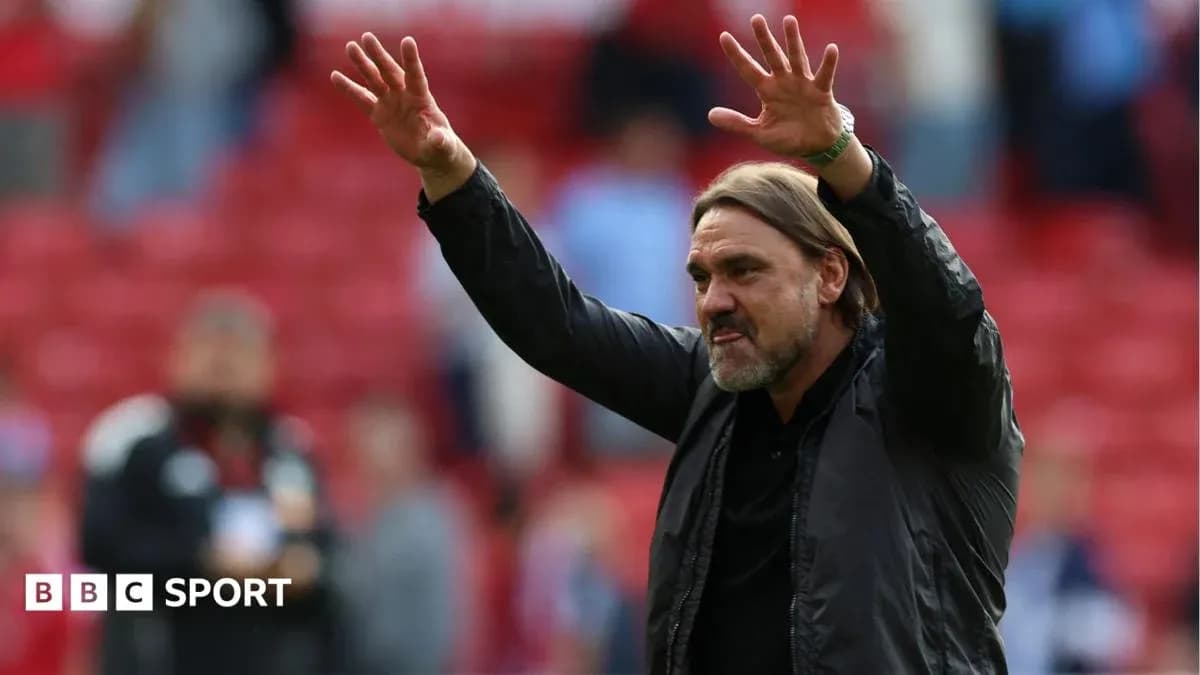
Nine months on, the momentum is unmistakably white. Daniel Farke’s side have taken 17 points from their past eight Premier League games, a run bettered only by Arsenal’s 18 since the start of April. This isn’t a team clinging on anymore. It’s one starting to impose itself.
"I expected a difficult game away at Forest," Farke told BBC Match of the Day after the win. "I'm very happy to come away with a cleansheet and compliments to the players."
The contrast with that chaotic early spell in the top flight is stark. Leeds finished 14th last season, eight points clear of the drop, but that security was earned the hard way. They stumbled through the opening third of the campaign, winning just three of their first 13 and losing eight. Pressure built around Farke and his methods.
Then came the pivot.
The tactical turn that changed everything
On 29 November at Etihad Stadium, in a 3-2 defeat by Manchester City, Farke abandoned his 4-3-3 and moved to a 3-5-2. The result that night didn’t change, but the trajectory of the season did. From that point on, Leeds only lost five league games.
The team stopped being so easy to play through. They became more compact, more awkward, more willing to dictate rather than react.
"There were times in the first half of last year where we allowed teams to run over us a bit," captain Ethan Ampadu told BBC Final Score. "We wanted to get a bit more solid and put our stamp on the game. We want the ball, we want to be attacking and creative."
That mindset was on show at the City Ground. Leeds, a side that won only two away league games in the entire 2025-26 season, looked more mature, more ruthless.
"Away games in Premier League are always difficult," Farke said. "Sometimes the second year is more difficult. Last season, we picked up many points with draws. On the road, we want to be competitive and be more effective."
They were both.
Ambition backed – and delivered
The shift hasn’t just been tactical. It has been political inside the club as well.
After securing survival, Farke did not play the grateful underdog. He publicly warned that he might walk away if Leeds failed to match his ambition in the summer, insisting he was "not the right choice" if the club wanted to stand still.
The board listened. Then they spent.
Around £80m went into new signings, and three of them walked straight into the starting XI on opening day. The early evidence suggests the money was not wasted.
James Trafford, signed from Manchester City for £45m – a record fee for a British goalkeeper – played with the authority of a man unfazed by the price tag. He made decisive saves, calmed his defence and looked like he belonged at this level.
In front of him, Bosnia-Herzegovina defender Tarik Muharemovic delivered exactly what Farke demands from his back line: aggression, clarity, and presence in both boxes. He defended stoutly and almost capped his debut with a goal, rising to meet a set-piece and forcing Matz Sels into action with a towering header.
Further forward, Harry Wilson, a free transfer after 10 goals and seven assists for Fulham last season, thought he had marked his debut with a goal, only for the offside flag to cut short the celebration. The finish, though, was a reminder of the threat he brings.
"From the very first minute they walked into the building, they have shown their quality," Ampadu said. "They have shown why they have been brought in to try and help us get to the next level. They've shown that hunger and drive to take Leeds to a better place so that has been very good."
Farke agreed. "I am very happy because they have big boots to fill," he said. "Trafford is a good player but he hasn't played that many Premier League games, Tarik too. So they both shined and showed why we agreed to sign them, but the whole group was excellent today. Wilson too was excellent. The vibe and mood is good around the place."
That mood is anchored by continuity as much as change. Farke is now the third-longest-serving manager in the division, behind only Mikel Arteta at Arsenal and Unai Emery at Aston Villa. In a league obsessed with instant fixes, that stability is starting to show on the pitch.
From survival talk to something more
For all the progress, Leeds are not pretending they’ve outgrown the basics. Survival remains the first box to tick.
"We know our targets and goals," Ampadu said. "We want to be a Premier League club next season. We want to achieve that target and then get to a better place. Once that can be achieved, we think of everything else."
The difference now is tone. This is no longer a club talking about survival with anxiety. It is talking about it as a minimum requirement.
With Stach producing decisive moments, the new signings bedding in quickly and a system that suits the squad, Leeds arrive in their second season back in the Premier League with something they haven’t truly had for a while: a sense that this might only be the beginning.