Life After Pep: Manchester City's Troubling Start
There are always caveats with the Community Shield. It’s a glorified friendly, a marker rather than a verdict, and nobody has paraded that trophy and then the Premier League since 2018. But context can only excuse so much. For Enzo Maresca, this was a brutal first glimpse of life in Pep Guardiola’s old chair.
Yes, it was against the champions. Yes, Arsenal’s pre-season schedule has been gentler, their air miles fewer. Yes, Manchester City’s midfield will look different soon, with Rodri on the brink of a move to Barcelona and a clearer structure expected once the real stuff begins.
Even with all of that on the table, a 3-0 defeat that laid bare such basic flaws felt alarming.
Life after Pep starts with a jolt
Following Guardiola is never just about results. It is about replacing a worldview. His aura looms over any successor, but it is the intricacy of his football that makes the handover so treacherous. Maresca knows that world – he was Guardiola’s assistant in 2022-23 – and his own ideas are clearly Guardiola-inflected.
They are not a carbon copy, though. Guardiola never stopped tweaking, never stopped mutating his system. Any deviation from that, even by a disciple, creates friction.
On Sunday, that friction looked more like fracture. City defended with a looseness that would have horrified their former manager. Arsenal did not need to be extraordinary to expose them, but they were sharp, slick and ruthless enough to make it count.
Arsenal’s passing carried a zip that was missing too often last season. Any suspicion that a 22-year wait for the title might have dulled their hunger can be parked for now. Tougher days will come; this was not a definitive test of their credentials. It was, however, a pretty damning inspection of City’s.
They were timid going forward. They were chaotic at the back. At times, they were barely recognisable as the club that has set the standard for the past decade.
A soft second that told a hard truth
The second goal cut deepest. Not because of its brilliance, but because of its simplicity.
Martin Ødegaard was allowed to pause, look up, and measure his cross. No pressure on the ball, no sense of urgency. Christos Tzolis drifted off the back of Abdukodir Khusanov almost unnoticed. Kai Havertz peeled away from Rúben Dias with minimal resistance.
None of it should happen at this level, not with such ease. Khusanov could point out that right-back is not his natural home, but it is not alien territory either. Any defender at this level knows a wide player will try to slip off the shoulder. To lose him that cheaply, in that area, was baffling.
Yet it fitted the wider pattern. City looked a half-step slow in thought and body, second best to loose balls, second best in duels, second best in concentration. Arsenal played as if the season had already started. City played as if it was still July.
If this is a title race – and that remains the expectation – how far ahead could Arsenal be by the time Maresca’s City finally find their rhythm, if they find it at all?
Structural cracks on the flank
The problems on that right side ran deeper than one lapse.
Antoine Semenyo barely influenced the contest. Elliot Anderson, operating on the right of the midfield two, never really stemmed the flow of Riccardo Calafiori’s surges. The Italian left-back, nominally starting from deep, scored the first goal and powered into space again for the third. He roamed, he combined, he hurt City repeatedly.
An adventurous left-back should not be allowed to dominate a flank almost single-handedly, even one with licence to drift infield. City’s structure simply did not cope. The cover was late, the distances wrong, the chain reactions slow. For a side that once treated such details as non-negotiable, that is a jarring shift.
Midfield vacuum and transfer missteps
The heart of the issue sits in midfield. Or rather, in the gap where City’s midfield authority used to be.
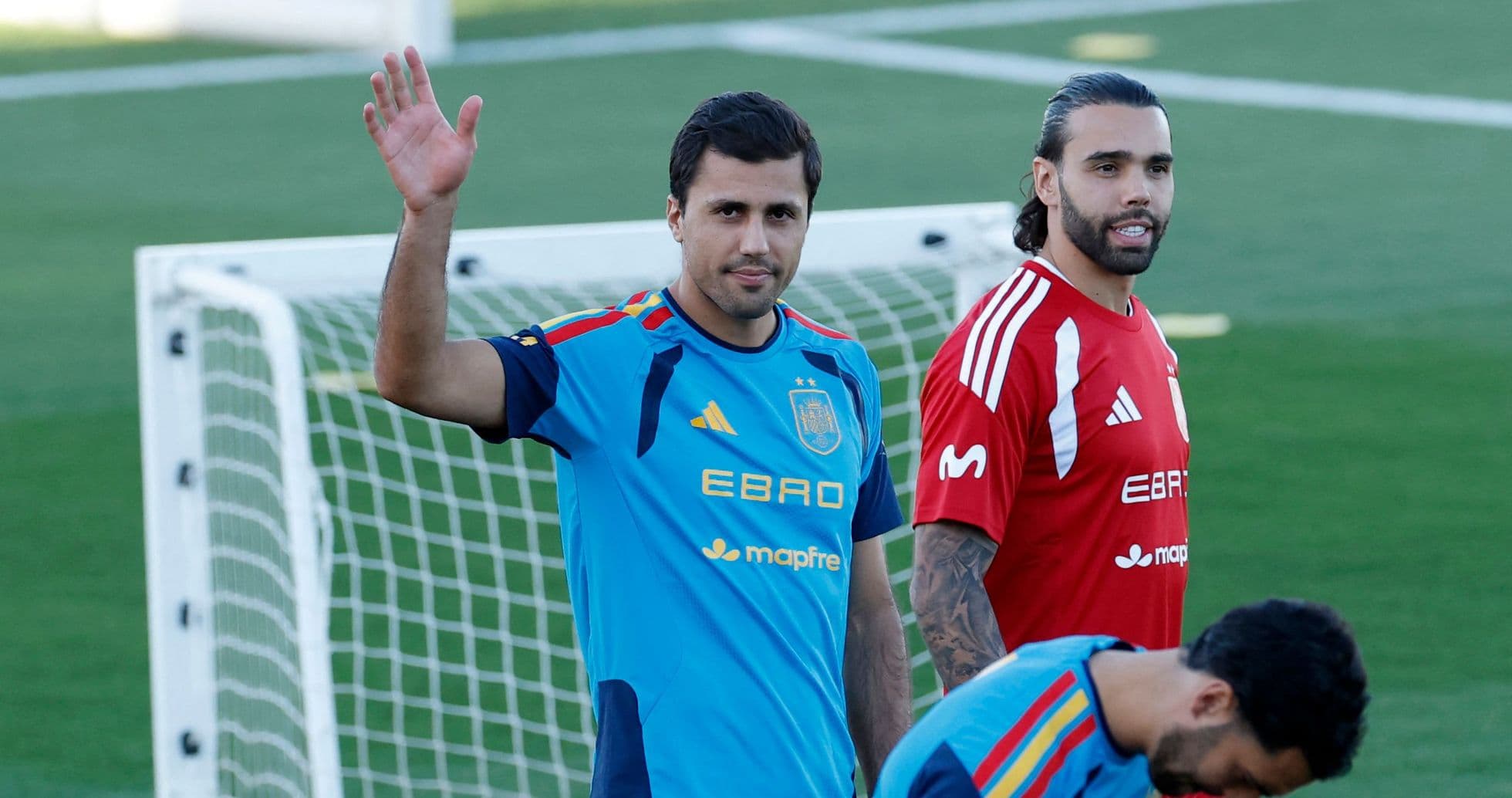
Rodri watched on as an unused substitute while negotiations over his likely move to Barcelona continued, with City accepting a bid on Sunday night. Losing him is not just about losing a world-class pivot. It is about losing the organiser, the metronome, the player who knits chaos into control.
Enzo Fernández, who worked under Maresca at Chelsea, had been earmarked as the natural replacement. Chelsea, though, set a hard 5pm Friday deadline for offers. City never put one in. The window did not slam shut on their entire summer, but it did close on that particular solution.
Mateo Kovacic, who spent much of last season filling in for Rodri, turns 33 this campaign. He cannot be the long-term answer. Strip out Bernardo Silva as well and the shortfall in central areas becomes stark. The balance that once defined City has gone missing.
Look across the squad and the sense of erosion grows. Dias and Marc Guéhi are the only defenders over 25. Experience at the back is thin. Higher up the pitch, attacking midfielders are plentiful, but Omar Marmoush has yet to truly convince as cover for Erling Haaland.
The £200m burst of spending in January 2025 briefly steadied things, but the return on that outlay now looks underwhelming. Marmoush, Khusanov, Vitor Reis, Nico González – useful players, perhaps, but not untouchable. City would not be devastated to lose any of them.
Recruitment, once laser-guided, has started to wobble. Tijjani Reijnders, signed for £50m last summer, is already on his way out. Rayan Aït-Nouri was a curious signing at the time and the past year has done nothing to challenge that verdict.
A squad in transition – or in decline?
Maresca must have glanced at the opposite dugout and winced. Mikel Arteta can now pick and mix from an outrageous collection of midfielders, each offering a different angle, a different tempo, a different threat. Arsenal look layered, deep, and ready to absorb injuries and suspensions without losing identity.
City, by contrast, resemble a squad caught between eras. Generously, you can call it transition. Less kindly, it looks like the early stages of decline.
For two years or so, there was a sense of Guardiola edging past his absolute peak, the machine creaking at the edges. In hindsight, perhaps it was only his genius that kept a fading squad on the summit.
Strip that genius away and the flaws are suddenly exposed in daylight.
The calendar says it is early. The competition was “only” the Community Shield. The transfer window still offers scope for late repairs. All of that is true.
But the evidence of Sunday, even through all those caveats, is hard to ignore. This is a brutal moment to inherit Guardiola’s empire. In the best of circumstances, following a legend is a near-impossible job.
Right now, the circumstances at Manchester City look anything but the best.