Liverpool’s American Summer: Turbulence and Ambition
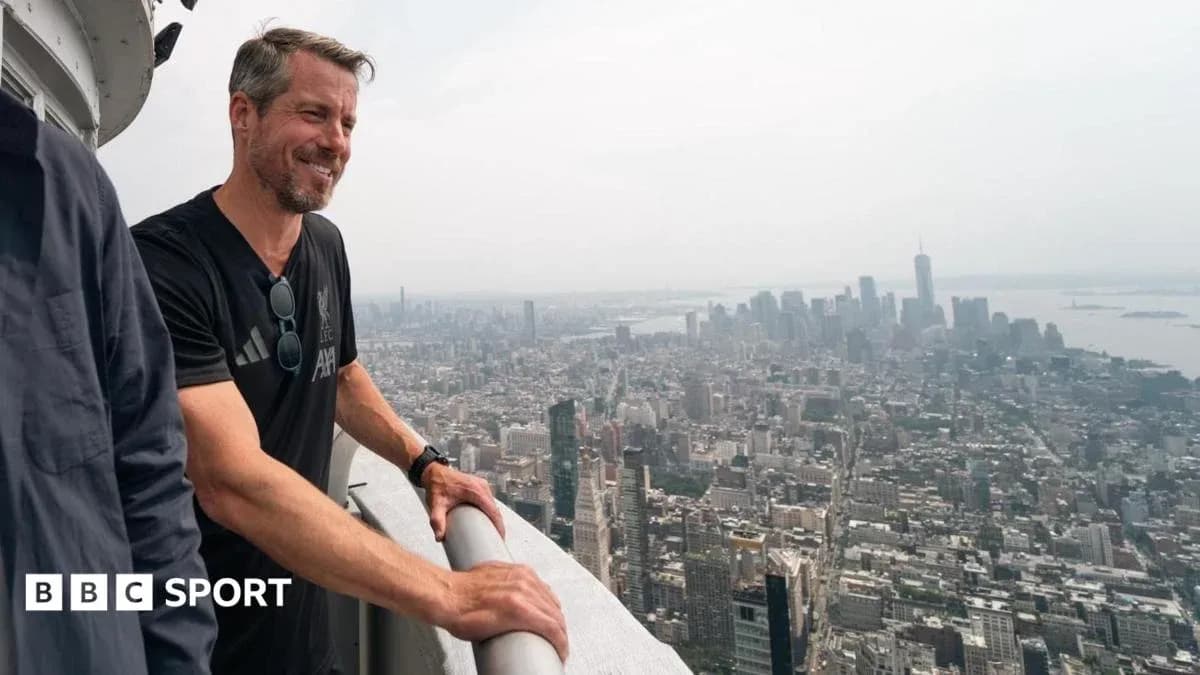
The Liverpool crest is everywhere in New York. On subway platforms, in bars, on shirts strolling past Yankee Stadium. When a club claims more than 26 million supporters in the United States, this kind of July takeover starts to make sense.
Billy Hogan, Liverpool’s chief executive and the public face of Fenway Sports Group, stands in the middle of it all and calls the last 12 months “a super difficult year”. He doesn’t need to spell out why. On the pitch, a record outlay failed to deliver. Off it, the club has lurched from one major decision to the next.
Now, in the city of dreams, Liverpool are trying to sell a new one.
A $4.5bn valuation and fresh money on the table
Behind the glossy pre-season tour and Andoni Iraola’s first steps in the dugout, the real story sits in boardrooms and hotel suites. FSG have confirmed talks with a consortium led by British-Indian businessman Amit Bhatia over a strategic minority investment. The Financial Times values any potential deal at more than £4.5bn.
Hogan chooses his words carefully, but the direction is clear.
“John Henry and FSG have always said that if there was an interest in an investment that would help the football club, then they would consider it,” he says. That line has been in circulation for years; now it is being tested.
“At this point, I wouldn’t say anything different to the statement that a consortium led, managed and represented by Amit Bhatia has come forward and expressed an interest in a minority investment.”
The message he wants out there is equally blunt: this is not an exit strategy. Hogan, part of the project since FSG bought Liverpool for £300m in 2010, stresses that the Boston-based group – who also own the Boston Red Sox – are not edging towards the door.
There is, he insists, still too much to go after.
“This is the biggest and most popular sport in the world and we’re one of the biggest clubs in the biggest league in the biggest sport in the world,” he says. “We’ve definitely not peaked.”
The numbers back him up. Liverpool sat fifth in the latest Deloitte Football Money League, with Premier League‑leading revenues of £702m. FSG see a league with momentum, a club with global reach and a valuation that has ballooned from the brink of bankruptcy to multi‑billion territory in 14 years.
The plan, as ever, is to turn that scale into silverware.
A record spend, a poor season and a coach gone
For all the talk of revenue charts and commercial growth, last season bites. Liverpool spent a record £450m in the summer window, then stumbled. The campaign ended with Arne Slot sacked and a dressing room stripped of senior pillars.
- Mohamed Salah, Andy Robertson, Ibrahima Konaté – all gone on free transfers.
- A spine, and an era, ripped out with no transfer fees to soften the blow.
In their place comes Iraola, the Basque coach tasked with stitching together a new Liverpool from the fragments of the old one. His first outing on American soil, against Wrexham at Yankee Stadium, feels symbolic: a famous baseball cathedral hosting a club trying to reinvent itself under owners who made their name in Major League Baseball.
Hogan doesn’t flinch at the word that now hangs over the club: instability.
“Transition and change is inevitable in football,” he says. “In our case, with a new coach coming in, there’s real excitement around Andoni’s mindset and philosophy that supporters will really enjoy.”
Excitement is one thing. Patience is another. Hogan knows the rebuild will not be instant.
“That will take time,” he concedes, before leaning back on a familiar theme. “We are in a very healthy place as a football club – the leadership from ownership is in a very steady place and we’re looking forward to the next season and the season ahead.”
Edwards out, Hughes linked away – but the model stays
The upheaval has not stopped at the touchline. Michael Edwards has stepped down as FSG’s CEO of football, his role reshaped by the abandonment of multi‑club ownership plans. Sporting director Richard Hughes, the man charged with navigating this critical window, is already being linked with Al Hilal in Saudi Arabia.
The churn would rattle most fanbases. Hogan’s counter is that Liverpool’s framework is built to withstand it.
He circles back to the central FSG doctrine: spend within your means, invest when it makes sense, and always with trophies in mind.
“Over the course of FSG’s stewardship, the investment has always been focused on doing what’s best to put us in a place to win,” he says. Sometimes that has meant heavy outlays. Sometimes, emphatically, it has not.
This summer tells its own story. After last year’s £450m blitz, Liverpool have added only one player: Federico Chiesa, for £12.5m. No scattergun spree, no late scramble to soothe the mood.
“Sometimes that means significant expense and other times it doesn’t like in the summer of 2024 when there was only one addition,” Hogan says. The final call, he adds, rests with Mike Gordon, the club’s de facto managing owner.
To supporters, it will feel like a gamble. To FSG, it is a calculated bet on coaching, structure and a squad they believe can be refined rather than rebuilt.
Women’s team brought back into focus
Not every area of the club has moved at the same pace. Liverpool’s women’s side, 11th in last season’s WSL and without a top-flight title since 2014, has long lagged behind the men’s operation.
Here, Hogan is refreshingly candid.
“To be self-critical, that is probably an area that we maybe took our eye off the ball several years ago but we’ve changed that,” he admits.
AXA Melwood now houses one of the best training environments in the women’s game, according to Hogan, and the club is increasing investment in the squad. The philosophy, he says, mirrors the men’s: run sustainably, grow smartly, compete hard.
“There’s tremendous growth in the women’s game and a huge opportunity going forward to really drive that,” he adds.
For a club that markets itself on “This Means More”, catching up in the women’s game is not just a business opportunity; it is a credibility test.
From the brink to a billion-pound era
It is easy to forget where this all started. In 2010, Liverpool were not talking about £4.5bn valuations or topping revenue tables. They were staring at administration.
FSG’s tenure has not been flawless – far from it. The European Super League fiasco, ticket price rows, and missteps in fan engagement have all scarred the relationship at times. Earlier this year, Hogan wrote directly to supporters after protests forced the club to scale back planned ticket price rises for the coming seasons.
Yet the physical evidence of change is hard to ignore. Anfield has been transformed, two of its four stands redeveloped in the past decade. The old ground has grown without losing its tight grip on the surrounding streets.
“Back when FSG acquired LFC, a number of similarities were drawn with Boston Red Sox and Liverpool and one of them was this idea of an iconic venue that truly sits in the community,” Hogan says.
Now, the focus stretches beyond bricks and seats. Liverpool are looking at the footprint around Anfield – transport, infrastructure, non‑matchday activity – to turn the stadium into a seven‑day engine rather than a 19‑day stage.
“We’re proud of how we’ve expanded while keeping the soul but also modernising it in the way that’s befitting of the football club,” Hogan says.
If there is one thing he allows himself to savour, it is the shift from crisis to stability.
“If you go back to that point in 2010, the club was literally on the brink of bankruptcy. Now it has the right foundations underneath it,” he says. The things that rarely make headlines – debt structure, training facilities, long-term stadium certainty – are, in his view, the pillars that keep Liverpool competitive.
Trophies, memories and the next chapter
For all the spreadsheets and valuations, Liverpool still live and die by what happens between white lines. Hogan knows it.
“Ultimately, it’s about winning trophies and I wish we could win more but we’ve been fortunate to win a few,” he says.
He talks about fan parks at Champions League finals, the ones won and the ones lost. The colour, the songs, the sense that a club and its people are moving together, even when the result goes the wrong way.
“The joy and the memories and frankly the fun of it is what I look back from time to time,” he says. “It’s something that everyone associated with Liverpool should be proud of because it happens together and we all want this club to be the best in the world.”
That is the bar they continue to set for themselves. A club once on the brink now flirts with a valuation north of £4.5bn. A fanbase that stretches from Anfield Road to the Bronx watches to see if new money will arrive, if a new coach can steady the team, if a thin summer window proves bold or reckless.
After a torrid year, Liverpool have chosen New York to start again. The question now is simple: in a city built on reinvention, can they turn financial might and global reach back into the one currency that matters most – major trophies?