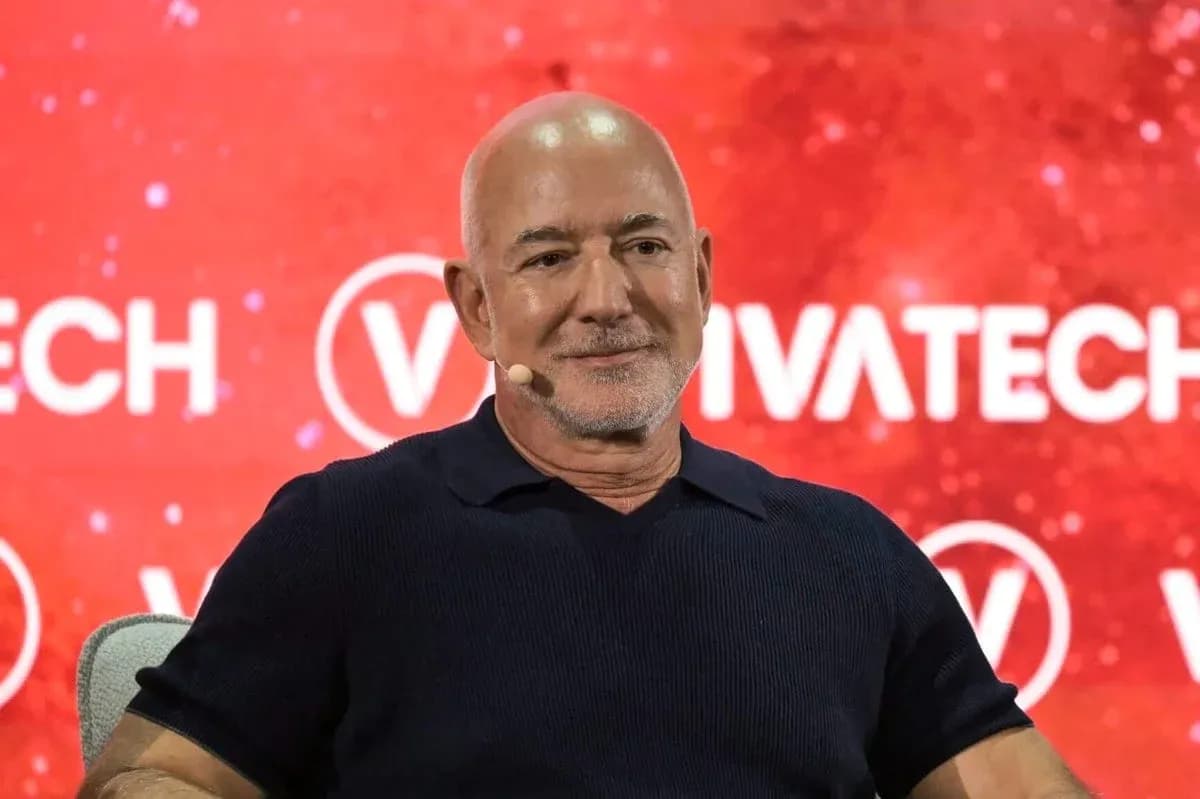
Liverpool Secures New Investment from Jeff Bezos and Amit Bhatia
Liverpool have a new power in the boardroom — and one of the world’s richest men is now tied to Anfield.
Fenway Sports Group (FSG) have sold a significant minority stake in Liverpool to a heavyweight consortium fronted by former Queens Park Rangers co-owner Amit Bhatia, with Jeff Bezos among the investors. It is Bezos’ first step into sports ownership, a move that drags the world’s third-richest man directly into the Premier League’s financial arms race.
The deal, announced on Friday, has been months in the making after talks first surfaced in July. The exact size of the stake has not been disclosed, but sources familiar with the agreement say it sits in the region of 30 per cent to one-third of the club. Those sources were not authorised to speak publicly due to the confidential nature of the process.
Bezos arrives, but Bhatia leads
Bezos’ involvement comes through the K5 Sports fund, but this is not his show to run. The driving force is Bhatia, who has assembled and led the 1892 Holdings consortium. Also on board is the family office of Facebook co-founder Eduardo Saverin and his wife, Elaine.
Bhatia will become Liverpool’s vice chairman and take a seat on the club’s board. He will be joined there by Elaine Saverin and Bryan Baum of K5 Sports. Bezos, despite his profile and wealth, will not sit on the board, according to plans outlined by sources close to the deal.
This is Liverpool’s first external minority investment since Dynasty Equity bought around three per cent of the club for close to $200million in September 2023.
FSG keep the keys. They retain majority ownership and full operational control. The message from Boston is clear: this is not a takeover, and it is not a soft launch towards one. Senior figures insist there will be no change to the club’s leadership structure or day-to-day running.
FSG president Mike Gordon underlined the long-game thinking that has defined their tenure.
“Liverpool has always been built by thinking beyond one season and making decisions with the club’s long-term interests in mind,” he said. “As we considered this opportunity, it became clear that Amit and the consortium shared our long-term philosophy and appreciation for what makes Liverpool special.”
Bhatia, speaking on behalf of 1892 Holdings, called the move “a huge privilege” and stressed the consortium’s belief “deeply in Liverpool and its leadership”.
No transfer war chest – yet
Supporters scanning the announcement for clues about this summer’s transfer budget will be disappointed.
The new money does not mean an immediate injection into the squad. The recruitment strategy for the current window was set long before this deal and will not be rewritten. Liverpool’s self-sustaining model remains intact; this is not the arrival of a benefactor willing to pour billions into transfer fees and wages.
So where does the excitement lie?
In the years ahead. In the scale of the people involved. In the doors they can open.
FSG maintain they were not hunting for a bailout. This is about leverage, reach and long-term value. Bhatia’s network across Asia, and the technology and venture capital backgrounds of figures such as Saverin and Bezos, offer obvious routes to new commercial partnerships and global growth.
FSG will still do the heavy lifting. They call the shots. The precise influence Bhatia will wield is yet to be seen, but the expectation is that he will not overshadow the existing hierarchy. That, in itself, explains why this consortium got through the door when so many others have been turned away.
From a pure business perspective, the move underlines just how lucrative FSG’s time at Anfield has been. Selling around a third of a club they bought in 2010 and still keeping control is the kind of outcome most investors dream of. In Premier League terms, it ranks among the standout deals of the era.
Who are the new players in Liverpool’s boardroom?
Bezos, 62, barely needs an introduction. He founded Amazon from his garage in 1994 after leaving New York investment bank D.E. Shaw, built it into the world’s largest e-commerce company, then stepped down as CEO in 2021. He owns The Washington Post and founded space company Blue Origin. Forbes’ Real Time Net Worth list currently places him as the world’s third-richest person, with an estimated $272.1billion.
Saverin, 44, co-founded Facebook with Mark Zuckerberg after the pair met at Harvard. Born in Brazil, he moved to the United States in 1993 and later relocated to Singapore in 2009, renouncing his U.S. citizenship before Facebook’s IPO. He launched venture fund B Capital with Raj Ganguly in 2015; it now manages more than $12billion in assets.
Bhatia, 46, is a British-Indian businessman with deep roots in finance and industry. A former Morgan Stanley investment banker, he chairs construction firm Breedon Group, runs AyBe Capital Advisors and is a founding partner of property investment firm Summix Capital. His marriage to Vanisha Mittal, daughter of steel magnate Lakshmi Mittal, links him to one of the most powerful industrial families in the world.
Lakshmi Mittal once ranked as high as third on Forbes’ billionaire list and is currently 64th, with an estimated net worth of $33.9billion. Saverin sits just behind him on that list at $33.2billion.
Sporting backgrounds and near-misses
Bhatia is no stranger to English football. His near 19-year association with Queens Park Rangers ended this summer when he stepped down from the board and transferred his shares to majority owner Ruben Gnanalingam. He served as QPR vice-chairman until 2018 and then as chairman until 2023, overseeing turbulent years on and off the pitch.
Saverin has already flirted with Premier League ownership. He was part of the consortium backing former Boston Celtics co-owner Steve Pagliuca’s bid to buy Chelsea in 2022, when Roman Abramovich was forced to sell under pressure from the UK government following Russia’s invasion of Ukraine.
Bezos has long been linked with U.S. sports franchises. He explored potential moves for NFL teams the Washington Commanders and the Seattle Seahawks but never pulled the trigger. Liverpool marks his first actual step into the arena.
Why FSG chose this moment
FSG’s stance has been consistent. Principal owner John Henry and chief executive Billy Hogan have repeatedly said they would consider new shareholders if the right partner came along and if it was in Liverpool’s best interests.
They have also shown a willingness to bring in outside capital at parent-company level. In March 2021, RedBird Capital Partners spent around $735million to acquire an 11.5 per cent stake in FSG, shoring up finances in the wake of the Covid pandemic.
Two years later, Dynasty Equity acquired roughly three per cent of Liverpool for just under $150million, with much of that money flowing directly into the club. It funded the Anfield Road Stand redevelopment, the repurchase of Melwood for the women’s team and the repayment of bank debt.
This latest deal is on a different scale. A stake in the region of 30 per cent delivers a huge return for FSG after nearly 15 years at Anfield and still leaves them in command.
There is also a cold financial logic at play. As Arjun Nagarkatti of Deutsche Bank has noted in a general sense, every investor must decide when it is “a good time to monetise their asset”. Football’s rising valuations make that calculation more tempting than ever.
What it means for Liverpool’s future
Since 2010, Liverpool have been run on a self-sustaining model. Revenue generated by the club is reinvested back into it. At times, that has frustrated supporters who felt the owners did not push hard enough when Liverpool were on top of the world under Jurgen Klopp.
Yet the model has delivered: a Premier League title, a Champions League, multiple finals and a club transformed into a commercial powerhouse.
Now, with a consortium of ultra-wealthy investors on board, the potential upside grows. New sponsorship deals. Fresh markets. Extra muscle in negotiations. Under the incoming squad cost ratio rules that will replace current profit and sustainability regulations, every extra pound of sustainable revenue strengthens Liverpool’s hand in the transfer market.
Recent history offers a clue to how this money might be used. The Dynasty Equity deal sent £146.5million of shareholder cash into Liverpool across the 2023-24 and 2024-25 seasons, largely for infrastructure and debt. The new investment is unlikely to be funnelled straight into transfer spending either, not least because financial regulations limit the impact of owners simply injecting huge sums.
What it can do is reshape the balance sheet, support future stadium or infrastructure projects and potentially allow more flexibility within a model that has been rigidly self-sustaining.
Is this the start of a full takeover?
There is no guarantee this consortium will ever own Liverpool outright.
People close to the club stress that the transaction documents allow flexibility if the relationship evolves over time, but insist there is no pre-agreed path to a majority sale and no hidden option for a further stake baked into this deal.
For now, FSG stay in charge, strengthened by a new cast of global heavyweights. Liverpool gain fresh financial firepower, new networks and a deeper pool of expertise, all without surrendering control.
The question now is not who owns Liverpool, but how this new alliance will shape what the club can become in a sport where the financial ceiling keeps rising.