Liverpool Players at World Cup: Performances and Insights
After 104 matches, a stack of flashpoints and a final that never quite caught fire, the World Cup has shut its doors. Spain climbed out on top, Argentina sank under their own weight, and Liverpool’s eight representatives now head back to a very different kind of scrutiny.
Some return with medals, others with questions. All of them return with stories.
Victor Munoz – N/A
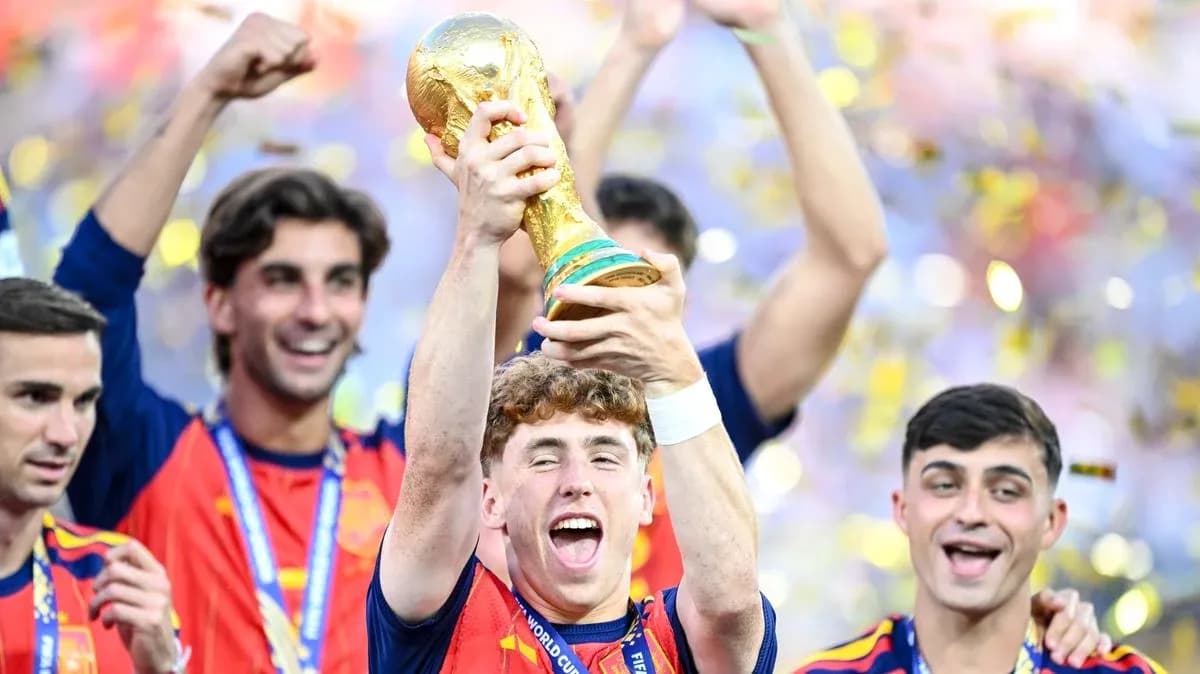
A World Cup winner who never kicked a ball.
Spain were still trying to work out how they’d drawn a blank against Cape Verde when news broke that Liverpool had activated Victor Munoz’s £34.5m release clause at Osasuna. The timing felt perfect: a new era under Andoni Iraola, a new Spanish winger to watch on the biggest stage.
Then nothing.
Munoz picked up an injury, disappeared from the team sheet for a spell and never played a single minute as Spain marched to the trophy. No cameos, no late sprints down the flank, no chance for Liverpool fans to get even a glimpse of what they’ve bought.
What he does have is a medal and a slice of history. Munoz becomes only the sixth serving Liverpool player to win the World Cup, following Roger Hunt, Ian Callaghan, Gerry Byrne, Fernando Torres and Pepe Reina. An invisible World Cup, perhaps, but not an insignificant one.
Alexis Mac Allister – 7
Argentina’s final was flat. Alexis Mac Allister’s tournament was not.
He ran himself into the ground for eight games, missing only the dead rubber against Jordan once Argentina had already secured top spot in their group. From a more advanced midfield role, he knitted attacks together, pressed with intelligence and produced the numbers to back it up: a created goal against Cape Verde, the opener in the quarter-final win over Switzerland.
When Argentina teetered against England, Mac Allister helped drag them back from the edge. His composure in tight spaces and willingness to take the ball under pressure gave Lionel Messi and others the platform to work. Across the tournament he picked up just one booking, a remarkable level of discipline for a 27-year-old who thrives in the chaos of midfield.
He faded in the final, like so many around him, but the broader picture is clear. This was a midfielder operating with authority on the biggest stage. Liverpool will want exactly that version of Mac Allister walking into pre-season.
Alisson Becker – 7
This was not a vintage Brazil. Alisson Becker still looked like a vintage goalkeeper.
Back fit after injury, he brought calm to a side that never truly convinced. His handling was clean, his positioning sharp, his decision-making measured. When Brazil creaked, he often stood between them and embarrassment.
There was little he could do about Erling Haaland’s two ruthless finishes in the defeat to Norway that ended Brazil’s run. The issue lay in front of him, not behind. Across the tournament he reminded everyone why he remains one of the elite goalkeepers in world football.
For Liverpool, the equation is simple: keep him on the pitch and the team immediately rises a level.
Alexander Isak – 6
The irony will not be lost on Liverpool supporters.
Alexander Isak, who never once completed 90 minutes in a game for Liverpool last season, suddenly managed three full matches out of four for Sweden at the World Cup. Fully fit, fully trusted – and, at first, fully dangerous.
He opened with a flourish, scoring once and supplying two assists against a poor Tunisia side. The movement was sharp, the link-up play slick, the finishing decisive. He added another assist in the heavy win over Holland, hinting at a tournament that might explode.
It never quite did. As Sweden’s level dropped, so did Isak’s influence. The early promise gave way to diminishing returns, and by the time they went out, his World Cup felt like a story of what might have been rather than what truly was.
Liverpool will be left wondering which version they can coax out in the months ahead.
Cody Gakpo – 8
Cody Gakpo arrived at this World Cup under a cloud of doubt from sections of the Liverpool fanbase. He left it having reminded everyone exactly what he can be.
Freed from the tactical constraints and positional juggling of club duty, he looked reborn on the left flank for Holland. The standout performance came against Sweden, where he tore through the game with two goals and an assist, driving at defenders, cutting inside with conviction and playing with the kind of clarity and aggression that had been missing at Anfield.
Then came a very different kind of moment. In the round of 32 defeat to Morocco, Gakpo scored shortly after the devastating news of the loss of his unborn son. It was a goal loaded with emotion, a strike that said as much about his character as his technique.
On pure football terms, this was an excellent tournament. In human terms, it was something far heavier. Liverpool will hope the confidence he rediscovered survives the journey home.
Virgil van Dijk – 7
Virgil van Dijk captained a Holland side built to attack. The bill landed at the feet of the defence.
He still found ways to leave his mark. A goal in the entertaining draw with Japan, an assist against Tunisia, a steadying presence when the game threatened to unravel. Yet back home, the criticism kept coming from familiar voices who have never fully embraced him in orange.
The problem was structural as much as individual. Ronald Koeman’s team were set up to go forward in numbers, and the back line, Van Dijk included, paid the price. Holland conceded in all four of their games, and the narrative quickly turned towards what they couldn’t do rather than what they did.
For Liverpool, the key takeaway is that their captain came through another major tournament as a central figure, still demanding responsibility, still carrying weight. The debate in the Netherlands will go on. At Anfield, his role remains non-negotiable.
Ryan Gravenberch – 7
Ryan Gravenberch used this World Cup to showcase both sides of his game.
Given a more advanced midfield role than he usually enjoys at Liverpool, he started with real purpose. Against Japan he produced two clever assists, ghosting into space, picking the right passes, and showing the vision that once made him one of Europe’s most coveted young midfielders.
Then came the tactical switch. For the defeat to Morocco he dropped back into a more defensive position, tasked with screening rather than breaking lines. He was substituted before Holland conceded the late equaliser that dragged the tie to penalties, spared the chaos that followed but unable to influence it.
The tournament underlined his versatility and hinted at untapped potential. Iraola now has a clearer picture of a player who can hurt teams higher up the pitch as well as graft deeper.
Florian Wirtz – 6
The numbers paint a kind picture of Florian Wirtz’s World Cup. Three assists in four games, operating mostly off the left, in a Germany side that never truly convinced.
Yet the feeling lingered that there was more to come. His quality on the ball was obvious, his ability to unlock defences clear, but he drifted in and out of games too often for a player of his talent. When Germany’s campaign ended in controversy with a penalty shootout defeat to Paraguay, Wirtz was already off the pitch, unable to shape the defining moments.
This was a good tournament on paper, a frustrating one in reality. Liverpool will look at the flashes, the numbers, and the age, and see a player who might explode under the right conditions.
Spain’s new winger arrives as a champion. The rest return with scars, form, and fresh questions. Iraola’s first Liverpool squad will be shaped not just by what these players did at the World Cup, but by how they respond to it when the real work starts again.