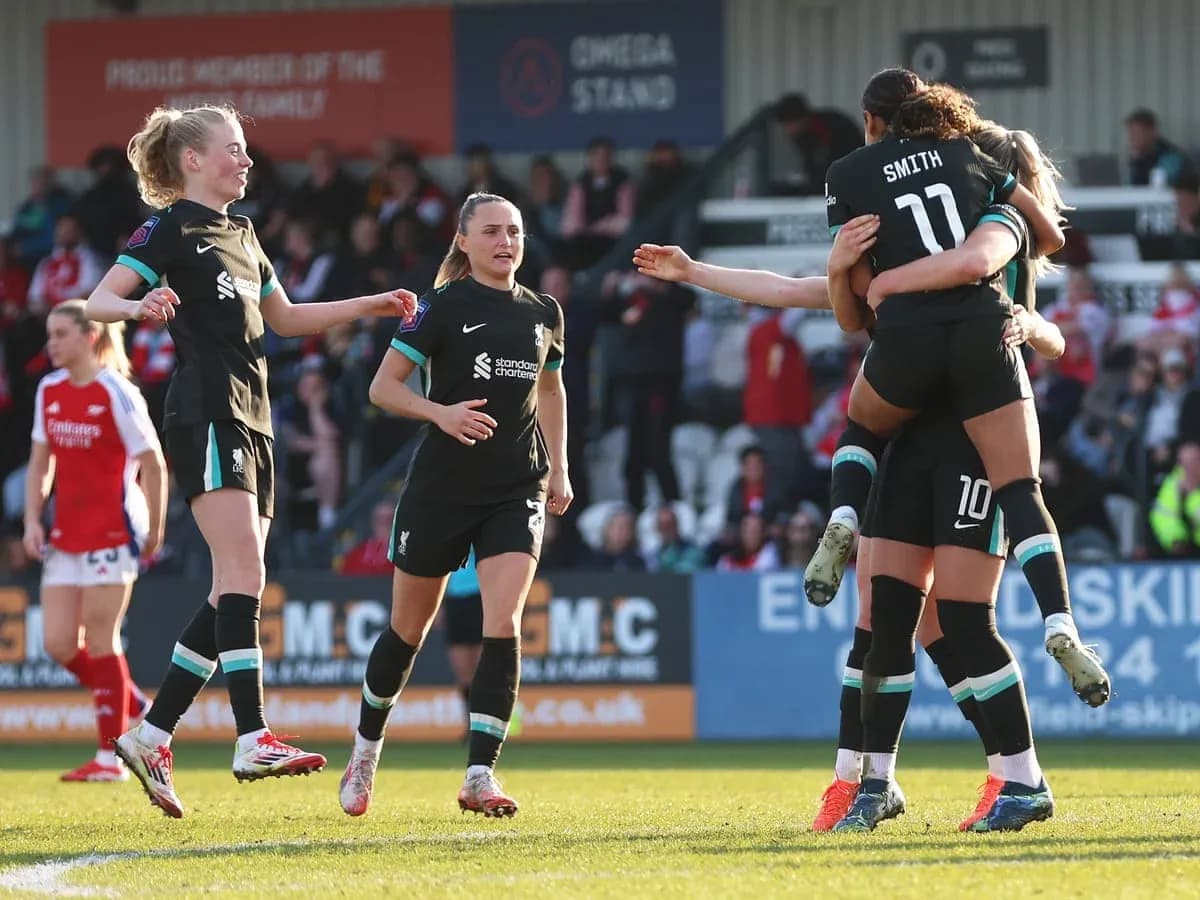
Liverpool W vs Arsenal W: FA WSL Clash Preview
Anfield hosts a classic top-versus-bottom clash on 16 May 2026 as Liverpool W welcome title-chasing Arsenal W in the final stretch of the FA WSL season. The stakes could hardly be more contrasting: Liverpool are fighting to stay clear of the relegation trapdoor in 11th place on 17 points, while Arsenal arrive in Merseyside second in the table on 48 points, still pushing to keep their Champions League-bound season on course and apply pressure at the top.
Across all phases, the gap between the sides is stark. Liverpool have won just 4 of 21 league games, with a goal difference of -11 (20 scored, 31 conceded). Arsenal, by contrast, have lost only once in 21, winning 14 and drawing 6, with a formidable goal difference of +37 (50 for, 13 against). Yet Anfield and the occasion can act as a leveller, and Liverpool’s home record offers them at least a foothold: 3 wins, 3 draws and 4 defeats from 10 home matches, with goals scored and conceded perfectly balanced at 12-12.
Arsenal’s away form, though, is elite. In the league they have taken 21 points from 10 away games (6 wins, 3 draws, 1 loss), scoring 22 and conceding only 7. They travel as one of the division’s most complete outfits, with both the best attack and one of the stingiest defences across all phases.
Tactical landscape: containment vs control
Liverpool’s season-long data paints the picture of a side built first on survival and structure. Their most-used shape is a 4-1-4-1 (8 starts), with occasional switches to 4-2-3-1 (4) and 5-4-1 (2). That spread underlines a pragmatic, reactive approach: an extra midfielder or defender added as required to plug gaps rather than to dominate the ball.
At home, Liverpool average 1.2 goals scored and 1.2 conceded per game, suggesting that when they get their defensive distances right, they can keep matches tight. They have kept 3 home clean sheets and failed to score in 3 of those 10 games, which fits the profile of a side often locked in low-margin contests. The biggest home win (4-1) shows they can explode in front of goal on their day, but the heaviest home defeat (1-4) is a warning about what happens when their structure breaks against stronger attacks.
Arsenal’s tactical identity is more assertive and consistent. Their default is a 4-2-3-1 (9 starts), supported by occasional 4-4-2, 4-3-3 and 4-1-4-1 setups. The double pivot in front of the back four gives them both a platform to build and the security to release their attacking midfielders and wide forwards. Across all phases they average 2.7 goals per home game and 2.2 away, with an overall attacking average of 2.5 goals per match. Defensively, they concede just 0.7 per game, home or away.
That balance – high output in attack and control at the back – makes Arsenal one of the most tactically complete sides in the division. Ten clean sheets in 20 league matches underline how effectively they manage games once in front, and they have failed to score in only 3 fixtures.
Key players and attacking threats
For Liverpool, the focal point in attack is Beata Olsson. The Swedish forward has 4 league goals and 2 assists in 15 appearances (12 starts), with 6 shots on target from 11 attempts. Her profile is that of a hard-working front player: 60 duels contested, 22 won, and 9 dribble attempts with 5 successful. She will likely be asked to occupy Arsenal’s centre-backs, press from the front, and offer an outlet on the counter.
Supporting her, Mia Enderby has emerged as one of Liverpool’s most influential young players. The midfielder has 3 goals and 2 assists in 21 appearances (16 starts), with 943 minutes played. Enderby’s 88 duels (41 won) and 21 dribbles attempted (11 successful) point to a player who can carry the ball under pressure and help Liverpool transition from defence to attack. Her ability to break lines from midfield will be crucial if Liverpool are to bypass Arsenal’s pressing structure.
Arsenal’s attacking arsenal is deep and varied. Alessia Russo leads their scoring chart with 6 goals and 2 assists from 20 appearances. Her numbers are impressive: 32 shots, 22 on target, 16 key passes and a passing accuracy of 77%. She is not just a finisher but a complete attacking reference point, dropping into pockets to link play and creating for others as much as for herself.
Stina Blackstenius offers a different but complementary threat. With 5 goals and 2 assists in 19 appearances (7 starts), she has been a highly effective rotational forward. Her 26 shots (14 on target) in just 467 minutes underline her efficiency in the box. Whether she starts or comes from the bench, her movement against tiring defenders can be decisive.
From deeper positions, Olivia Smith has become a key creative and goal threat. The Canadian midfielder has 4 goals and 2 assists in 18 appearances, with 19 key passes and 11 successful dribbles. Her ability to find pockets between the lines and deliver final balls adds another layer to Arsenal’s attacking variety.
Chloe Kelly, with 4 goals and 1 assist in 15 appearances (4 starts), is another high-impact option, especially from wide areas. Her 11 shots (6 on target) and 80% passing accuracy suggest a player who combines end product with secure ball retention, though her 4 yellow cards indicate a combative edge in duels and pressing.
Discipline, set pieces and penalties
Liverpool’s disciplinary profile shows a tendency to pick up cards as matches wear on. A significant portion of their yellow cards arrive between minutes 61-75 and in stoppage time (91-105), hinting at fatigue and late defensive scrambles. They have also seen 2 red cards across the season, which is a risk factor against a side that moves the ball as quickly as Arsenal.
Arsenal, by contrast, have accumulated yellows but no reds, maintaining control in high-intensity fixtures. Their card distribution is relatively even, with a slight spike in the final quarter of matches (76-90), often when they are protecting leads.
From the spot, both teams are reliable this season. Liverpool have scored 2 of 2 penalties, while Arsenal have converted their single penalty attempt. There is no evidence of missed penalties in the individual data provided, so both sides can trust their designated takers if a key moment arrives.
Head-to-head: recent history
- On 6 December 2025 in the FA WSL at Emirates Stadium, Arsenal W beat Liverpool W 2-1.
- On 22 March 2025 in the FA WSL at Emirates Stadium, Arsenal W beat Liverpool W 4-0.
- On 9 March 2025 in the FA Women’s Cup quarter-finals at Mangata Pay UK Stadium, Liverpool W beat Arsenal W 1-0.
- On 15 December 2024 in the FA WSL at St Helens Stadium, Arsenal W beat Liverpool W 1-0.
- On 28 January 2024 in the FA WSL at Prenton Park, Arsenal W beat Liverpool W 2-0.
Across these five competitive fixtures, Arsenal have 4 wins, Liverpool 1, and there have been 0 draws. Notably, Liverpool’s solitary win came in a high-stakes cup quarter-final away from home, evidence that they can execute a disciplined game plan against this opponent.
Form and momentum
In the league, Liverpool’s recent form line reads LLWDW, which is more encouraging than their season-long pattern of long losing streaks. They have taken 7 points from their last 5 games, suggesting a late-season uptick and some resilience under pressure.
Arsenal’s league form is WW DWW, with 4 wins and 1 draw in their last 5. Across all phases they have enjoyed a longest winning streak of 6 matches this season, and they remain extremely hard to beat, with just one league loss.
Defensively, Liverpool have kept 4 clean sheets in 21 league games; Arsenal have 10 in 20. Liverpool have failed to score in 9 matches, Arsenal in only 3. Those numbers strongly favour the visitors in terms of consistency at both ends.
The verdict
All the underlying data points towards Arsenal W as clear favourites at Anfield. They boast the stronger league position, superior goal difference, better recent form, and a dominant head-to-head record. Their attacking depth, led by Alessia Russo, Stina Blackstenius, Olivia Smith and Chloe Kelly, is matched by a defence that concedes less than a goal per game and keeps clean sheets with regularity.
Liverpool W, however, have reasons to believe they can make this uncomfortable. Their home record is competitive, their goals for and against at Anfield are level, and they have already beaten Arsenal away in a knockout quarter-final in 2025. With Beata Olsson and Mia Enderby offering counter-attacking outlets, and a flexible defensive structure that can switch between 4-1-4-1 and 5-4-1, they are equipped to dig in and look for moments in transition.
Logically, the balance of probabilities favours an Arsenal win, most likely in a game where they control territory and chances. But if Liverpool can reproduce the discipline of their cup upset, compress space between the lines, and take one of the limited chances that come their way, this could be tighter than the table suggests. Arsenal remain the likelier side to leave Anfield with three points; Liverpool’s task is to turn a statistical mismatch into a one-off contest decided on fine margins.