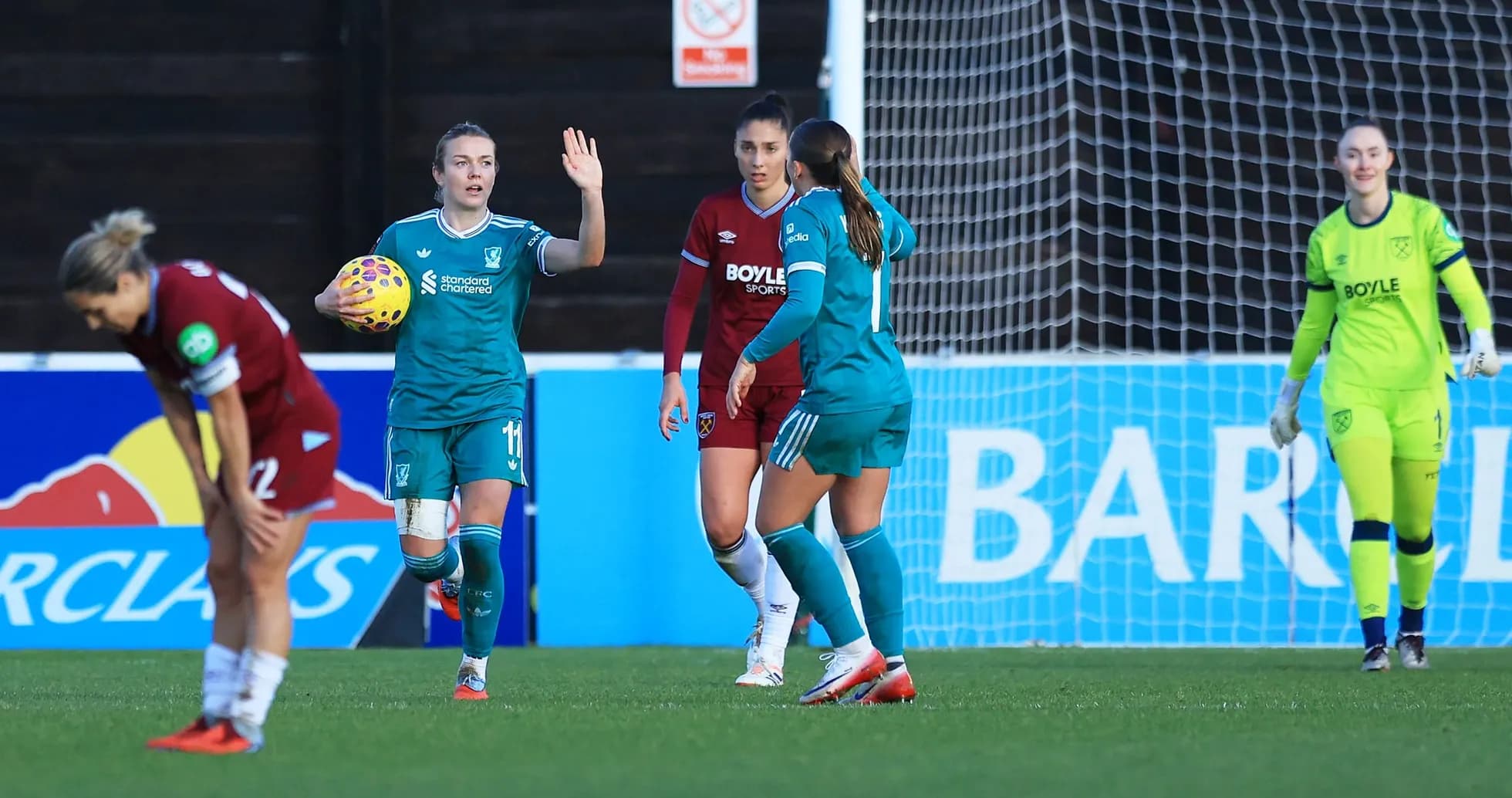
Liverpool W vs West Ham W: FA WSL Clash Preview
Liverpool W welcome West Ham W to St Helens Stadium on 26 April 2026 in a high‑stakes FA WSL clash near the bottom of the table. Liverpool sit 10th on 17 points (4‑5‑10, goal difference -9), with a relatively solid home record (3‑3‑3, 12:11). West Ham are 11th on 13 points (3‑4‑12, goal difference -25) and very fragile away from home (1‑0‑8, 4:21). With both sides still needing points to steer clear of danger, this shapes as a pressure game where Liverpool’s home edge and superior underlying numbers are key.
Looking at recent form, Liverpool clearly arrive in better shape. Their last five matches show a 67% form rating with 9 goals scored (1.8 per game) and only 5 conceded (1.0 per game). West Ham’s last five are rated at 33%, with just 4 goals scored (0.8 per game) and 9 conceded (1.8 per game). The model comparison strongly favours Liverpool: 69% vs 31% in attack, 64% vs 36% in defence, and a total strength index of 73.8% vs 26.2%.
Over the full league campaign, Liverpool average 1.1 goals scored and 1.5 conceded per match. At home, they are better on both sides of the ball: 1.3 scored and 1.2 conceded. They have 3 home clean sheets and have failed to score in only 2 of 9 home fixtures. West Ham, by contrast, average just 0.8 goals scored and 2.2 conceded overall. Away from home they are particularly weak: 0.4 scored and 2.3 conceded, with 0 clean sheets and 6 blanks in 9 away games. That away attacking output is extremely low for a side that must now chase points.
The prediction model’s Poisson distribution gives Liverpool an 83% edge vs 17% for West Ham, and in the specific “goals” comparison Liverpool hold a 75% vs 25% advantage. This aligns with the raw scoring profiles: Liverpool create more and concede less, while West Ham’s defence is consistently under pressure, especially after the break (41 goals against in 19 league matches, with 16 of those conceded from the 61st minute onward).
Head‑to‑Head Data
Head‑to‑head data, separating competitions, also leans Liverpool’s way in league play. In the FA WSL:
- On 14 December 2025 at Chigwell Construction Stadium, West Ham W and Liverpool W drew 2‑2.
- On 2 February 2025 at St Helens Stadium, Liverpool W beat West Ham W 1‑0.
- On 29 September 2024 at Chigwell Construction Stadium, West Ham W and Liverpool W drew 1‑1.
- On 17 March 2024 at Prenton Park, Liverpool W beat West Ham W 3‑1.
- On 22 October 2023 at Chigwell Construction Stadium, West Ham W and Liverpool W drew 1‑1.
- On 2 April 2023 at Chigwell Construction Stadium, West Ham W and Liverpool W drew 0‑0.
- On 4 December 2022 at Prenton Park, Liverpool W beat West Ham W 2‑0.
- On 23 February 2020 at The Rush Green Stadium, West Ham W beat Liverpool W 4‑2.
In league meetings from 2020 onward (excluding cups and friendlies), that gives Liverpool 3 wins, West Ham 1 win, and 4 draws. In cup competition, Liverpool also dominated their latest encounter: on 29 January 2025 in the FA Women’s Cup 4th Round at Chigwell Construction Stadium, Liverpool W won 5‑0 away. The pattern is clear: Liverpool rarely lose this matchup and have been especially strong in the most recent years.
The market is aligned with the model. Across major bookmakers, home odds cluster between 1.63 and 1.80, with the draw roughly 3.60–4.10 and West Ham around 3.90–4.50. Implied probabilities place Liverpool near or above 60% to win in regulation, with West Ham priced as clear outsiders.
Given the official prediction data, the core betting angle is the double chance on Liverpool. The model explicitly advises: “Double chance: Liverpool W or draw”, with probability splits of 50% home, 50% draw, and 0% away. That effectively rules out West Ham as a recommended side.
Betting Verdict
Betting verdict: follow the model and the market. The standout value‑aligned play is:
- Main pick: Double chance – Liverpool W or draw.
With Liverpool’s superior form, stronger home metrics, and dominant recent H2H record, West Ham taking all three points would be a significant upset relative to both data and odds.