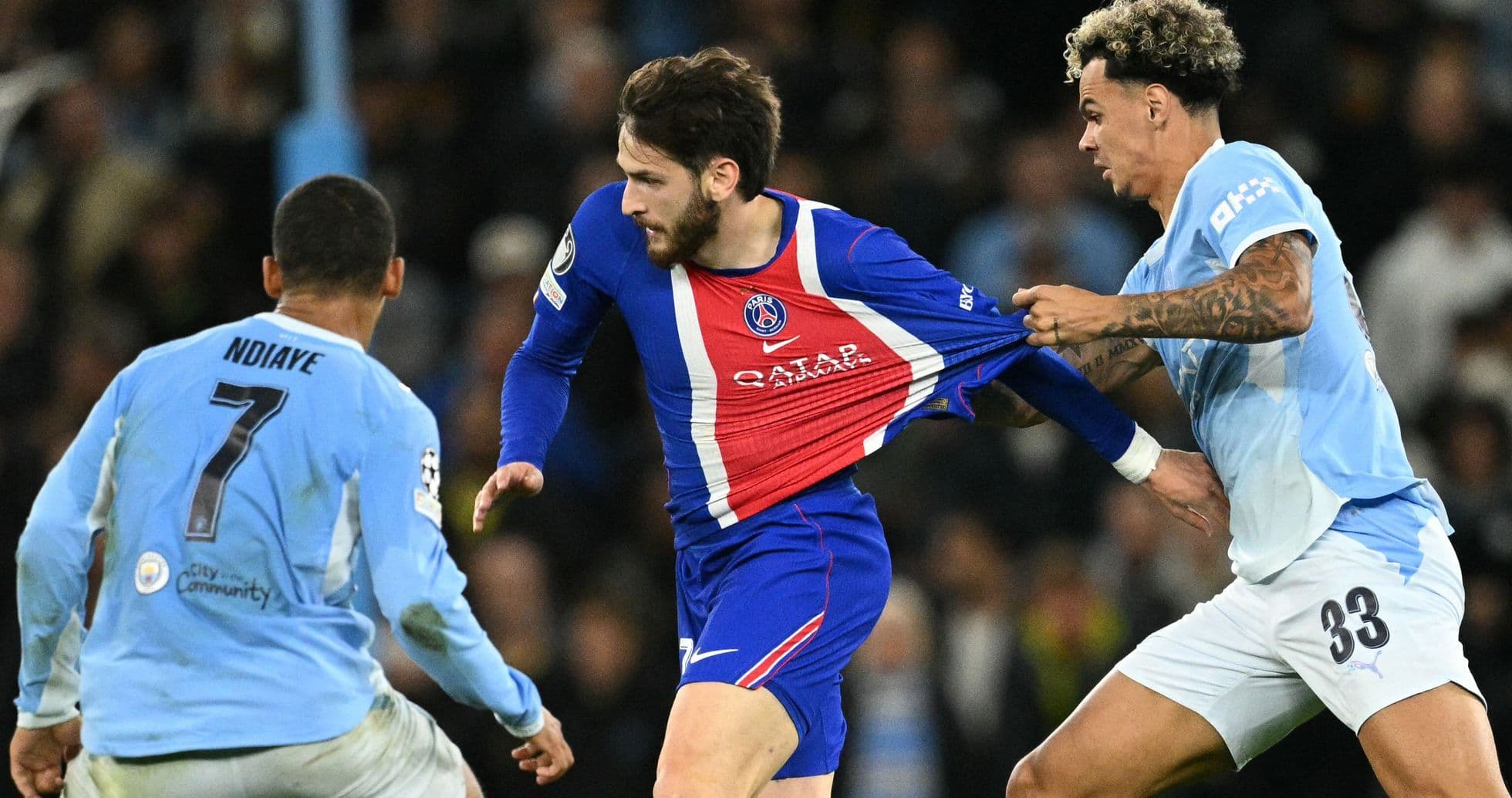
How Luis Enrique's PSG Outplayed Manchester City's High Line in a 4-2 Champions League Win
Paris Saint-Germain showcased sharp transition play to beat Manchester City 4-2 at the Etihad Stadium. Despite a spirited comeback led by Erling Haaland, City's defensive lapses early on proved too much to overcome.
Clash of Styles: Maresca vs. Enrique
The match was a battle of contrasting tactics between Enzo Maresca and Luis Enrique. Manchester City aimed to control possession and press high using a 4-2-3-1 setup, with Enzo Fernandez and Elliot Anderson as a double pivot to manage tempo. They depended on Jeremy Doku and Rayan Cherki for creative spark.
On the other hand, PSG used a flexible 4-3-3 that focused on quick vertical attacks rather than passing around horizontally. They lured City forward, exploiting the gaps left behind with the speed of Ousmane Dembele and Desire Doue targeting City’s centre-backs in one-on-one breaks.
Manchester City’s Formation and Challenges
Maresca’s team started in a 4-2-3-1 formation but often shifted into a 3-2-5 during buildup, with Josko Gvardiol dropping back for extra cover. The pressing was intense—when Safonov passed short, City’s front four pushed up hard to force long balls. This aggression came at a cost, leaving Ruben Dias and Marc Guehi exposed due to large spaces between midfield and defense.
In possession, City struggled to break through PSG’s mid-block. Enzo Fernandez tried to steer play from deep, but PSG blocked passes to Cherki, who played as the number ten. Jeremy Doku faced double coverage from Achraf Hakimi and Warren Zaire-Emery, limiting his impact. Haaland was isolated with little support despite City holding 54% possession, lacking the sharp vertical passes needed to threaten PSG’s defense. The high defensive line also allowed PSG to catch City out repeatedly with fast passes into space.
PSG’s Compact and Effective Setup
Luis Enrique’s side operated a disciplined 4-3-3 that dropped into a compact 4-5-1 when City reached the midfield, with Vitinha and Fabian Ruiz shielding the backline efficiently. They patiently let City keep the ball in safe areas before pouncing on mistakes. Vitinha orchestrated these moves, quickly finding Dembele or Doue making diagonal runs.
PSG deliberately risked building play through their goalkeeper Safonov to lure City’s pressers forward. Once bypassed, Zaire-Emery and Ruiz pushed the attack vertically. Desire Doue and Dembele punished City’s errors early on. Maghnes Akliouche’s movement into half-spaces pulled defenders out of position, opening lanes for PSG’s wingers. Despite only 46% possession, PSG scored three times in the first half, highlighting their effectiveness on the counter.
Key Tactical Battles
The wide areas and transition zones decided the match. Enrique noticed City’s full-backs, especially the adventurous Gvardiol, left space behind them. Dembele stayed wide and high, preventing City from fully committing forward without risking long balls over the top. This restricted City’s ability to overload attacks and forced midfielders to cover more ground sideways.
Enrique’s pragmatic approach outmatched Maresca’s rigid positional game. PSG’s mobile front three exposed City’s static centre-backs repeatedly in the first half, leading to a three-goal deficit within 32 minutes thanks to goals from Doue, Dembele, and Vitinha. By the time City adjusted, PSG had already gained the upper hand psychologically and tactically.
Second-Half Adjustments
At halftime, Maresca made three changes, bringing on Matheus Nunes, Ayyoub Bouaddi, and Iliman Ndiaye, replacing Ruben Dias, Rayan Cherki, and Jeremy Doku. City became more direct, pushing more players into the box to support Haaland. Ndiaye’s direct style helped create Haaland’s first goal in the 53rd minute. City’s approach shifted to faster recycling and crossing rather than slow build-up.
Enrique responded by refreshing PSG’s attack and strengthening midfield control. Khvicha Kvaratskhelia came on for Doue in the 66th minute, adding pace to counter-attacks. Joao Neves helped regain midfield dominance. After Haaland’s second goal in the 75th minute made it 4-2, PSG dropped deeper into a 5-4-1 block with Lucas Hernandez and Lucas Beraldo added defensively. This strategy stopped City’s late aerial efforts despite their 27 shots overall, securing the win through solid game management.
Summary
The first half’s tactical gap shaped the outcome. PSG’s ability to tempt City into a false sense of control before striking quickly proved decisive. Haaland’s brace showed City’s quality and improved intensity after halftime, but the damage done by Doue, Dembele, Vitinha, and Akliouche was too large to repair. Luis Enrique’s focus on sharp vertical transitions won over Maresca’s possession-heavy plan, showing that controlling space can matter more than simply keeping the ball in top-level European football.
- Next Matches:
- Manchester City: Premier League vs. Ipswich, 17 Oct 2026, 17:00
- PSG: Ligue 1 vs. Strasbourg, 17 Oct 2026, 18:15