Manchester City’s Dominance vs Nottingham Forest’s Resilience
This was a clash between City’s territorial dominance and Forest’s compactness and transition threat. City held 70 percent of the ball, completing 714 of 774 passes at 92 percent accuracy, against Forest’s 269 of 329 (82 percent). The 4-1-3-2 shape with Rodri anchoring allowed City to pin Forest’s 5-3-2 deep, but the final outcome, 2-2, shows how Forest traded control for punch in key moments.
Control versus result
City’s control translated into volume: 21 shots to Forest’s 9, with 16 of those City efforts from inside the box. The scoring threat numbers underline this: roughly 2.1 in xG for City against about 1.0 for Forest. On paper, that profile usually produces a home win. Instead, Forest converted their limited attacks into two goals, while City failed to turn dominance into a decisive margin.
Forest’s approach was clear: accept long phases without the ball, protect central zones with three midfielders in front of a back five, and look to break through Morgan Gibbs-White and Igor Jesus. Their 30 percent possession was by design, not a flaw.
Offensive mechanics and shot quality
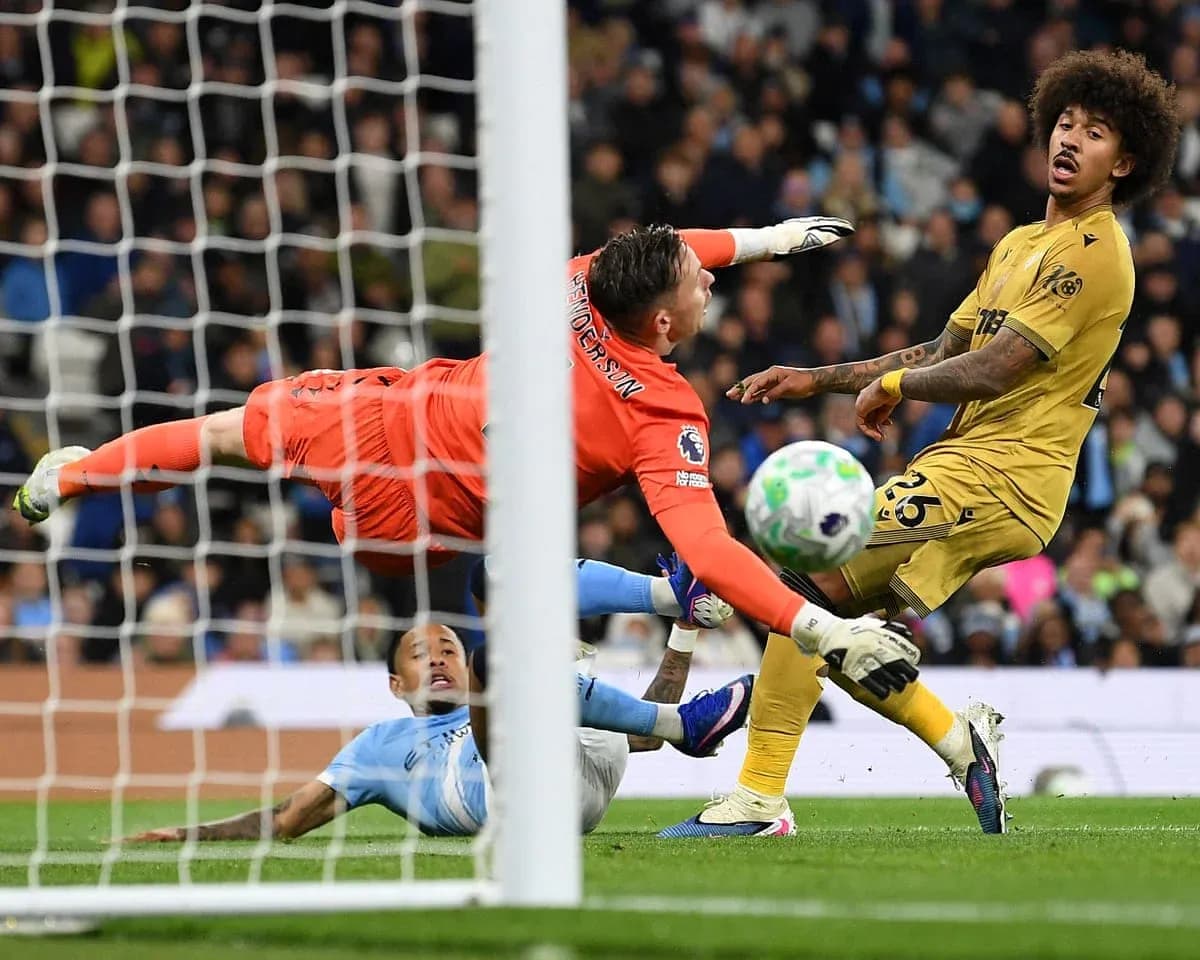
City’s attacking plan hinged on overloads between the lines. Bernardo Silva, Phil Foden and Rayan Cherki operated behind Erling Haaland and Antoine Semenyo, constantly occupying the half spaces. The shot map profile is telling: 7 on target, 8 off, 6 blocked. Nottingham Forest’s defense blocked 6 attempts from Manchester City, evidence of a crowded penalty area and last-ditch defending around the box.
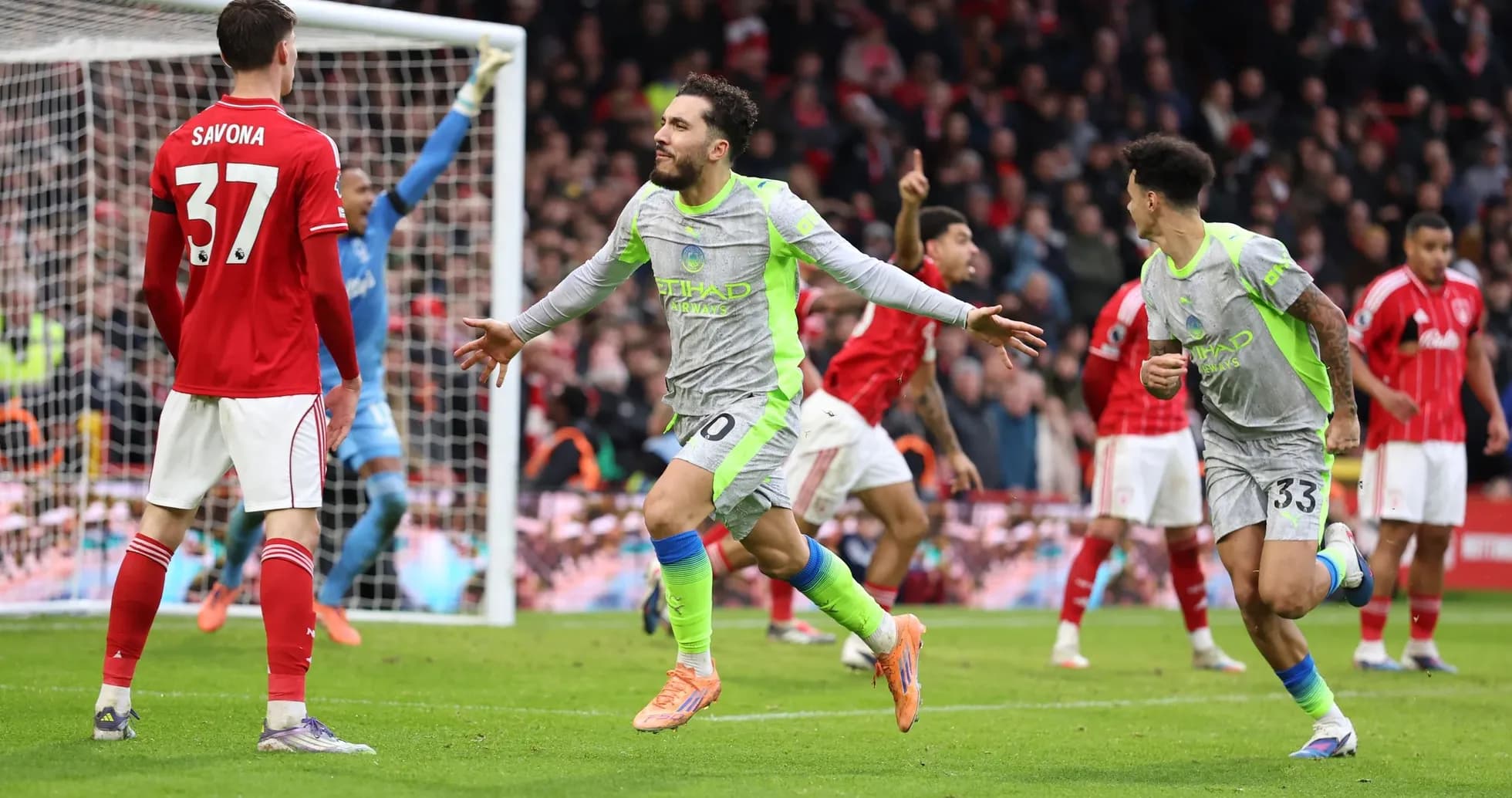
Semenyo’s opener on 31 minutes, assisted by Cherki, rewarded repeated entries into the right half space. After Forest equalised through Gibbs-White on 56 minutes, City’s response was structural rather than emotional: Rodri’s goal on 62 minutes, assisted by Rayan Ait-Nouri, came from sustained pressure and a second-line runner exploiting a brief lapse in Forest’s block.
Forest, by contrast, focused on chance quality over volume. With only 4 shots on target from 9 total, they maximised transitions and set attacking patterns around Gibbs-White. Their second goal, Anderson on 76 minutes assisted by Callum Hudson-Odoi, came shortly after an attacking substitution, reflecting a calculated push rather than random chaos. Manchester City had 3 shots blocked by Nottingham Forest in return, showing City’s back line did face moments of emergency defending despite their territorial dominance.
Defensive intensity, discipline and goalkeeping
The foul count (10 for City, 6 for Forest) suggests City counter-pressed more frequently, often stopping counters at source. Forest’s 4 yellow cards, all for defensive or game-management reasons (Sangaré for a foul on 45+1, Murillo on 60, Milenković for arguing on 63, Sels for time wasting at 90+4), reflect the strain of defending deep for long periods and then protecting a point late on.
In goal, Gianluigi Donnarumma made 2 saves and Matz Sels 3. Both keepers performed at a standard level without needing extraordinary saves; the scoreline was shaped more by defensive structures and finishing than by heroic goalkeeping.
Substitutions as tactical levers
The substitution pattern underlines the tactical chess. Forest’s first change on 63 minutes, Hudson-Odoi for Nicolás Domínguez, was an attacking shift: a winger for a central midfielder, effectively tilting the 5-3-2 towards a 5-2-3 in transition. That move paid off directly, with Hudson-Odoi assisting Anderson’s goal.
City’s double change on 77 minutes, Jérémy Doku for Foden and Abdukodir Khusanov for Ait-Nouri, mixed ideas: Doku added direct one-versus-one threat wide, but Khusanov for a full back was a conservative adjustment, possibly to guard against counters while still chasing a winner. Savinho for Cherki on 82 minutes further increased verticality, but Forest’s low block and time management (including the late yellow for Sels) blunted the impact.
Final verdict
Statistically, City’s game plan was coherent: dominate possession, compress Forest into their box, and generate a high volume of good-quality chances. The 2.1 versus 1.0 scoring threat and 21-9 shot split support that. Forest, however, executed their low-possession, high-resistance strategy with discipline, using a back five to force blocks, committing tactical fouls when needed, and timing attacking substitutions to exploit City’s advanced structure.
The 2-2 draw is the product of efficiency and game-state management: City controlled the flow, but Forest controlled the margins that matter.