Manchester United Dominates Rosenborg 5-0 Under Carrick
Manchester United did more than win their first pre-season game in Trondheim. They changed the conversation.
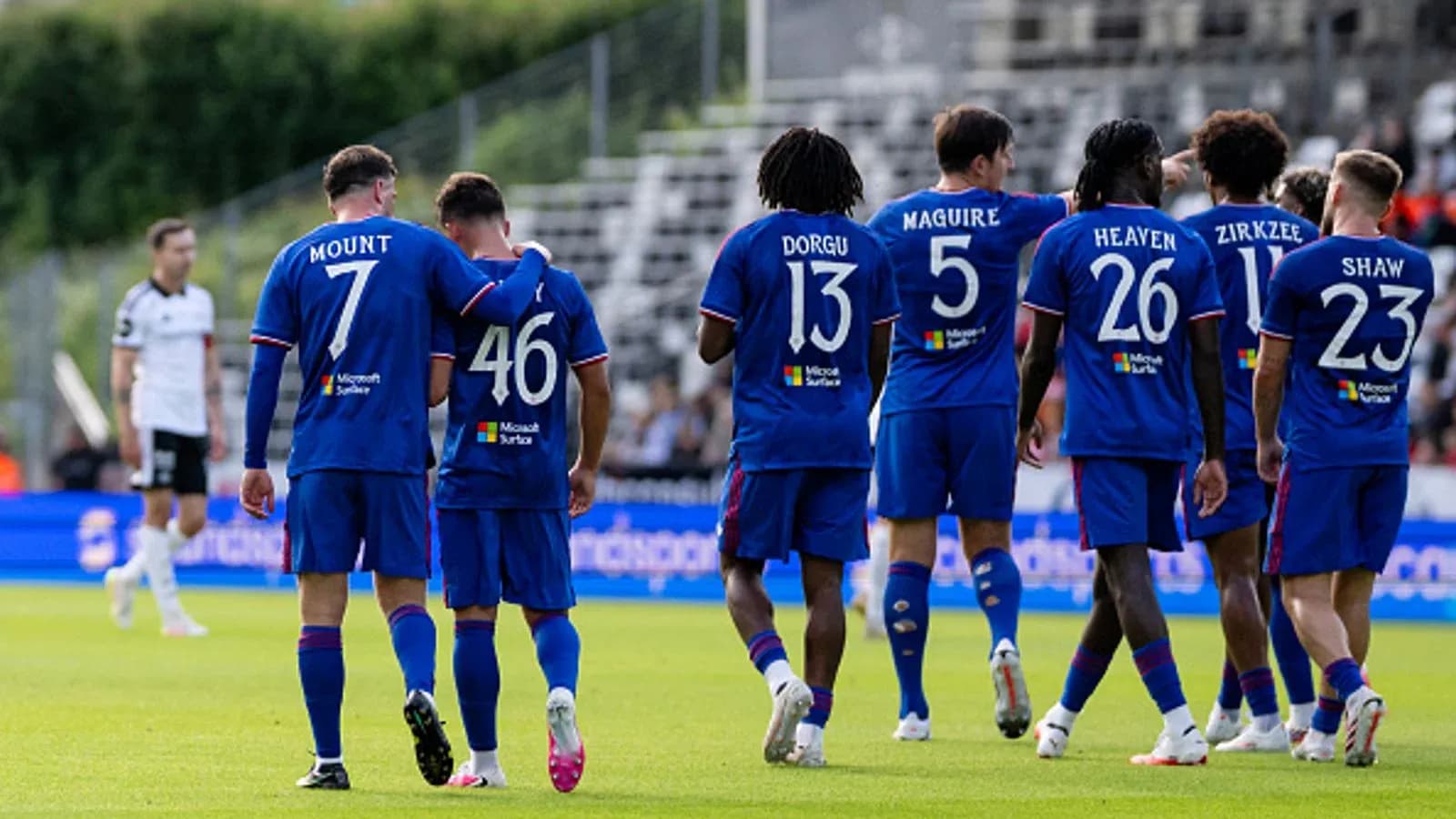
Six days after a flat defeat to Wrexham, Michael Carrick’s side dismantled Rosenborg 5-0, mixing the ruthless transition game that revived their season with something far more intriguing: control.
This wasn’t just a fitness exercise. It was a glimpse of what “Carrick-ball” might become.
A new look to Carrick’s United
Carrick’s initial rescue job at Old Trafford was built on the break. United ran like a counter-attacking machine: rapid wingers such as Bryan Mbeumo and Patrick Dorgu tearing into space, Bruno Fernandes and Matheus Cunha threading passes into the chaos.
The numbers backed it up. From that first 2-0 win over Manchester City to the end of the campaign, United ranked third in fast breaks per game. They were joint-first for goals from fast breaks per 90 and second for expected goals from those situations. Lethal when the game opened up.
On the ball, though, they were far less impressive. Thirteenth in overall possession. Eleventh in average possession duration. The same old problem since Sir Alex Ferguson left: plenty of threat on the counter, far less certainty when asked to pick apart a low block.
Rosenborg, 13 games into their league season and theoretically fitter and sharper, should have been able to lean on that weakness. They should have been able to dictate tempo, keep the ball, and ask United to chase.
They didn’t. United took it away from them.
Without Fernandes or Cunha, Carrick’s side still looked comfortable in possession. They moved Rosenborg around, stretched them, and at times simply toyed with them. Joshua Zirkzee became the reference point, the player who made the ball stick in advanced areas and allowed United to build instead of just break.
The counter remained a weapon. United’s second and fourth goals came straight from that familiar surge through space. But the pattern felt different. There was more patience, more structure, and a clearer hint as to why Youri Tielemans was such an appealing signing for this manager.
Carrick hasn’t abandoned transitions. He’s trying to add a second language.
Zirkzee dazzles – but where does he fit?
On the night, there was no debate about the standout performer. Zirkzee owned the stage.
Since his 2024 arrival, United’s number 11 has lived in the grey area. Not quite a classic number nine, not quite convincing enough to push Fernandes aside as a number 10. Moments of silk, yes, occasionally even Berbatov-esque touches, but not enough to quiet the doubts.
In Norway, he found the perfect tempo and the perfect role.
He acted as a magnet for the ball, dropping in, taking contact, spinning away on the half turn and dragging team-mates into the game. He assisted the opener. He scored the second. All in an hour’s work.
The goal was outrageous. A slick give-and-go with substitute Harry Amass, then a burst of footwork that sent two defenders the wrong way. Zirkzee then repeated the trick, sitting the goalkeeper down before rolling the ball into an empty net. It was the kind of finish that makes a pre-season crowd gasp and a fanbase dream.
Some will argue this is the moment to build around him. To make him central next season. To trust that flair.
Reality bites harder.
The pace of the game suited him. Rosenborg’s level and the rhythm of a pre-season friendly allowed Zirkzee to operate in pockets of space he rarely sees in the Premier League. It did nothing to silence the big question: can he cope with the intensity and speed of English football every week?
Benjamin Sesko still looks the more natural choice to lead the line. What Zirkzee produced here might actually be more instructive about how Carrick sees Sesko’s role when the Slovenian returns. A forward who can drop in, link play, and let runners spin beyond him, rather than a static penalty-box finisher.
Zirkzee reminded everyone of his quality. Whether he changed his status is another matter.
Carrington’s kids step into the light
If Zirkzee provided the artistry, Carrington’s academy supplied the energy and the romance.
United’s production line has long been a point of pride, and Trondheim gave a new group of youngsters a night they will never forget.
Shea Lacey started as the number 10 and grew as the game settled. The 19-year-old has already flickered at first-team level – he almost scored a spectacular goal in that 2-2 draw with Burnley – but this was his most prominent role so far.
He looked composed. Mature. His finish for the opener was calm, not rushed, the kind of strike that suggests he feels he belongs at this level. United fans voted him player of the match, a reminder that the excitement around him, which had cooled over the last year, still has a real foundation.
Once the golden boy of the youth ranks, Lacey had slipped out of the spotlight. On this evidence, there is still a serious player there, one who could yet carve out a genuine first-team role.
Amass made his case too. Sent on at half-time, the full-back has endured a stop-start spell, his momentum at Sheffield Wednesday last season checked by injuries. Here, he looked sharp again. His goal showed a natural instinct to attack dangerous spaces from left-back, but he also defended his flank with discipline and used the ball well.
United want another left-back. That remains the plan. But performances like this ask a simple question: should Amass be given a real shot as Luke Shaw’s permanent deputy?
Jacob Devaney and Ethan Williams both got on the scoresheet, moments they will carry for the rest of their careers. Pre-season or not, scoring for Manchester United is a line that never leaves your story.
The most intriguing young performance, though, might have come from Jaydan Kamason.
The 19-year-old right-back did get caught out positionally at times. That will be noted and worked on. When he had the ball, he was electric. His two assists came from low, clever crosses, the kind of delivery usually associated with wingers, not full-backs. His footwork matched that impression – quick, sharp, daring.
Carrick trusted him with more minutes than most of the other youngsters. That alone says plenty.
The JJ Gabriel wait
One name hovered over the night without ever stepping onto the pitch.
JJ Gabriel, just 15, has become the latest academy prodigy to dominate the conversation around United. His inclusion in the travelling squad had supporters hoping for a first glimpse of the teenager who has already been tagged as the next big thing.
He stayed in his fluorescent bib. No debut. No late cameo. Just the sight of him on the bench, waiting.
Does that mean expectations should be lowered for this pre-season? Not necessarily. Carrick, speaking before the game, hinted that Gabriel will get minutes in the upcoming friendlies.
For now, the story belongs to those who did play – to Zirkzee’s flourish, to Lacey’s composure, to Amass, Kamason and the rest of Carrington’s kids. The wonderkid will have his turn.
The more pressing issue is this: if this is the early version of Carrick’s permanent United, with control added to the chaos, how far can it go when the real games start?