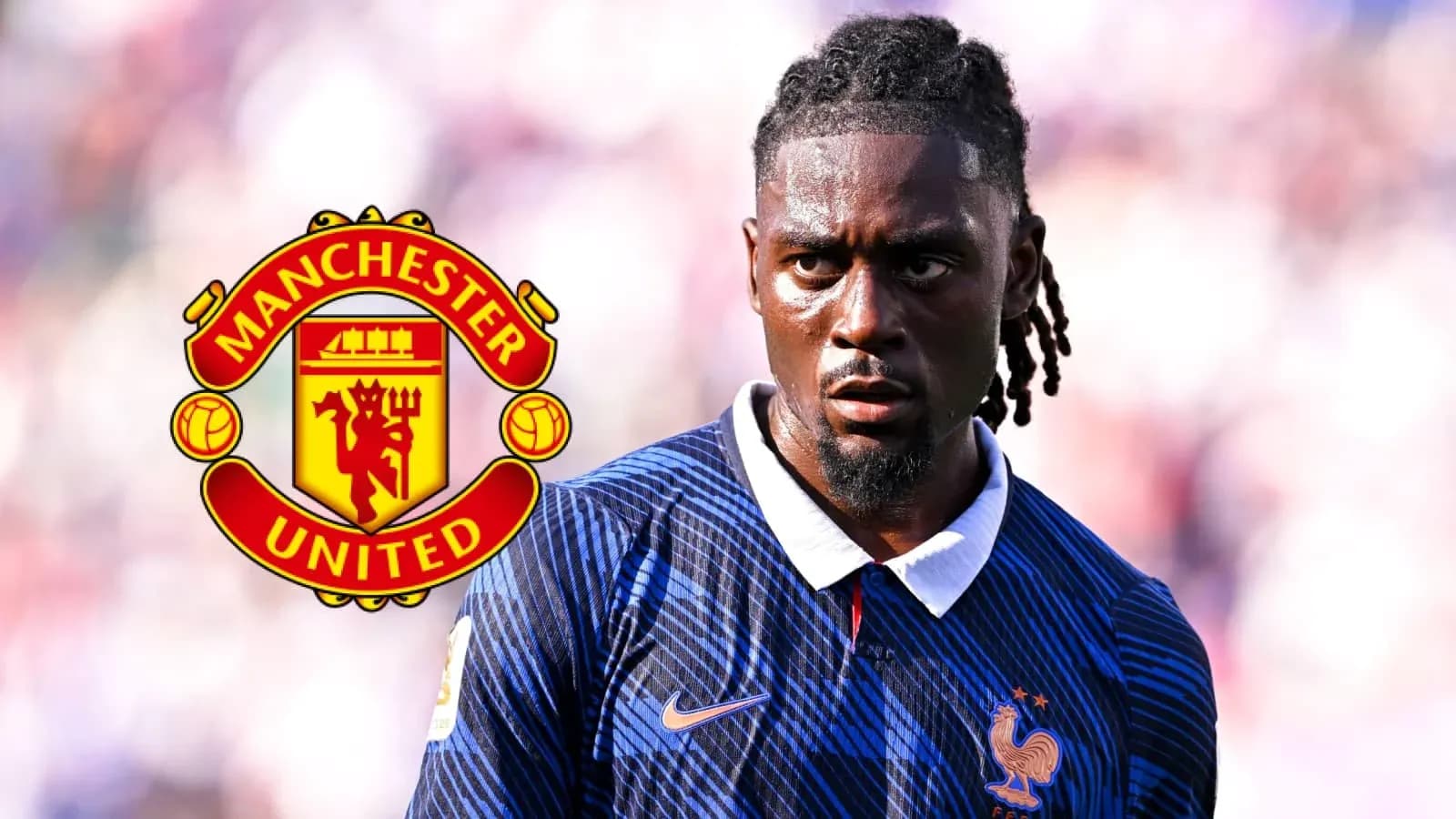
Manchester United's Midfield Dilemma: Is Manu Kone the Right Fit?
Manchester United’s midfield rebuild has moved quickly, decisively, and with a clear plan. But there’s still a hole in the middle of it – and if the answer is Manu Kone as a pure holding midfielder, they’re asking the wrong question.
Casemiro has gone, Manuel Ugarte is out long term, and in have come Andrey Santos and Youri Tielemans to restore depth and experience. On paper, the numbers look right again. On the pitch, they don’t. Not yet.
Michael Carrick’s squad still lacks what he himself once was: a specialist presence in front of the back four. Not just a destroyer. A reference point. A player who lives in that space, organises around it, and lets others breathe.
Kone is not that player. Or at least, he isn’t if you want to see the best of him.
A midfielder mislabelled
The temptation is understandable. Kone has been excellent for France at the World Cup, looking every inch a modern midfielder on the biggest stage. He’s 25, entering his prime, and already has five seasons across the Bundesliga with Borussia Monchengladbach and Serie A with Roma behind him. He looks like a ready-made solution.
Roma certainly treat him like a prize asset. He arrived on deadline day in the summer of 2024 and immediately injected life into their midfield. But not by sitting and screening. By running.
His first season in Italy told the story. Kone didn’t stand out because he was hoovering up loose balls in front of his centre-backs. He stood out because he carried Roma up the pitch. He bullied opponents off the ball, drove through the lines and turned safe possession into territory. His job looked a lot more like a No.8 than a No.6.
The picture shifted slightly when Gian Piero Gasperini arrived. The assumption was that Kone would be a natural fit for that intense, man-to-man, front-foot system Gasperini had perfected at Atalanta. Instead, the coach saw something different.
Kone was asked to tuck into Roma’s defensive line in the first phase of build-up, often stepping back rather than surging forward. He still had a good season, but his influence became more discreet. Fewer charges into space, more positioning and recycling.
Even in that more restrained role, the numbers underline his instincts. Last season he ranked in the 78th percentile among Serie A midfielders for the average distance of his progressive carries – and that was in a campaign where he went forward less than before. When he’s allowed to open his stride, he changes games.
United’s old mistake, new name
United should recognise this crossroads. They have been here before. Fred and Scott McTominay were thrown together as a double pivot and then criticised when the partnership didn’t work, when in reality both were being asked to cover roles that didn’t quite suit them. The structure was wrong, not the players.
They tried to rewind the clock with Casemiro, and for spells he justified the gamble. But the dream scenario was always the version of him from five years earlier, not the one they finally landed in 2022. Ugarte’s Ligue 1 tackling numbers at PSG tempted them next, only for those metrics to lose their shine in a different system.
Now, with Tielemans and Santos in place, United appear to see Kone as the man to sit deepest. He can do it. He has the physicality, the engine, the willingness to engage. But making that his primary job means stripping away the part of his game that truly hurts opponents.
His forward output is already limited. Kone has scored just four goals in 82 games for Roma and often looks short of conviction in the final third. Gasperini summed it up in December, after Kone finally scored his first goal of the 2025-26 season, admitting that if he finished more chances, he’d already be operating at an even higher level.
Since that strike, he has played 22 times for club and country and scored only once. The numbers help feed the misconception: low goals, modest assists, strong physique – he must be a defensive midfielder. But at his best, he isn’t. He’s a central midfielder who can defend, not a specialist who lives in the shadows of his centre-backs.
The price of misunderstanding
That brings us to the market. Is Kone overpriced given his lack of end product? Hard to say in an era where Elliot Anderson can deliver fewer than 10 goal contributions and still command £116m from Manchester City, and where Spurs pay £85m for Mateus Fernandes, another midfielder United considered before stepping back.
Roma will not sell cheaply. Their asking price is likely to start around £50m and climb from there, especially after his World Cup exposure. They already rejected roughly £38m from Inter last year. Any club paying that premium needs absolute clarity on what they are buying.
They would be signing a midfielder who still has rough edges. Kone’s off-the-ball movement in possession phases needs work. Too often last season he failed to drift into the right pocket to offer a passing angle, or he wandered into lanes that blocked better options. As a pure No.6, that kind of positional fuzziness becomes a serious problem.
United’s 4-2-3-1 shape does soften some of those concerns. Kone could operate in tandem with Tielemans or Santos, sharing responsibility: one goes, one stays. If the balance is genuinely equal, he has room to drive forward, press, and play to his strengths without leaving the defence exposed.
That’s essentially the framework France have used around him at the World Cup. His partners have been Adrien Rabiot against Iraq, Paraguay and Morocco, and Aurelien Tchouameni against Norway and Spain. Both are comfortable holding when Kone surges, just as Bryan Cristante often did for Roma – even if Cristante himself was the one pushing on more frequently in Serie A.
For United, the blueprint is obvious. When Tielemans roams, Kone sits. When Kone roams, Tielemans sits. Simple on a tactics board, far harder in the chaos of the Premier League. But the moment one of them is pinned as the permanent sitter, the value of the other drops.
Other doors, other fits
Kone will have alternatives. Atletico Madrid have been mentioned. Arsenal too, before their gaze shifted towards Bruno Guimaraes. Liverpool have tracked him since his days in Germany and could re-emerge as serious contenders.
At Arsenal, the presence of Martin Zubimendi as a fixed anchor would free Kone to do what Declan Rice eventually showed he could do: push up, break lines, join attacks. Liverpool, under Andoni Iraola in a 4-2-3-1, could pair him with someone like Ryan Gravenberch in a rotating double pivot, again allowing him to share duties rather than shoulder them alone.
Whichever club wins the race will be getting a quality player with time to iron out his flaws. But he is not a plug-and-play Casemiro clone, nor the simple “number six” some scouting reports might suggest.
Use him as a runner, a carrier, a disruptor who can also drop in when needed, and he can elevate a midfield. Chain him permanently to the edge of his own box, and you’ve paid £50m or more to mute his best weapon.
United’s rebuild has momentum. The next move in midfield will say a lot about whether they’ve learned from their past – or are about to repeat it with a different name on the back of the shirt.