Manchester United's Squad Depth Under Pressure Ahead of Key Matches
“It puts a bit of pressure on United. They've got City next week and European games starting in midweek.”
Gary Neville threw out that line after Manchester United’s 2-2 draw with Everton. It sounded like a warning. It now feels like a verdict.
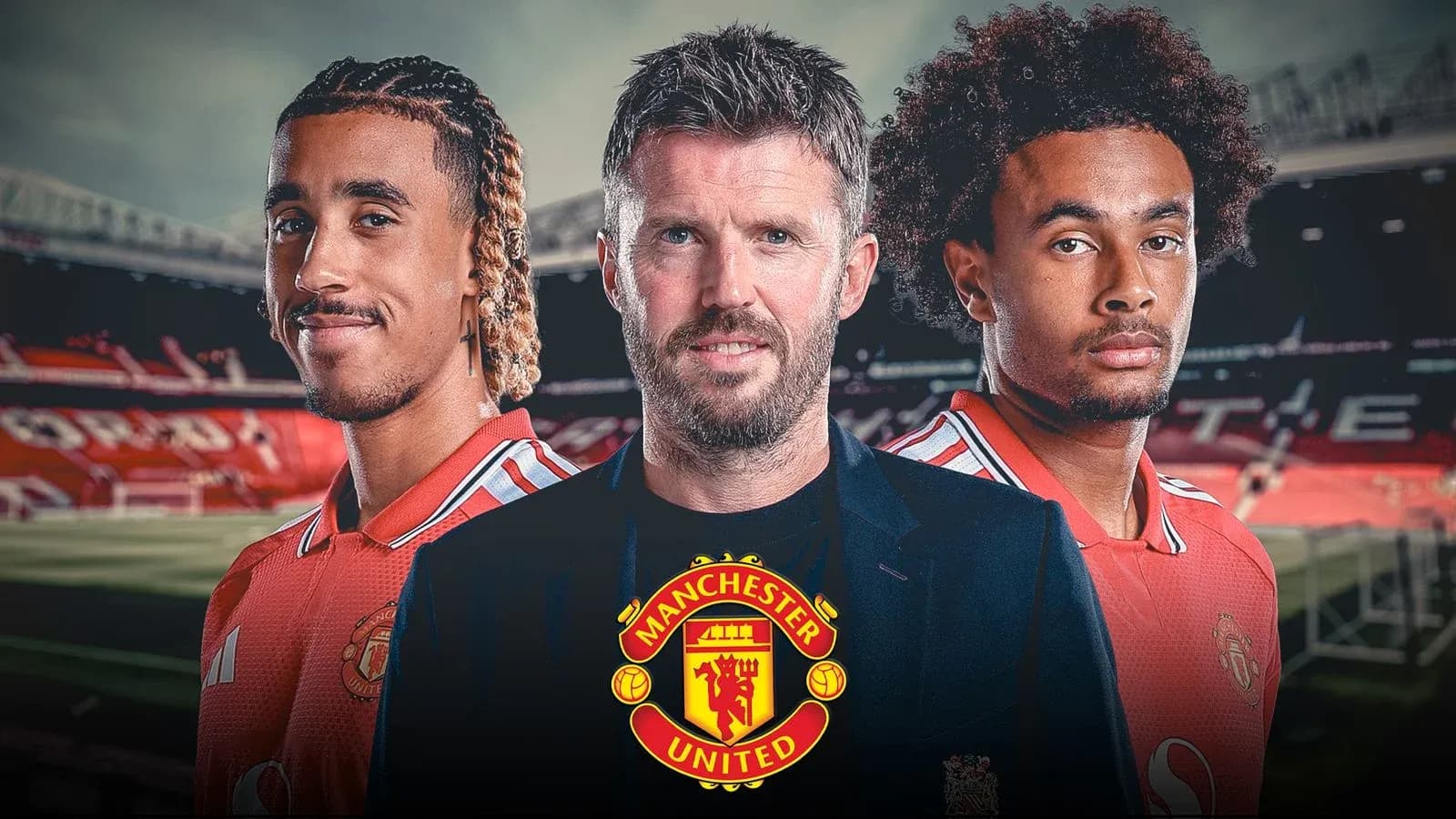
We are only in September, but the temperature around Michael Carrick has risen fast. This week, with Europe and a derby looming, already carries the weight of a season that could tilt either way.
An ‘easy’ start that isn’t
When the 2026/27 Premier League fixtures landed, the numbers painted a kind picture for United. Statistically, they were handed the softest opening six games in the division.
Halfway through that stretch, they’ve squandered more points than they’ve banked.
Now the calendar turns nasty. On Thursday night, United launch their Champions League campaign against Azerbaijani champions Sabah. Three days later, the first Manchester derby of the season.
Two games, two completely different stages, one brutal question: what does this squad actually have beneath the surface of Carrick’s preferred XI?
Rotation on Thursday feels inevitable. Given the level of opposition and the looming visit of City, Carrick almost has to shuffle his pack. That makes Sabah away (or at home, the pressure is the same) less about the result alone and more about the audition. It’s the first real look at United’s wider squad under strain.
Is it good enough?
A big squad with small margins
On paper, the numbers say yes. According to Transfermarkt, United have the second-biggest squad in the Premier League. That sounds like depth. It doesn’t look like it.
The problem is balance.
United are stacked in forward areas. In that department, they rank top for depth. But shift your eyes back a line or two and the picture changes. Eighth in midfield depth. Tenth in defence.
Zoom in further and it becomes starker. Ninth for right-back options. Eighteenth at left-back, a position that never seems to leave the conversation because of Luke Shaw’s injury record.
They have done this to themselves. Since 2022, only Everton and Liverpool have invested less in their backline. For a club with United’s resources and defensive issues, that is a damning statistic.
One imbalance is structural. The other is about quality.
The gap between the starting XI and the players who come on is too wide. United are not just short in certain areas; they are brittle when the bench is involved.
Financial restrictions have been cited inside the club, but the numbers are unforgiving. Since 2022, no Premier League side has a higher net spend than United. All that money, and still no genuine, consistent competition for places across the pitch.
When the subs come on, United fall away
Look at Everton as a case study.
Carrick waited until the 70th minute to make his first changes. Up to that point, United had a clear territorial identity. They controlled where the game was played and how.
After the substitutions, the pattern twisted. United spent more time in the opposition half, but the football became hollow. More sterile possession, fewer telling passes in the final third, a drop in chances created.
They also dipped in duels. Fewer challenges, less aggression, more space for Everton to exploit. The pressure they invited eventually told in the scoreline.
Context matters: Everton were chasing the game, and the last 20 minutes never mirror the first 70 exactly. But the trend is familiar. When Carrick turns to his fringe players, the performance level slides.
Benjamin Sesko stands out as the exception, an impact sub who actually lifts the tempo and threat. One player, though, cannot carry the burden of an entire bench.
The same pattern appears against Hull. On the surface, the numbers after the changes suggest United improved. But there’s a catch.
Four of the starting XI that day were dropped for the next two games. Carrick had been forced to rotate heavily in the opener because several players were still building fitness. His substitutions dragged the side closer to the group he truly trusts, the one that later faced Ipswich and Everton.
So the “improvement” came not from the bench raising the level of a settled team, but from Carrick restoring something closer to his first-choice core.
That’s the crux. Even when fewer than half the team is changed, the performance often suffers. The supporting cast is not matching the standard of the starters. And this week, that reality could leave Carrick exposed.
Auditions under the floodlights
For players like Leny Yoro, Patrick Dorgu, Andrey Santos and Joshua Zirkzee, Thursday night should feel like more than a group-stage opener. It is an exam.
These are the games where a manager decides who he can trust when the schedule tightens and the stakes rise. Put in a dominant, disciplined European performance and you don’t just help the team – you change the conversation about your own role.
Every one of them would love a taste of the derby. But the Champions League demands respect. United cannot afford a stutter at the start of their European run, not with the mood already edgy and the league form under scrutiny.
Neville talked about Carrick needing to earn the trust of the fans. That responsibility does not sit on the manager’s shoulders alone. The fringe players, the rotation options, the ones who hear their names linked with “squad depth” rather than “undroppable” – they all have to convince Old Trafford they belong.
Win on Thursday and United can steady the noise, at least for a moment. Lose, or even stumble, and the anxiety will swell before City even step onto the pitch.
This week will not define the entire season. But it may tell us something more important: whether United have a squad built to handle the strain of three games a week, or a starting XI walking a tightrope with no safety net beneath.