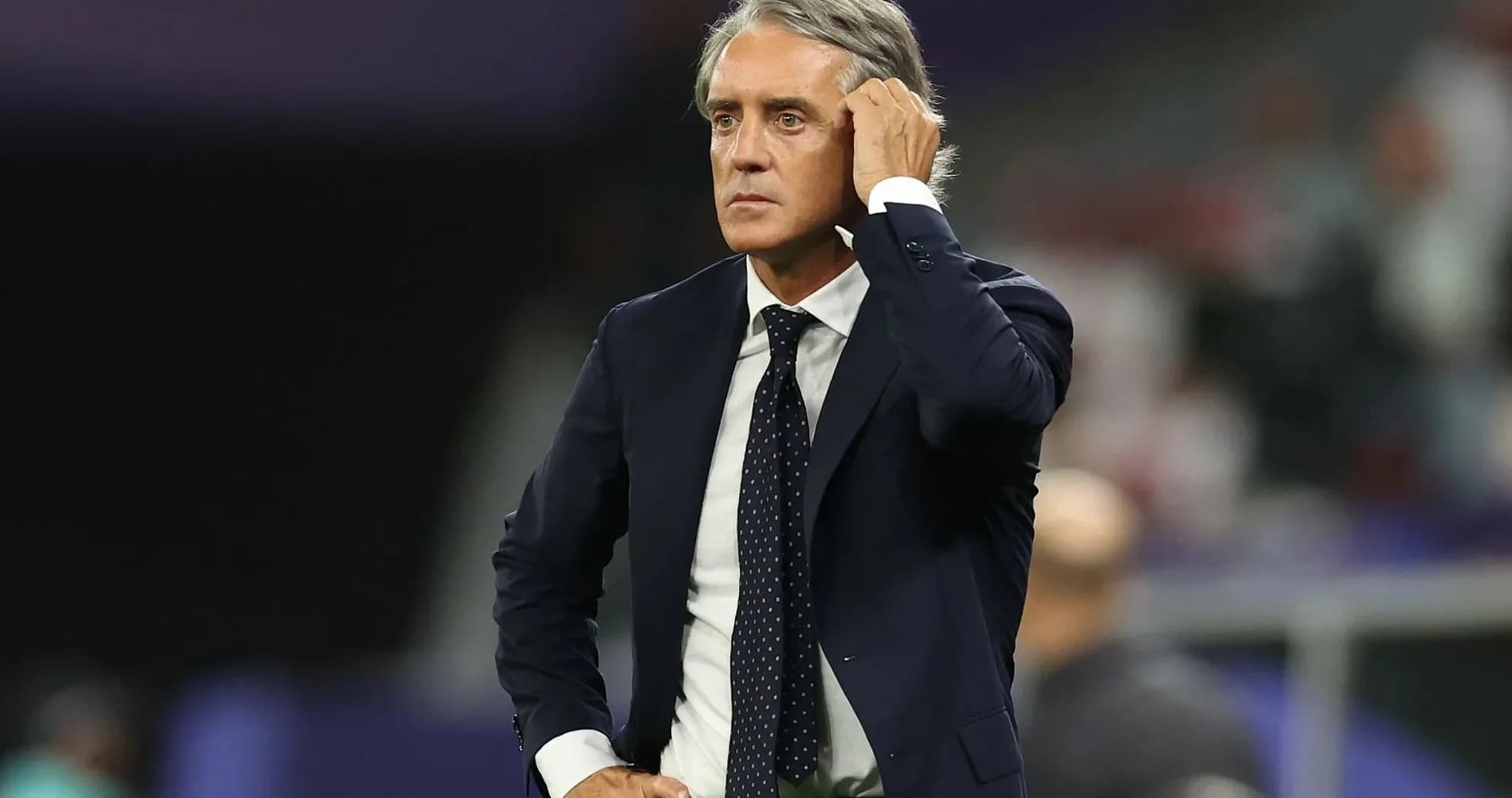
Roberto Mancini Returns as Azzurri Head Coach Amid FIGC Turmoil
Roberto Mancini is back where Italian football has so often turned in moments of doubt: on the Azzurri bench, summoned again after a chaotic spring that stripped away the federation’s carefully laid plans and exposed deep fractures at the top of the FIGC.
The federation confirmed Mancini’s return as Italy head coach with an official post on its social channels, ending a messy, stop-start search that had dragged on since Gennaro Gattuso’s resignation in April. Sky Italia reports he will be formally presented on Wednesday, closing the loop on a whirlwind few weeks in Rome’s corridors of power.
Mancini arrives fresh from a brief spell with Qatari club Al-Sadd, having left last month, and ready to step back into a role he knows intimately after his previous international tenure with Saudi Arabia. This is not a long-term succession plan finally coming to fruition. It is a late scramble, a rescue call to a proven figure after other doors were slammed shut.
Pirlo Blocked, Maldini and Leonardo Walk Away
The search for Gattuso’s successor had descended into internal crisis even before Mancini’s name returned to the forefront. Andrea Pirlo, widely seen as the leading candidate and close to the job, was dramatically vetoed at the last moment by FIGC president Giovanni Malago.
The trigger was Pirlo’s ambassadorial role with a Russian betting company, a red line for Malago. The reversal came at the eleventh hour, and it detonated inside the federation.
Technical director Paolo Maldini and adviser Leonardo, both only 16 days into their posts, resigned on the spot. Two heavyweight figures, gone in a flash. Their exit underlined just how divided the leadership had become over the direction of the national team and the standards expected of its figureheads.
What should have been a smooth handover after Gattuso’s departure instead turned into a power struggle, with the bench empty and the clock ticking.
Malago Turns to a Familiar Figure – and a New Right-Hand Man
With time running out and key lieutenants gone, Malago moved decisively. Speaking to the media on Tuesday, he laid out why the FIGC had circled back to Mancini and reshaped the structure around him.
“Time was running out and I thought the right person to be coach was Roberto Mancini. He's the best possible choice,” Malago said, making clear this was as much about urgency as it was about pedigree.
The president also revealed a second major appointment: Claudio Ranieri, the legendary former Leicester City boss, is stepping in as technical director. A role that, Malago insisted, remains central to the project.
“The role of technical director, not to be confused with other roles, has not disappeared,” he stressed. To reinforce that, the FIGC has approved an amendment to its statute, allowing another figure to also serve as president of Club Italia, the body that oversees the national teams.
“I needed someone to share the choice of Roberto Mancini as coach, and that person is Claudio Ranieri, who signed his commitment a few minutes ago,” Malago added.
So Mancini will not walk alone. He returns flanked by one of the most respected Italian coaches of his generation, a man whose reputation for organisation and calm contrasts sharply with the turmoil that preceded his arrival.
A Reset Wrapped in Familiar Faces
This is, in many ways, a reset disguised as a reunion. The FIGC has turned back to experience and gravitas, to names that carry instant authority in the dressing room and among the public.
Mancini’s task is clear: stabilise quickly, restore clarity on the pitch, and turn the noise of recent weeks into background static. Ranieri’s job runs alongside that: give the project structure, protect the coach, and ensure the federation’s new statute isn’t just a legal tweak but a functional shield.
The chaos that claimed Pirlo, Maldini and Leonardo has left scars. Whether this new axis of Mancini and Ranieri can turn a moment of crisis into a foundation for the next cycle will define not just the next qualifying campaign, but the FIGC’s credibility after one of the most turbulent managerial searches in its recent history.