Marc Skinner Leaves Manchester United Women: A Statement from INEOS
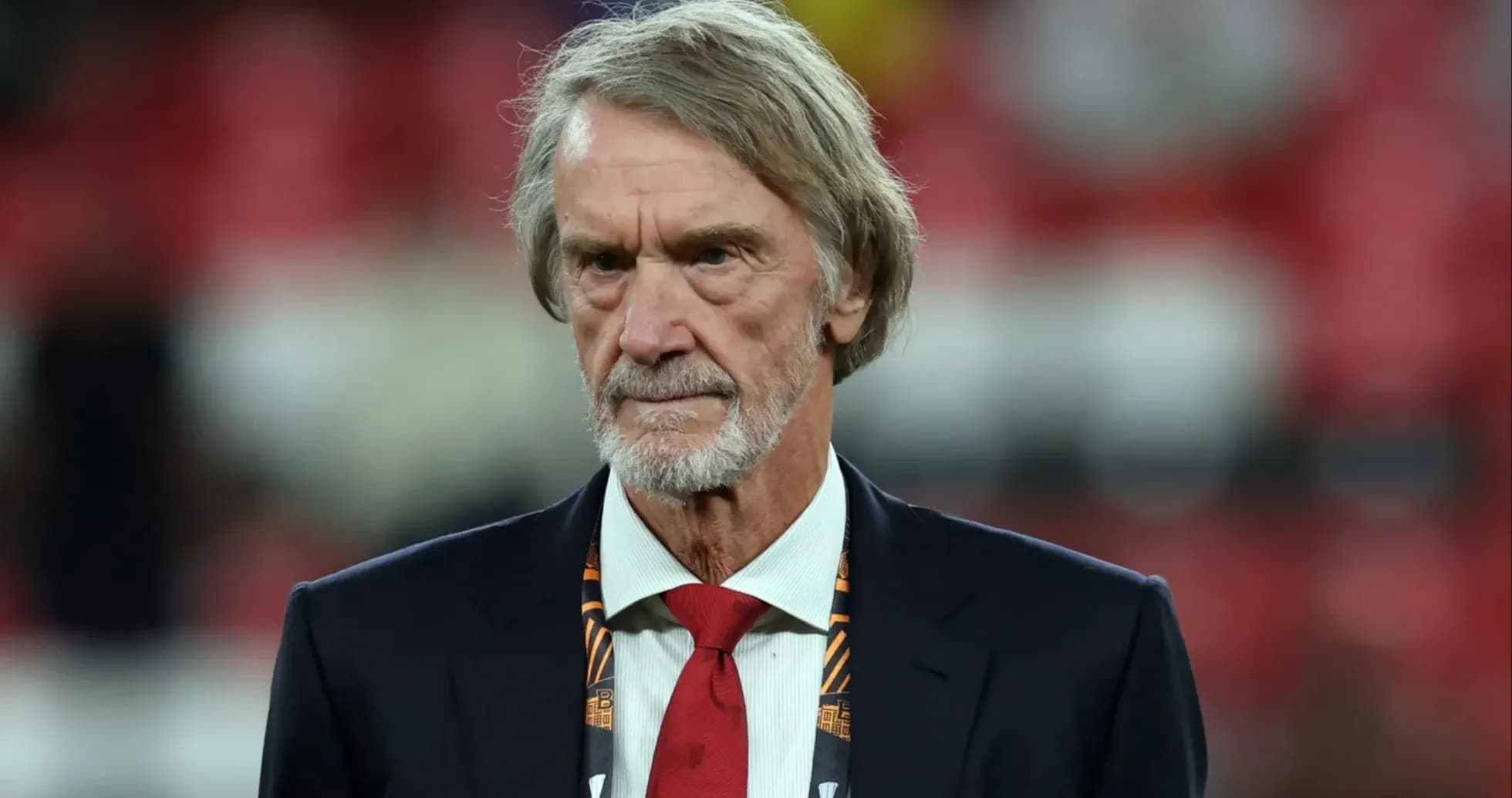
Marc Skinner’s exit from Manchester United Women is not just a managerial change. It is a statement of priority from Sir Jim Ratcliffe and INEOS – and not one that flatters the women’s side of the club.
A month before the new WSL season, United have lost the coach who delivered their first major trophy. Not to a bigger offer. Not to a national team job. To frustration.
A manager who overachieved – and walked
Angelina Kelly, talkSPORT’s women’s football correspondent, summed it up bluntly. Skinner’s departure, she said, was “50-50” in terms of shock. His tenure has been turbulent, but the context matters.
On a fraction of the budgets available at Arsenal, Chelsea and Manchester City, Skinner still dragged United into the conversation. He delivered the club’s first piece of silverware in the FA Cup. He took league finishes of fourth, third, fifth, second, fourth. He put Manchester United Women in the Champions League for the first time in their history.
On paper, that is overachievement. A coach squeezing more out of a squad than the balance sheet suggested was possible.
Yet the mood around him never settled. Fans questioned his selections. Performances in big moments fed the doubt. United reached four domestic cup finals under Skinner and won just one; the other three ended in aggregate defeats to Chelsea by a combined score of 6-0. That sort of gap on the biggest stage is hard to ignore.
So the picture is complicated: a respected coach with a solid record, but one who never fully convinced the stands.
Kelly compared it to the Eddie Howe situation at Newcastle before the new ownership. A manager widely admired within the game, praised by ex-professionals, respected in every interaction – but left staring at a ceiling imposed by those above him.
Skinner, she argued, looked at the coming season and saw a wall, not a pathway. Last year’s problems were clear: a lack of depth, a shortage of star quality for decisive moments. This summer, key players have gone, the squad is thinner, and the investment has not followed.
He could read the room. “I’m not going to be able to do anything with this team,” is the calculation Kelly believes he made. For his own reputation, he chose to walk.
The message from the boardroom? That is where the real scrutiny lies.
Ratcliffe’s words, Ratcliffe’s reality
The timing of Skinner’s exit lands squarely in the middle of an uneasy conversation about what Manchester United actually want their women’s team to be.
Before Ratcliffe’s arrival in 2023, the club appeared to be edging towards a more serious backing of the women’s side. Alessia Russo and Ona Batlle departed on free transfers – a damaging sign in itself – but United responded by spending a then club-record fee on Brazilian forward Geyse and adding Melvine Malard, Hinata Miyazawa and Irene Guerrero.
It looked like a pivot towards ambition.
Then came Ratcliffe’s public comments and his awkward visit to the training ground, where he asked captain Katie Zelem what her role was at the club. For supporters who already suspected the women’s team sat low on the new regime’s list of concerns, it landed badly.
Peterborough United chairman Darragh MacAnthony, speaking on talkSPORT, voiced the hard-nosed business view: the men’s team brings in the “mass amount of revenue” worldwide. That, he said, is the reality.
Kelly accepted the basic point but hit back at the optics. If you do not even know the name of your women’s captain, she argued, it “is going to come across as a bit disrespectful.”
And the comparison with other ownership groups is stark. Arsenal, Chelsea, Brighton and others with both men’s and women’s sides are “pumping money into the women’s side,” Kelly pointed out. They are not turning a profit. They are treating it as an investment, not a cost centre.
Tony Bloom at Brighton is her example. Widely praised as a shrewd owner, he is funding a stadium in Brighton specifically designed for the women’s team. Not a borrowed ground. Not a bolt-on. A statement of intent.
Against that backdrop, United’s approach looks cautious at best, indifferent at worst.
A ‘sustainable’ plan, or a cheaper one?
This summer has underlined the drift.
While United stall, rivals move. Lyon defender Alice Sombath has gone to Tottenham. London City Lionesses, sixth in the Championship last season, have stunned the market by signing two-time Ballon d’Or winner Alexia Putellas.
United, by contrast, have sold Malard to Chelsea for around £850,000 and shifted their rhetoric to “sustainability” and homegrown talent. Sources, Kelly said, claim the club believe current spending levels are not sustainable in the women’s academy. The new strategy is to build around youth and local players, framed as a return to the club’s identity.
In theory, that sounds romantic. In practice, Kelly hears something else.
Pressed on whether “homegrown” is simply code for doing it on the cheap, she did not hide her scepticism. If you want to attract and develop young talent, she argued, you need something tangible to show them. A project they can believe in. At the moment, “they have absolutely nothing going into this new season.”
There is quality, but it is thinly spread. A “fantastic goalkeeper.” A captain in Maya Le Tissier, “a wonderful centre back.” Ella Toone, the club’s biggest star. Jess Park, impressive since arriving from Manchester City.
Beyond that spine, Kelly sees little evidence of a serious build around them. No sign that the club are constructing a squad to compete with Arsenal and Chelsea, while others in the women’s game throw down markers with bold, headline signings.
So what is Ratcliffe’s play?
Kelly lays out two possibilities. Either he truly believes the sustainable, youth-heavy model will outsmart the rest of the WSL – that he is “smarter than the Arsenal owners, than Tony Bloom, than Michelle Kang” and the other investors driving the women’s game forward. Or the calculation is simpler: he does not see the value in spending on the women’s side and is willing to let it drift.
Right now, the latter feels closer to the surface.
A broken pathway and a small ask
The irony is painful. Manchester United Women’s senior side has only existed since 2018, but the club has long produced talented girls who then had nowhere to go. For years, the pathway simply ended. Promising youngsters reached a certain age and were effectively told: good luck elsewhere.
Ella Toone is the emblem of that failure. As a youngster, she had to play at Blackburn and Manchester City because the route at Old Trafford did not exist. She came back to United later, but her journey underlines how far behind the club started.
Now, with the women’s game accelerating, United risk repeating the same mistake in a new era. A youth system is only as attractive as the first team it feeds. If the senior side cannot compete, the pathway loses its shine.
Kelly struggles to see the plan. If United are banking on a seamless youth system to keep pace with Arsenal and Chelsea, where is the evidence? Where is the structure? Where is the spend?
The numbers she cites are damning in their simplicity. Around £10 million, she says, would transform Manchester United Women – enough to build a squad that could genuinely compete with the top sides. “Less than Mason Mount earns a year,” she notes. Not hundreds of millions. Not a stadium rebuild. A sum that barely registers on the men’s balance sheet.
That level of backing would give the women’s team a fighting chance. It would also help keep fans engaged in an era where loyalty often follows players rather than badges. Alessia Russo’s move to Arsenal proved that. Some supporters simply switched allegiance with her.
To keep pace with that shifting landscape, clubs need stars. They need to “put on a little bit of a show,” as Kelly puts it. United, at the moment, are asking supporters to buy into a project built around a handful of standout players and a lot of hope.
Hope does not sell season tickets on its own.
A club at a crossroads
The questions now are not about Skinner. They are about the people above him.
What does Ratcliffe want Manchester United Women to be? A flagship project that mirrors the club’s history of ambition and youth? Or a low-cost badge of modernity, maintained because every elite club is expected to have one?
Kelly does not see a coherent vision yet. She sees a team with a shrinking squad, a departing manager, a fanbase that has already tasted Wembley and Europe, and owners talking about sustainability while others build stadiums and sign Ballon d’Or winners.
The WSL will not wait for Manchester United to catch up. The league is moving, fast. The money is arriving, the standards are rising, and the gap between those who invest and those who hesitate is widening with every window.
United can still decide which side of that divide they want to stand on.
But with a month to go before the new season and their most successful women’s coach walking away, the clock is ticking loudly at Old Trafford.