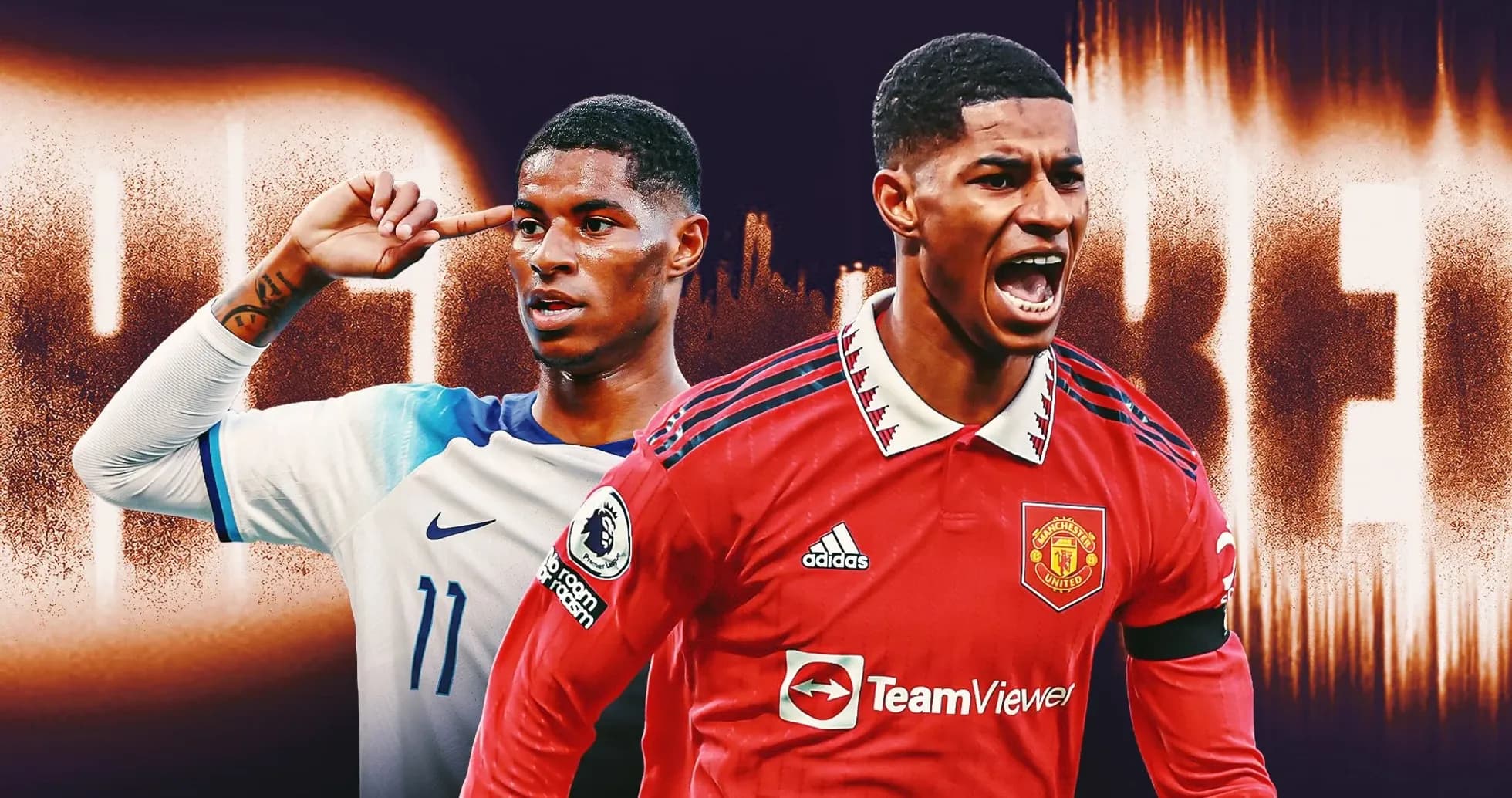
Marcus Rashford: From Footballer to Advocate
By 2016, Marcus Rashford could have drawn a clean line under his past. Manchester United star. England international. Global sponsor deals. The usual story: escape, success, distance.
He chose the opposite.
He took the hardest parts of his childhood and made them the engine of a public fight that stretched far beyond Old Trafford or Wembley.
From school dinners to a national reckoning
When Britain shut its schools in 2020 during the coronavirus pandemic, the closure exposed an uncomfortable truth. For many children from low-income families, free school meals were not a bonus. They were a lifeline.
The government’s early plan was brutal in its simplicity: when term ended, so did that support. No extension into the summer holidays. No safety net.
Rashford could not live with that. He knew what it meant to rely on those meals. He knew what it felt like to watch a parent struggle.
So he stepped in.
Working with the food charity FareShare, he helped fund and distribute meals to children who suddenly found their plates empty. That alone would have put him alongside a long list of footballers who quietly do good work away from the cameras.
He did not stop there.
In June 2020, Rashford went public with an open letter to the government, urging ministers to keep the support going through the summer. It was direct, personal, and deliberately stripped of party lines. His message was simple: “This is not about politics, but about humanity.”
The impact was immediate. The pressure built, the story refused to die, and Downing Street felt the heat. Prime Minister Boris Johnson reversed course, and the government announced a summer fund for children in need. Around 1.3 million children were expected to benefit.
One letter. One footballer. A policy U-turn.
Turning popularity into pressure
The story could have ended with that victory. A feel-good chapter in a difficult year.
Then the government balked at extending the scheme further.
Rashford answered with a petition. It surged past a million signatures, a raw measure of public anger and support. The noise became impossible to ignore. In November, the government came back with an aid package worth £400 million, then just under €450 million.
At 22, Rashford had done something rare in British public life: he had dragged a sitting government into a rethink on social policy. Other players had donated money, fronted campaigns, lent their names to charities. He turned his into leverage.
That taste of change only sharpened his ambition. Feeding children through a crisis was one thing. Tackling the roots of child poverty was another.
Rashford began to build something more permanent.
Building a movement, not a moment
Working with companies, supermarket chains and aid organisations, he helped establish the Child Food Poverty Taskforce. The aim was not vague goodwill. It was to maintain pressure, force political conversations and push for concrete measures against child poverty.
He also zeroed in on the government’s Healthy Start programme, which offers eligible families vouchers for essentials such as milk, fruit and vegetables. Rashford campaigned for that support to be expanded, dragging a little-known scheme into the national spotlight.
He understood that access is not just about calories. It is about quality, choice, dignity. To that end, he teamed up with television chef Tom Kerridge to promote healthy eating, using his profile to make information and ideas feel reachable to families who rarely see themselves reflected in glossy food campaigns.
And he did not stop at food.
Books had been a luxury in his own childhood. Something you went without when the priority was the next meal or the next bill. In 2020, with Macmillan Children’s Books, he launched his own book club to open up literature to children from disadvantaged backgrounds.
“There were times when escaping into the world of books would really have helped me. I want all children to have that escape. Not just those who can afford it,” he said.
Again, the pattern was clear. He took what he lacked as a child and tried to build it for someone else.
Drawing the line on racism
Rashford’s activism did not stop at poverty. It extended to identity, dignity, and the right simply to exist without abuse.
After the Euro 2021 final, England’s penalty shootout defeat to Italy unleashed an ugly wave of racism. Jadon Sancho, Bukayo Saka and Rashford, the three Black players who missed from the spot, became targets.
Rashford apologised for his performance, for the missed penalty, for the technical detail of the moment. But he refused to apologise for himself.
“I can take criticism of my performance all day long. My penalty was not good enough; it should have gone in. But I will never apologise for who I am or where I come from,” he said.
The distinction was stark. You can dissect his run-up, his body shape, his decision. You do not get to question his right to wear the shirt.
In an era when elite footballers are not just players but brands, assets and global marketing tools, that stance is far from guaranteed. Many are coached to smooth out the edges, to avoid political storms, to say nothing that might upset sponsors or stir the commentariat.
Rashford walked straight into the storm.
A different kind of rebel
He did it knowing the risks. Commercial, political, personal. He chose to use his platform for people with none, proving that a modern professional can still step beyond the safe script and shape the society around him.
This is not rebellion for the sake of headlines. He is not the caricature of the troublemaker, the player who kicks against authority simply to be seen.
His rebellion is sharper than that. It is constructive. It is rooted in lived experience and tied to specific goals: extend this scheme, fund that programme, change this policy.
No one pretends his efforts have wiped out child poverty in Britain. They have not. Aid packages do not dissolve structural inequality overnight. But he has shown that a single footballer can push further into the political and social arena than the sport’s powerbrokers ever really intended.
In football, rebellion is often pictured as a red card, a slammed door, a raised middle finger to the establishment. Rashford has offered another version.
Sometimes, defiance is quieter. It is a letter to a minister, a petition that refuses to fade, a sentence that says: I will not apologise for who I am or where I come from.
And in a game that so often tells its stars to stay in line, that might be the most radical act of all.