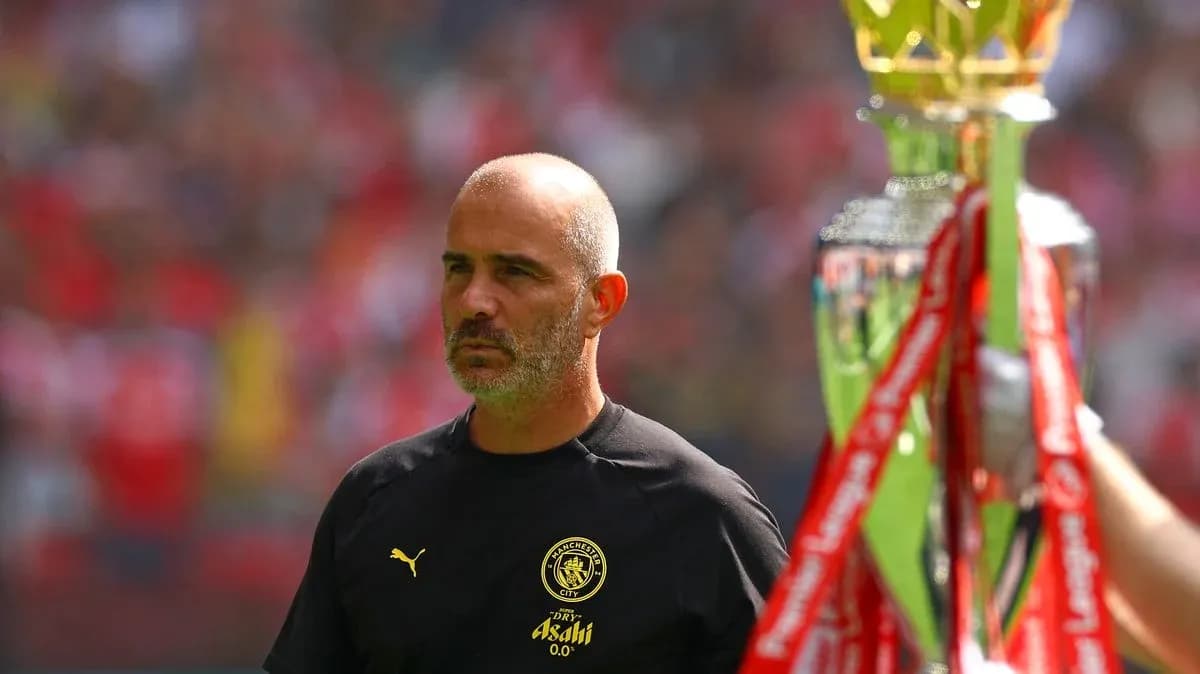
Maresca's City Struggles in Community Shield Against Arsenal
Manchester City have spent the summer looking like a team with a plan. Patterns, rotations, structure – Enzo Maresca’s ideas have been clear enough for supporters to start joining the dots.
Then came Arsenal at Wembley.
For 90 minutes in the Community Shield, those dots scattered. City looked disjointed, oddly flat, and a long way from the slick, choreographed side that had emerged on the Asia tour. Against the first elite opponent of Maresca’s reign, they suddenly resembled less than the sum of their considerable parts.
That jarred even more because four of those parts were among the best the club owns.
Starters who didn’t look ready
Erling Haaland, Elliot Anderson, Nico O’Reilly and Jeremy Doku were all thrown straight into the starting XI despite only just returning from holiday. On paper, it looked like a manager desperate to land his first trophy. Why else would you rush them back when others had banked more minutes and more time absorbing his methods?
Maresca’s explanation after the game painted a different picture. This wasn’t about Wembley. It was about Bournemouth and beyond.
"Sometimes players prefer to start doing the proper warm up and start from the beginning," he said. The plan, he added, was always to take them off after 45 to 60 minutes. In short, he treated a showpiece final like a finely calibrated fitness exercise: start them, get the rhythm into their legs, then pull them before the damage – physical or tactical – became too great.
The damage on the day, though, was obvious enough.
Anderson out of position, Kovacic exposed
No player felt that more than Anderson. Days earlier, Maresca had been crystal clear: the former Forest man is a No.6 or a No.8. Central. Involved. Orchestrating.
Against Arsenal, he was shunted to the right in a loose, floating role that never really made sense. It didn’t suit him, and it did Mateo Kovacic no favours either. With Anderson wide and O’Reilly higher up, Kovacic was left as the lone holding midfielder, repeatedly swamped as Arsenal poured through the middle.
There were flashes from Anderson – two excellent deliveries into the box, one for Haaland, one for Doku – reminders of his attacking quality even from an awkward station. But the experiment looked exactly that: an experiment. And not a convincing one.
Just as puzzling was the absence of Matheus Nunes. All summer he has effectively been anointed as City’s first-choice right-back, to the point that the club have parked plans to bring in competition for him. Yet against Arsenal, with a major trophy on the line and a top-level opponent pressing hard, he stayed on the bench.
In his place, Abdukodir Khusanov endured a difficult afternoon, part of a defensive line that never looked entirely settled. The selection calls on that flank – Anderson wide, Nunes out, Khusanov in – turned a tricky task into something far more uncomfortable.
Maresca’s previous work, though, suggests those choices were more outlier than blueprint. Put Anderson back where he belongs and restore Nunes to the back line and City should look far more like the side that had impressed in pre-season.
Grealish cameo with a transfer twist
The other eyebrow-raiser came at half-time. On came Jack Grealish.
This is a player who spent last season on loan at Everton, missed the summer tour and has been widely expected to leave before the transfer window closes. His minutes felt like they might have been more valuable for someone firmly in Maresca’s plans, such as Rayan Ait-Nouri.
Yet Grealish used the stage. For any club weighing up a move for the £100m winger, this was a handy reminder of his sharpness and ability to influence games. If City are intent on moving him on, that 45-minute run-out may help nudge negotiations in the right direction.
A flunked first exam – but not the full story
As a first serious examination of Maresca’s City, Wembley was harsh. The performance raised fair questions: how quickly can he imprint his ideas at this level? Will his structure and selections stand up to the demands of a Premier League and Champions League campaign without Pep Guardiola’s shadow and safety net?
Yet some of the calls were so starkly at odds with his pre-season work that it’s hard not to see a manager playing a longer game. Prioritising fitness for key players, experimenting with roles, managing minutes for those on the market – it all points to a coach treating the Community Shield as a stepping stone, not a defining moment.
That nuance will not comfort everyone. Defeat to Arsenal, and the manner of it, has already sparked strong, instant verdicts on Maresca’s City. The temptation to read a whole era into one scratchy August afternoon is powerful.
But this was 90 minutes in isolation, distorted by half-fit stars, square pegs in round holes and a manager clearly thinking about the league calendar rather than the silverware in front of him.
The real judgment starts when Bournemouth arrive and Maresca has no excuse to treat it like a warm-up.