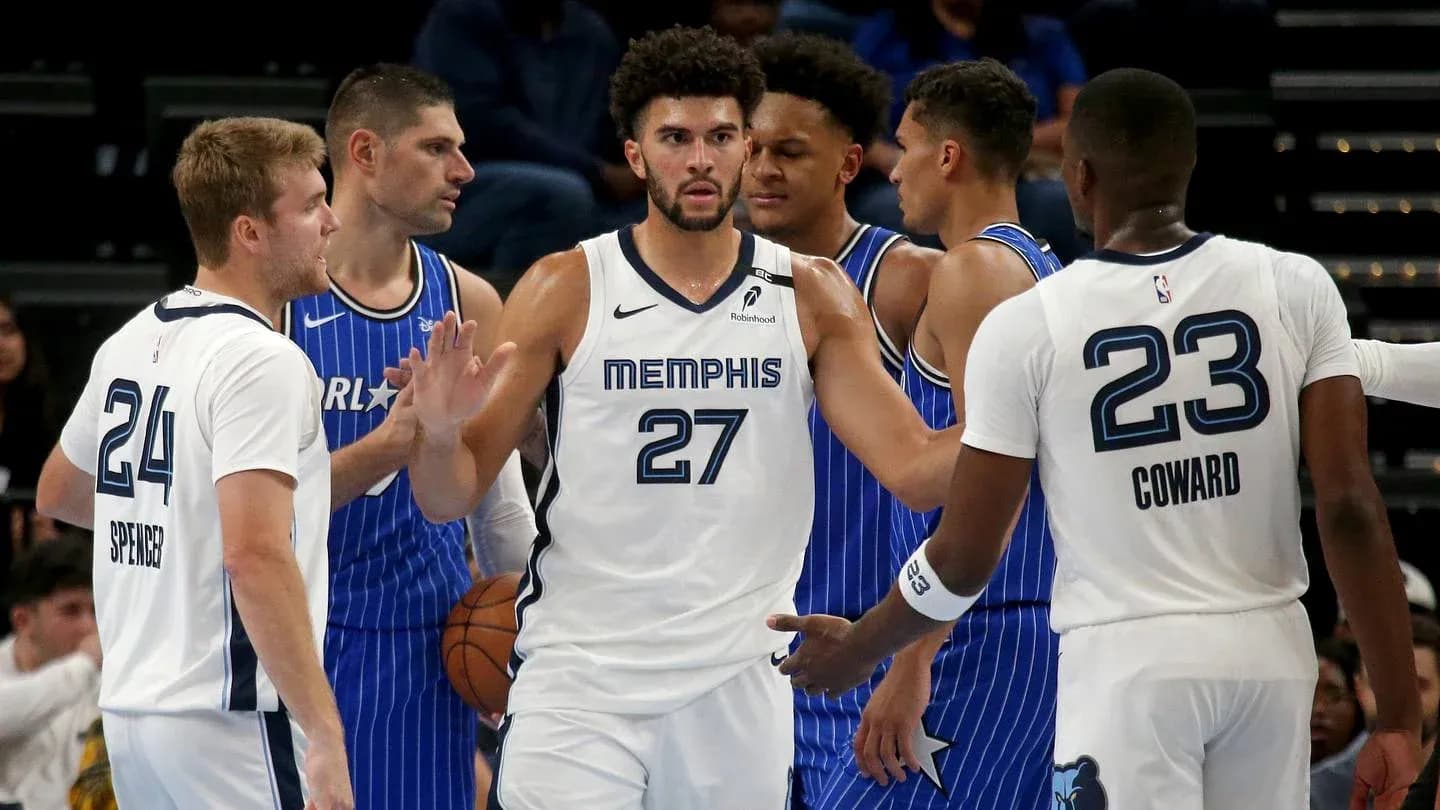
Memphis Grizzlies: A Promising Start to the Season
Ten games don’t define a season. They rarely even tell the truth about a team. But with these Memphis Grizzlies, they’re telling us something.
A 7–3 start from one of the youngest rosters in the league, in the first steps of a new era, is not supposed to look this polished, this purposeful, this… dangerous. Soft schedule or not, Memphis has put down a marker.
A New Identity Built From the Arc
The numbers jump off the page before the film even loads.
Over their past 10 games, the Grizzlies have buried 152 threes at a blistering 38.6%. They’ve also knocked down 195 free throws at an 84.6% clip. Those are not just hot streak figures; they are historic ones.
Memphis has hit each of those thresholds separately in previous 10-game stretches across franchise history. Doing both at once to open a season? That’s a different level. Only one other team in NBA history has ever managed that combination to start a year.
Right now, they sit second in the league in three-point percentage and first in free-throw percentage. No one circled that on a preseason scouting report. No one had this group pegged as an elite shooting outfit.
And yet here they are.
Yes, regression is coming. It always does. But the story isn’t just the percentages — it’s the personnel.
Cam Spencer looks every bit the “this is what he does” marksman, the kind of historically accurate shooter franchises spend years trying to find. Ty Jerome can run hot in stretches where every catch-and-shoot attempt feels automatic. Jerami Grant, coming off the bench, is drilling 45% of his threes on nearly four attempts a night, punishing second units that dare to help off him.
Then there’s the quiet revolution: Jaylen Wells and Ced Coward leveling up into genuinely reliable shooters. That was the dream when this phase of Grizzlies basketball began — not just to survive offensively, but to build a stable, above-average floor. Right now, they’re doing more than that: sixth in true shooting, 10th in offensive rating, 12th in half-court offense.
Will they stay this hot? No. Does that matter as much as the fact this might be the best pure shooting collection Memphis has ever put around a core? Not really.
If this is the baseline for a rebuilding roster, the timeline just got faster.
A Core That Already Fits
Young teams usually look like experiments in October and November. Misreads. Mis-timed cuts. Guys still trying to figure out where they belong.
Memphis has some of that, naturally. But the core of Cam Boozer, Zach Edey, Coward, and Wells already looks like a group that has skipped a few steps in the usual development curve.
Health has helped. So has the way their games mesh.
When those four share the floor, the Grizzlies play grown-up basketball. They rebound in numbers. They execute sets instead of just running actions. They rotate and help as a unit on defense. Add Ty Jerome to that mix, and you get one of the most productive starting units in the league, not just a promising one.
The key is role clarity. Each player leans into what he does best — and the coaching staff has built those strengths into the structure.
Coward and Wells, once question marks as shooters, are now trusted floor spacers. Edey, often pigeonholed as a massive offensive presence, is making his mark defensively, altering shots and anchoring possessions. Boozer is beginning to translate his offensive processing from theory to habit, reading the floor, making the extra pass, picking the right spots to attack.
They’re not perfect. They’re not finished. But they have something every young team chases: a 10-game reference point that proves they can win real NBA games playing their way.
That breeds confidence. Confidence breeds consistency. And consistency is where rebuilds stop being hypotheticals.
The Cracks Beneath the Shine
For all the promise, the flaws are obvious — and important.
Turnovers are the loudest alarm. Memphis sits 20th or worse in both committing turnovers and forcing them. That’s a double hit: they give away possessions and don’t steal many back. It undercuts their advantage on the glass and hands opponents extra chances they don’t need.
With the level of shooting and decision-making on this roster, that should be fixable. But it has to be addressed.
Then there’s the rim.
The Grizzlies have ridden a wave of three-point success, but the other side of variance has already flashed in early November. When the shots from deep stop falling, what’s left?
Right now, not enough near the basket. Memphis ranks 27th in the percentage of total shots taken at the rim and 19th in accuracy once they get there. That’s a dangerous combination for a team that doesn’t have elite self-creation or a dominant transition game to fall back on.
Without consistent rim pressure, the offense risks becoming too dependent on jump shots. The fix won’t come from suddenly turning this roster into a parade of slashers. It has to come from sharper ball movement, better timing, and more deliberate efforts to generate looks at all three levels in the half court.
The Grizzlies don’t need to abandon what’s working. They need to add a Plan B for the nights when the three-point gods turn their backs.
Expectations, Adjusted
Memphis is almost certainly ahead of schedule. That doesn’t mean it’s wrong to raise the bar.
This group is wired competitively. Multiple players on this roster hate losing in a way that shows up in the details — the closeouts, the box-outs, the extra rotation on the weak side. That mentality, paired with this level of shooting and a core that already fits, means they won’t be an easy out on many nights.
The schedule will stiffen. The percentages will cool. The league will adjust.
The question is no longer whether the Grizzlies can win. They’ve already answered that over these first ten games.
The real question is how soon this version of Memphis turns “encouraging start” into something the rest of the NBA has to take seriously every single night.