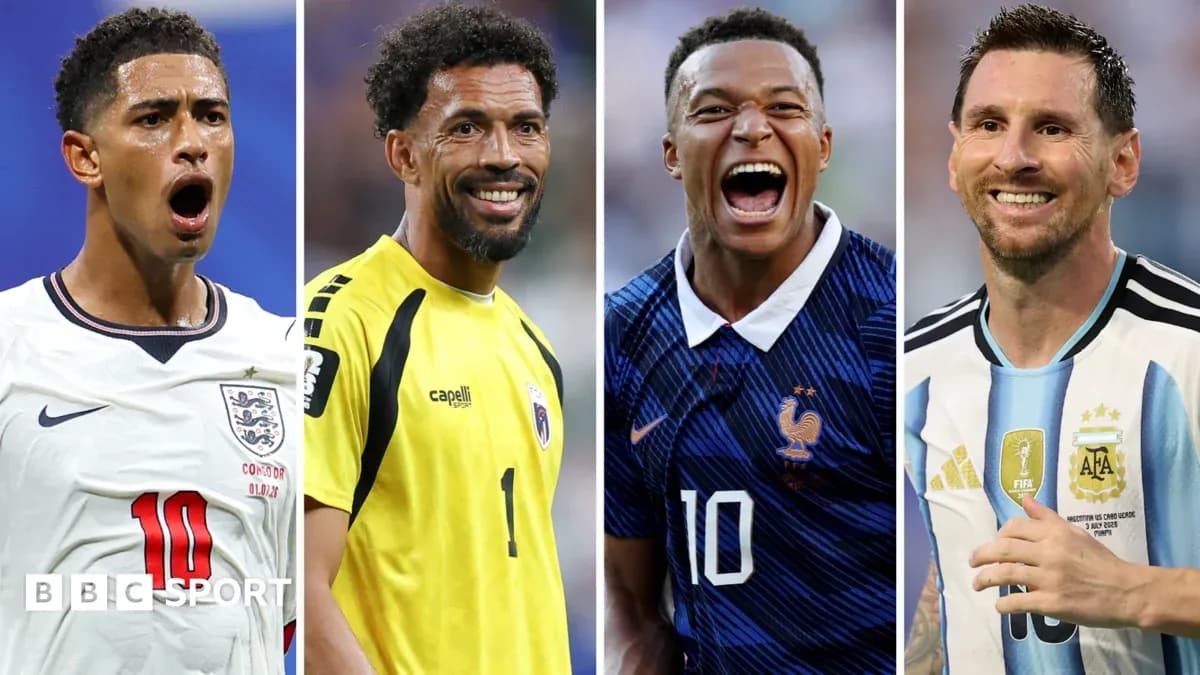
Messi's Last World Cup Masterpiece: A Tournament of Surprises
Lionel Messi bent the World Cup to his will one last time. At 39, with the clock ticking on an extraordinary career, he still found fresh ways to astonish – and drag Argentina, almost by force of personality and technique, through another brutal tournament.
This World Cup was supposed to belong to the next generation. Instead, it became a canvas for one final Messi masterpiece, framed by a cast of breakout stars, goalkeeping miracles and heavyweight failures.
Messi’s moments, Cabral’s thunderbolt
The image that will live longest is Messi’s goal against Cape Verde. A deadlock, tension rising, the ball fizzled into him on the run. The touch was velvet, the space almost non-existent. One more caress, then a guided finish into the top corner that looked placed but travelled like a rocket. Technique over power. Control over chaos.
Cape Verde refused to bow. Sidny Cabral’s extra-time equaliser against Argentina did not just extend the tie, it jolted the entire tournament. From the edge of the area, slightly inside the angle, he wrapped his right foot around the ball and sent it curling into the far top corner. Emiliano Martinez barely moved. The stadium did. Disbelief, then bedlam. It was the 103rd minute, Argentina were pegged back to 2-2, and a tiny island nation had pushed the champions to the brink.
That strike became an instant classic. It was replayed in studios, on phones, in bars. When Argentina eventually edged it 3-2, they survived the moment – but they did not erase it.
Messi’s influence stretched far beyond single goals. In the semi-final against England, when Argentina were being hunted down, he slowed the game to his rhythm, dictated where the ball went, when the tempo rose, when it dipped. He won the Silver Ball, yet to many observers he remained the tournament’s true heartbeat.
Goals that changed games – and reputations
This World Cup produced a gallery of outrageous finishes.
- Kerim Alajbegovic’s strike for Bosnia-Herzegovina against Qatar in the group stage was a solo run of rare composure. He weaved through challenges, then sent a rising right-foot shot screaming into the top of the net. It was the sort of goal that changes how a player is spoken about back home.
- Erling Haaland delivered a different kind of brutality for Norway against Brazil in the last 16. It looked like a casual swing of his right boot. It was nothing of the sort. The ball flew into the net with ruthless precision and astonishing power, the perfect full stop on a match-winning display that dumped out one of the favourites.
- In a cagey quarter-final between Argentina and Switzerland, Julian Alvarez tore the game open in extra time. No trickery, no elaborate build-up. Just a swerving, long-range right-foot drive that ripped into the top corner. The “under-rated” tag felt absurd as soon as the ball hit the net.
- Antonio Nusa’s opener for Norway against Ivory Coast was pure finesse. A shimmy in the box, a defender sent the wrong way, then a measured curling finish into the top corner. No panic, no rush, just cold precision.
The goalkeepers who refused to be beaten
The outfield stars had company. This tournament belonged just as much to the men in gloves.
- Johny Placide’s double save for Haiti against Morocco came straight from a goalkeeper’s highlight reel. First, he blocked with his legs. Before anyone could react, he sprang left to claw away a follow-up with one hand. It was instinct and agility rolled into one sequence.
- Jordan Pickford’s performance at the Azteca in England’s win over Mexico was laced with significance. Early on, Raul Jimenez’s header seemed destined for the corner. Pickford hurled himself low to his left and turned it away. In that febrile cauldron, it was a game-shaping intervention.
- Orjan Nyland produced one of the most remarkable saves of the tournament for Norway against Brazil – from his own defender. Kristoffer Ajer misdirected the ball goalwards, Nyland scrambled back, twisted in mid-air and managed to turn it on to the post. Disaster averted by sheer athleticism.
- Aymen Dahmen’s stop for Tunisia against Japan defied logic. Takehiro Tomiyasu thrashed a close-range effort at goal, the ball seemed to do everything but cross the line. Somehow, Dahmen kept it out.
- Patrick Beach, for Australia against Turkey, flung himself to his right to tip Abdulkerim Bardakci’s rising 30-yard strike on to the post. Alireza Beiranvand, for Iran against Belgium, missed Kevin de Bruyne’s initial shot, then somehow recovered his position to block Maxim de Cuyper from inside the six-yard box.
- And then there was Vozinha. Cape Verde’s 40-year-old goalkeeper started his World Cup with seven saves in a goalless draw against Spain and finished it with eight more against Argentina. He stood between Messi’s side and humiliation. His performances turned him into a global cult hero, his social media following exploding from around 50,000 to more than 29 million.
Rodri’s command, Bellingham’s will, Mbappe’s drive
Spain’s captain Rodri walked away with the Golden Ball. It felt fitting. He anchored the best team in the tournament, the irreplaceable fulcrum just as he is for Manchester City. Spain conceded only one goal all tournament, and his positioning, timing and calm stitched everything together.
Messi, with eight goals and four assists in eight games, took the Silver Ball. Kylian Mbappe, who arrived in the US looking more relaxed and determined than ever, claimed the Bronze Ball after a campaign of goals, leadership and a relentless work rate off the ball that surprised even those who know him best.
For England, Jude Bellingham became the defining figure. At times he seemed to drag his country through games by sheer force of will. His equaliser against Norway in Miami, seconds after the Norwegian fans had taunted England with “you’re going home”, felt like a one-man rebuttal.
Michael Olise left his imprint too. Marked out of the semi-final against Spain, he still departed with seven assists and the memory of that outrageous scissor-kick against Sweden that smashed against the post and had the entire press box half-rising to celebrate.
For many, though, Messi’s leadership, intelligence and ability to decide the biggest matches still placed him above all. At 39, he continued to “defy the law of physics”, as one seasoned observer put it, and further cemented his claim as the greatest.
Cubarsi and the kids who stole the stage
The official Best Young Player award went to Pau Cubarsi, Spain’s 19-year-old centre-back who played every minute of their campaign. Composed, unflappable, magnificent in the semi-final against France, he looked less like a prospect and more like a pillar of the future.
He was not alone.
- Morocco’s Ayyoub Bouaddi announced himself with a commanding display against Brazil in New York New Jersey. His movement without the ball drew comparisons with Patrick Vieira and Luka Modric, an intelligent, roaming presence who seemed to be everywhere at once.
- Erling Haaland might not sound like a “breakout” name, but in the US his impact turned him into a household figure far beyond the traditional football bubble. This World Cup pushed his profile into another stratosphere.
- Switzerland’s Johan Manzambi, just 20, played with a grin and a showman’s instinct. Three goals in four games, a Premier League move to Aston Villa in the region of £50m already in place, and a sense that injury robbed the tournament of an even bigger storyline.
- Mexico’s 17-year-old Gilberto Mora slipped into the starting line-up and played with the air of a veteran. His poise and style evoked Modric, his ceiling seemingly limitless.
- And then there was Alex Freeman of the USA, whose performances at full-back drew such praise that his own manager, Mauricio Pochettino, publicly suggested he could become one of the best in the world in his position.
Stadiums that shook, nights that linger
Some nights cut deeper than others.
At the Azteca, Mexico v England felt like football plugged straight into the senses. The Mexican anthem thundered around the stadium, a wall of sound that rattled through the press box. For those who have covered World Cups for decades, it ranked among the greatest atmospheres they had ever experienced.
In Philadelphia, Paraguay’s penalty shootout win over Germany created another kind of memory. Outside the stadium, fans in red and white flags wept as they tried to explain what it meant. For one father and son, it was “the best day of their lives”. Those are the nights that turn tournaments into folklore.
Messi’s opening hat-trick of the World Cup sent its own message: he was not done. Argentina were not done. The defending champions were back for more.
Cape Verde’s push against Argentina, fuelled by Cabral’s wonder goal, became the emotional heartbeat of the knockout rounds. The smallest nation ever to reach that stage stood toe-to-toe with the holders and almost sent them home.
Across the US, fans embraced the circus. Tailgates in Philadelphia, sausages and beers handed out from the back of pick-up trucks, strangers asking reporters if “it’s coming home” before kick-off. In Los Angeles, Mexico’s victories set off fireworks across the city, green shirts flooding the streets.
Giants that stumbled
Not everyone rose to the occasion.
Brazil, under Carlo Ancelotti, trudged through the tournament. Slow. Uninspired. Un-Brazilian. Norway exposed every flaw in the last 16 and sent them home with a performance that felt like a verdict, not a fluke.
Senegal arrived with arguably the most talented squad in their history. Off-field issues and a flawed environment choked that potential. Two goals up against Belgium in the last 32, they stood on the brink of salvaging their campaign. Tactical errors and poor game management flipped the script. A golden chance for a gifted generation slipped away.
Portugal, with Cristiano Ronaldo still central, exited in the last 16 after a 1-0 defeat by Spain. Ronaldo scored three in five games, but the team never hit the level many expected. Another World Cup ended in frustration.
The USA started brightly, riding a wave of optimism at home, only to be dragged into controversy around Folarin Balogun and then meekly knocked out by Belgium. A promising narrative collapsed into a familiar post-mortem.
Scotland’s failure to sneak through as one of the best third-placed teams stung. The wait for confirmation, drawn out over days, only deepened the pain.
France, in their semi-final against Spain, simply never arrived. A star-studded attack floundered, the performance flat and lifeless in a match that demanded edge and courage. Those who had tipped Spain to win still did not expect France to go out with such a whimper.
Even the final itself drew criticism. The MetLife Stadium in New Jersey, huge and imposing, was branded an expensive, awkward bowl in the middle of nowhere. Many would have preferred Philadelphia’s more accessible, fan-friendly setup.
The fans who owned the World Cup
Every World Cup crowns its own champions in the stands.
Mexico’s support felt like the tournament’s beating heart. In the Azteca and across the US, they sang, roared and suffered with a passion that infected everyone around them. In Mexico City, the night before they faced England, a restaurant MC announced the presence of English visitors and the room erupted in applause. Warmth and rivalry, side by side.
Brazil’s fans turned cities into temporary outposts of Rio and Sao Paulo. When they came to Philadelphia, the streets shifted colour and sound for 48 hours.
Norway’s travelling support brought the Viking row to the world stage. Red shirts sat in lines, rowing in unison, a choreographed surge that swept through stadiums. After games, players joined in, turning celebrations into mass rituals. In Miami, as Norway led England 1-0, their fans taunted with “you’re going home”. Seconds later, Bellingham silenced them. The moment only added to the theatre.
Curacao’s fans, from a nation of just 150,000, somehow made enough noise inside the Philadelphia Stadium to feel as if the entire island had decamped to the US.
Colombia’s supporters transformed Arrowhead Stadium in Kansas City into a carnival when they faced Ghana, colour and music rolling around the stands.
Argentina’s following was vast. Twice in Miami and Kansas City, their support swelled beyond 60,000, a sea of sky blue and white that never stopped singing. They generated some of the loudest, most intense atmospheres anywhere in the US.
And then there was Los Angeles, where Mexico’s presence turned matches into city-wide events, fireworks crackling overhead and green shirts visible on every corner.
In the end, Spain lifted the trophy and Rodri took the Golden Ball. Cubarsi emerged as a defensive prodigy. Messi, impossibly, stayed at the centre of everything. Cabral, Vozinha, Manzambi, Mora and others wrote themselves into the game’s shared memory.
The giants stumbled, the smallest nations roared, and the US discovered just how wild and sprawling a World Cup can be. The only real question now is what any future tournament can possibly do to follow this.