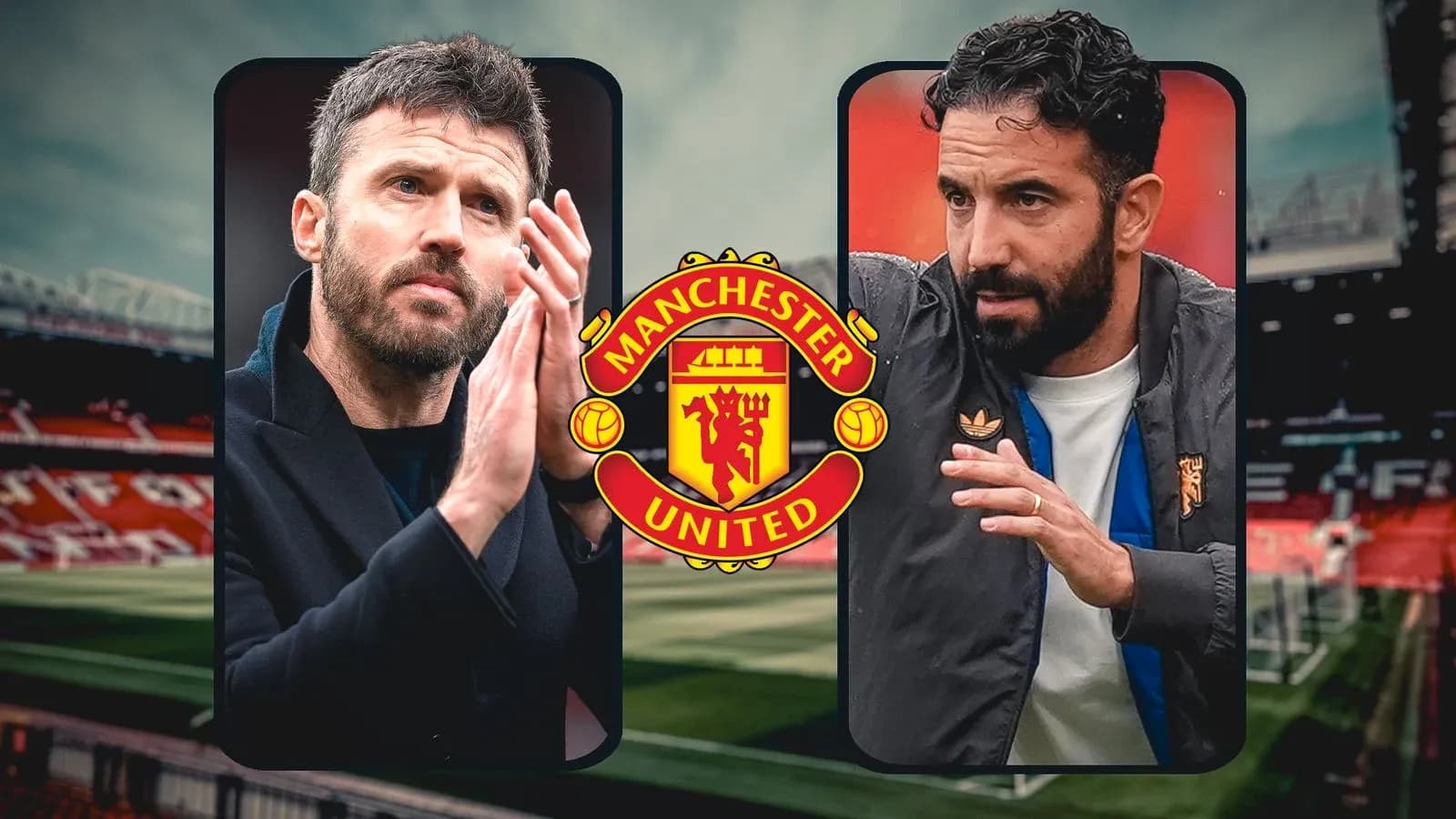
Michael Carrick's United Philosophy: A New Era Begins
Ruben Amorim once told Manchester United fans they would have to suffer before they could succeed. Michael Carrick has arrived with a different sermon: there is a United way to do this, and it doesn’t have to feel like purgatory.
Twelve months ago, Marcus Rashford was lighting up Barcelona, Carrick had just been sacked by Middlesbrough, and Amorim was bracing for his first full campaign at Old Trafford. Now all three collide again, in the same stadium, with the roles flipped and the stakes strangely emotional for a pre-season game.
Rashford, the prodigal forward, walks back into a club that looks familiar but feels very different. The manager greeting him is not a distant figure but a former team-mate and captain, arms open, offering a clean slate and a chance to rewrite a story that began a decade ago in United’s academy.
Across the technical area, Amorim turns up with AC Milan and a point to prove. Sacked five months into last season at United, he has crossed the continent and now chases his first pre-season win against the club that dismissed him. His turbulent spell at Old Trafford – dramatic, combustible, often box-office – stands in stark contrast to Carrick’s quiet, steely rise.
Rashford’s presence adds a sharp edge to it all. Amorim felt he had to move him on, publicly questioning the England international’s attitude more than once. Two loans later, with flashes at Aston Villa and a LaLiga title with Barcelona behind him, Rashford is back in front of the coach who cut him and the one who wants to restore him. This does not feel like a friendly. It feels like the next episode of a long-running soap opera.
The meeting with Milan closes pre-season for both clubs and doubles as a mirror. A chance to look back at a chaotic year, and to see how United’s midseason reset under Carrick has turned a fractured squad into something that again resembles Manchester United.
Here are three ways Carrick has reshaped the club since Amorim’s exit.
From rigid dogma to real flexibility
Amorim’s refusal to bend became the defining mark of his time in Manchester. Given the job of turning around results, he stuck to what he knew: his 3-4-3, his system, his rules.
He didn’t just defend it. He doubled down. Under pressure, he famously told reporters that not even the Pope could convince him to change his shape. It was a line that travelled well, but it also summed up the problem. When the Africa Cup of Nations stripped numbers from his squad, he still could not – or would not – adapt. Results sagged. So did patience.
There were late signs of compromise, hints that he might tweak the structure, but when the heat rose he retreated to type. That stubbornness reportedly grated on the United hierarchy and fuelled the disconnect with the fanbase.
Supporters never fully bought into the three-at-the-back vision. Yes, there were spells when United scored freely under Amorim, but the system felt alien to what Old Trafford had grown up on. It was functional, often entertaining in bursts, yet far from the identity fans wanted to see in the long term.
Early noises from Milan suggest familiar issues. Reports of confusion, of players pushed into unfamiliar roles to serve the system rather than the other way round, echo the complaints from Manchester.
Carrick’s first game in charge cut straight through that tension. A Manchester derby, at Old Trafford, and a chance to show what he believed United should look like. He let the team off the leash. United attacked with conviction, broke lines, and punched holes in Manchester City almost every time they went forward. The 2-0 scoreline flattered the visitors. It could have been ugly.
That front-foot intent has carried into this pre-season. The ball goes forward quicker. Transitions are sharper. New signing Andrey Santos has made a habit of threading vertical passes through midfield, while Bryan Mbeumo has thrived in a central role, constantly darting in behind and unsettling defences.
Bruno Fernandes, pushed back into his natural No 10 position, became the symbol of the shift. Freed from compromise, he went on a creative tear that ended with a new Premier League assist record. Under Carrick, the old debates about United’s style have gone quiet. The team looks like it knows what it wants to be.
Belief restored at Old Trafford
The mood has changed. You can feel it before a ball is kicked.
Amorim’s press conferences were compulsive viewing but they carried a cost. Talk of storms. Of suffering. At one point, he labelled his side the worst team in United’s history. It was raw, it was dramatic, but it drained optimism from the stands and the dressing room alike.
On paper, United were not in crisis when he was sacked. They were close to the top four, still in the race. You would not have guessed it from his tone. Doubt seeped into everything. He even said his team were not ready for the Champions League.
Carrick walked in and simply got them there. Same squad, same league, different message. United edged over the line and secured the Champions League spot Amorim had effectively written off.
Now the mood has flipped. Ahead of the new season, there is open talk of ambition. Leny Yoro and Mbeumo have both spoken about wanting to win the league. That kind of statement would have sounded delusional a year ago. Carrick has not batted it away. He has embraced it.
He believes this group can do something special. That claim lands harder when you remember where they were: a year removed from being dragged towards a relegation scrap under the previous regime, they now talk about titles with a straight face. The difference is not just tactical. It is psychological.
United, once again, look like a club of believers.
A second chance culture
Under Amorim, crossing the line often meant you were gone for good. Fall out of favour and the door did not tend to reopen. In a squad long accused of lacking character, that hard line carried a certain appeal.
Alejandro Garnacho discovered the consequences. Kobbie Mainoo looked on the brink of the same fate. Rashford, frozen out and criticised, was shipped out on two separate loans as his position at the club became untenable.
Amorim will feel vindicated on some calls. Garnacho’s loan to Chelsea never really took off, and he now finds himself at Aston Villa trying to rebuild momentum. That decision, in Amorim’s eyes, will stand up.
Mainoo’s story tells a different tale. Marginalised under Amorim, he flourished under Carrick. The midfielder became a fixture in the side, and though he did not start a league game until January, his impact was such that he earned a nomination for PFA Young Player of the Year. The talent had always been there. The opportunity had not.
Rashford remains the great unknown. His quality has never been in doubt. Amorim’s issue was with his conduct, his professionalism, the way he carried himself day to day. The winger’s bursts of form at Villa and his role in Barcelona’s LaLiga triumph have reminded everyone what he can do. Now comes the harder part: proving he can match the culture Carrick has built if he is to stay beyond the September deadline.
What is clear is that Carrick has reopened a door that looked bolted. He has offered Rashford something Amorim would not: a genuine shot at redemption at Old Trafford.
Whether Rashford takes it is another story. But under Carrick, United have become a place where careers can be revived, not just ended. And as the club’s former prodigy walks back into the fold to face the manager who exiled him and the one who believes he can still be saved, you sense this season will tell us just how far that philosophy can carry Manchester United.