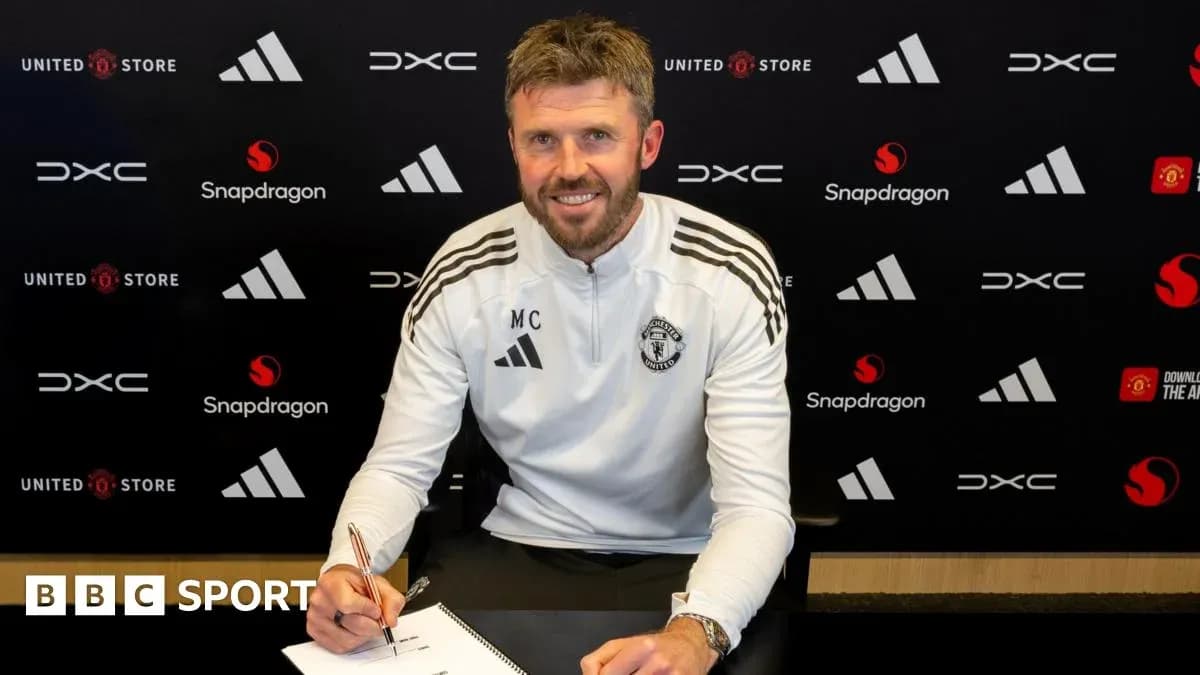
Michael Carrick Takes Permanent Charge of Manchester United
Manchester United have stopped pretending this is temporary. Michael Carrick is their head coach, properly and permanently, on a two-year deal. The caretaker has the keys.
At 44, the former United midfielder has earned it the hard way. He walked into a club in January that had just sacked Ruben Amorim, a season drifting, a dressing room unsure of its direction. Four months later, United are guaranteed third in the Premier League and back in the Champions League, with momentum and a plan.
- Eleven wins from 16 league games.
- Thirty-six points collected in that spell – more than any other top-flight club over the same period.
- A place on a six-man shortlist for the Premier League manager of the season award.
This has not been a sentimental appointment. It’s a reward for a body of work.
From Carrington calm to Champions League nights
The turnaround has not been built on wild tactical reinvention or headline-grabbing soundbites. It has been built on calm.
Carrick walked into Carrington and lowered the temperature. Players talk about stability, about clarity, about a manager who doesn’t flinch when games tilt against his team. The late surge up the table, sealed by Sunday’s thrilling win over Nottingham Forest, has been the public face of that composure.
“From the moment that I arrived here 20 years ago, I felt the magic of Manchester United. Carrying the responsibility of leading our special football club fills me with immense pride,” Carrick said after the announcement.
He has been asked about his future so often in recent weeks he could almost have handed out pre-printed answers. Now there is no need. The uncertainty has gone; the scrutiny will only grow.
Across the past five months, his squad have hit the standards he demanded: resilience when they were under pressure, togetherness when results mattered most, and a refusal to fold in difficult spells. That, as much as the numbers, has convinced the hierarchy.
“Now it's time to move forward together again, with ambition and a clear sense of purpose. Manchester United and our incredible supporters deserve to be challenging for the biggest honours again,” he added.
That line is not just rhetoric. It’s a challenge to his own club.
Third place secured – but a different kind of season awaits
There is a truth Carrick knows better than anyone: this was the easy part.
Third place in a 40-game season tells one story. No European football. Early exits in both domestic cups. Long training weeks, time on the grass, time on the video screen. Space to coach.
Next season will be different. A campaign that could stretch to 60 matches changes everything – the load on players, the depth of the squad, the margin for error. To simply finish third again, with those extra demands, would represent a major step forward.
To have any chance of that, United have to get recruitment right.
Central midfield is the most urgent concern. Casemiro is leaving, Manuel Ugarte has not convinced, and Kobbie Mainoo, for all his promise, cannot be expected to play every game in every competition. That is not development; that is overuse.
Carrick needs at least one midfielder who can anchor, press and pass at the level he wants, and probably more. The gap is obvious. So is the risk if it is not addressed.
Gaps to fill and kids to trust
The issues do not stop in midfield.
If Patrick Dorgu continues to be pushed into a more advanced role, United will have to find genuine competition for Luke Shaw at left-back. Shaw remains first choice, but a 60-game season is unforgiving. Behind him, the drop-off is too steep.
The same tension exists in goal. Senne Lammens needs pressure and a pathway, but Radek Vitek has just come off an outstanding season at Bristol City and wants to keep playing every week. Bring him back and he sits. Leave him out and you risk stalling the succession plan. These are the decisions that turn a tidy project into a robust squad.
The academy can help, and it will. Jacob Devaney, just 18, has impressed in the Scottish Premiership with St Mirren and looks ready for a closer look. Shea Lacey, an England Under-20 international, has the talent and temperament to force his way into the conversation next season.
But the kids cannot carry the weight alone. They are the supporting cast, not the structural pillars. Carrick needs backing from the recruitment department, not just another glossy presentation about youth pathways.
Beyond the numbers
Some statistical analysis has tried to poke holes in United’s resurgence, arguing that the performances under Carrick have not always matched the results. The metrics, they say, hint at a team riding its luck.
There is a kernel of truth in that. United have not dominated every game. They have had to suffer at times.
Yet those numbers miss something important: the mood. The sense of order. The lack of panic on the touchline and in the dressing room when games swing. United under Carrick look like a side that knows what it is trying to do, even when it doesn’t quite execute it.
That is not easily measured, but it matters when the season stretches into the cold months and the fixtures pile up.
Carrick has earned his contract by restoring that sense of direction. The next phase will demand something more ruthless: the right signings, the right calls on who stays and who goes, the bravery to lean on youth without hiding behind it.
He has the job he always seemed destined for. Now comes the question that will define his time at Old Trafford: with the right players, how far can he really take Manchester United?