Mirra Andreeva Shines at WTA Finals Despite Controversy
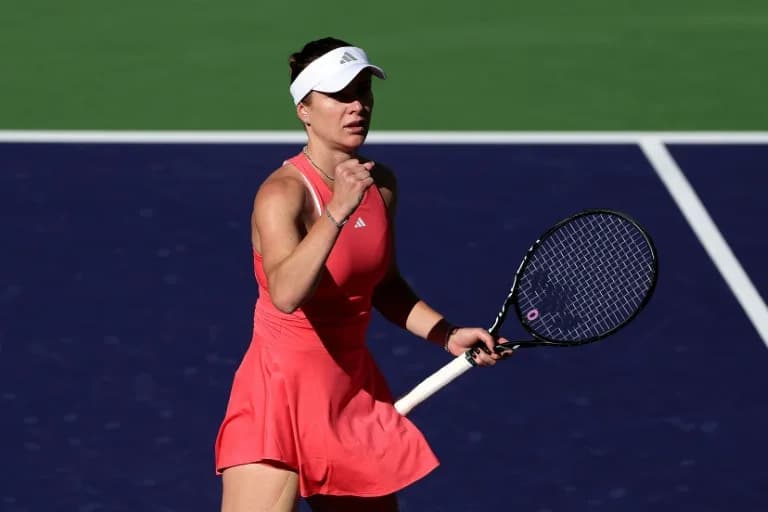
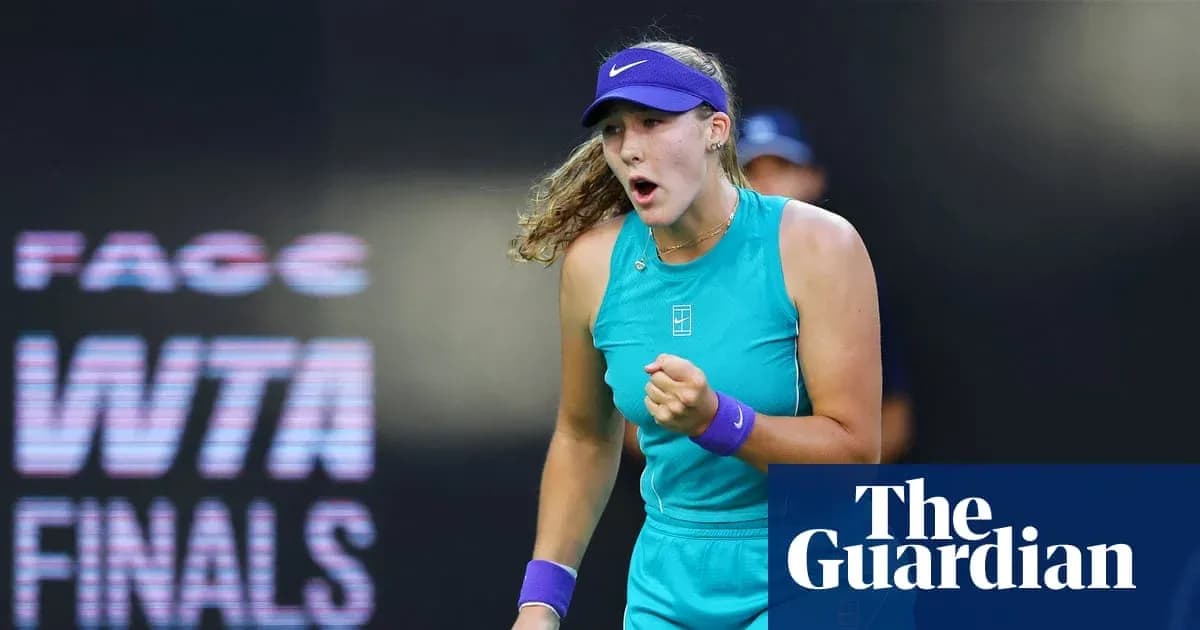
Mirra Andreeva walked off Stadium 2 with a 6-4, 6-0 win and a grin that said plenty. A debut at the WTA Finals, a straight-sets dismantling of Elina Svitolina, and then a live TV debrief in front of a packed Indian Wells crowd. Not a bad day’s work for a 19-year-old.
Waiting for her on the Sky Sports desk was Madison Keys, the 2025 Australian Open champion moonlighting as a reporter. Keys didn’t bother easing into it. She turned, smiled, and fired the first shot: “Hey, diva!”
Everyone knew what she meant.
A hot mic, a cold verdict
On the eve of the tournament, Jessica Pegula – one of the tour’s most even-tempered presences – found herself at the centre of a storm. A hot mic picked up a private conversation with her coach after a practice set against an edgy Andreeva. Pegula’s verdict was blunt: Andreeva was a “diva” who “needs to be humbled”.
The clip rocketed around social media. Within hours, the label stuck to Andreeva like a name tag she never asked for.
Yet by the time she walked into the Finals proper, the teenager had flipped the script the only way that really counts in tennis: on the court. She outplayed Svitolina, shrugged off the noise, and then leaned into the joke. The tension that could have soured the week instead became part of the show.
Pegula apologised quickly. Andreeva answered with a wink of her own. When she later posted a photo from the pre-tournament shoot featuring the two of them, she captioned it simply: “DIVAS”.
A golden era on the court, a battle off it
Strip away the gossip and the WTA right now is delivering some of the best tennis of the past decade. The top of the women’s game is stacked so deep that every member of the current top 10 owns either a grand slam title or a WTA 1000 trophy.
The depth is so ruthless that even six-time major champion Iga Swiatek, who finished the year at No 9, didn’t qualify for this year’s WTA Finals. For the first time since 2019, she’s watching the flagship event from the outside.
This is what the WTA sells better than anyone: elite athletes who don’t hide from the spotlight or from each other. The tour lives in that awkward, combustible space where fiercely ambitious rivals share planes, hotels and locker rooms, then walk out to try to break each other’s resolve for two hours.
You see it in the frosty handshakes, the sidelong glances at the net, the prickly press conferences that light up timelines. You also see it in moments of sportsmanship that cut through the noise. It’s raw, it’s messy, and it suits the social media age perfectly.
The question hanging over all of it is simple: can the WTA turn this drama and quality into a business that matches the product?
Money, missteps and a moving target
The tour has chased big money before and paid a price for it.
A blockbuster 10-year deal took the WTA Finals to Shenzhen, a partnership designed to anchor the calendar in China and unlock a new financial tier. One year in, Covid-19 hit. Then former world No 1 Peng Shuai accused former vice-premier Zhang Gaoli of sexual coercion. Her subsequent disappearance from public life prompted the WTA to take a rare, hard line in global sport: it would not return to China until it could directly reach Peng.
Events eventually returned to the country, but Shenzhen walked away. The fallout has been brutal. The WTA’s balance sheet took a hit so heavy that it sold 20% of WTA Ventures, its commercial arm, to CVC Capital Partners for $150m in perpetuity. The organisation is now operating at a loss, with thin financial reserves and far less room for error.
The Finals, meant to be the jewel of the calendar, became a travelling problem. The event hopped from city to city without a permanent home, often needing WTA money to prop it up. A three-year deal with Saudi Arabia, starting in 2024, was framed as the stabiliser – big fees, guaranteed stage, a chance to breathe.
It never settled. The agreement was not expected to extend beyond its initial term, and with conflicts flaring in the region this year, the WTA pulled the plug early and moved the event.
Accusations of sportswashing trailed the Saudi plan from the start. Now the tour is left trying to rebuild its showpiece again, this time on more familiar ground.
Indian Wells as a bridge, Charlotte as a bet
So the Finals have landed in Indian Wells for a single season, a stopgap that still feels symbolic.
Under chair Valerie Camillo, the WTA has started to talk more clearly about where it wants to plant its flag. The strategy is straightforward: put the tour’s biggest event in a market that understands tennis, has money to spend, and offers stability. From next year, that means Charlotte, North Carolina.
The US gives the WTA a chance to reset. A huge fanbase, established sponsors, and a sports culture that knows how to package and sell star power. The tour has also taken operational control of the Finals itself instead of outsourcing to local organisers, a move that brings risk but also the possibility of finally shaping the event on its own terms.
For now, Indian Wells is doing what it does best. The desert backdrop, the pristine grounds, the sense that this is a serious tennis town – it all helps. Stadium 2, with its 8,000 seats, has been busy, the crowds engaged even at the tail end of a punishing season.
Plenty of players look spent. World No 1 and defending champion Elena Rybakina withdrew with a viral illness, a reminder of how long the year has run and how thin the margins are. Whether this edition truly ignites remains to be seen.
But after a season that delivered three high-quality grand slam finals, the standard on display in California still feels worthy of the stage.
The perfect storm for the social era
In the end, the Pegula-Andreeva episode says a lot about where women’s tennis stands.
A private gripe becomes a global talking point in minutes. A teenager responds not with outrage but with a performance and a punchline. A veteran apologises, the cameras roll, and a one-word jab – “diva” – turns into a shared joke instead of a feud.
For a tour searching for financial stability and a permanent home for its showpiece, this is the raw material you can’t buy: personality, friction, humour, edge.
The WTA has the athletes, the storylines and a product that fits the way sport is consumed now. The only thing left to prove is whether it can finally build a business big enough, and secure enough, to match the theatre its players deliver every week.