Morgan Rogers joins Chelsea: A record-breaking transfer and its challenges
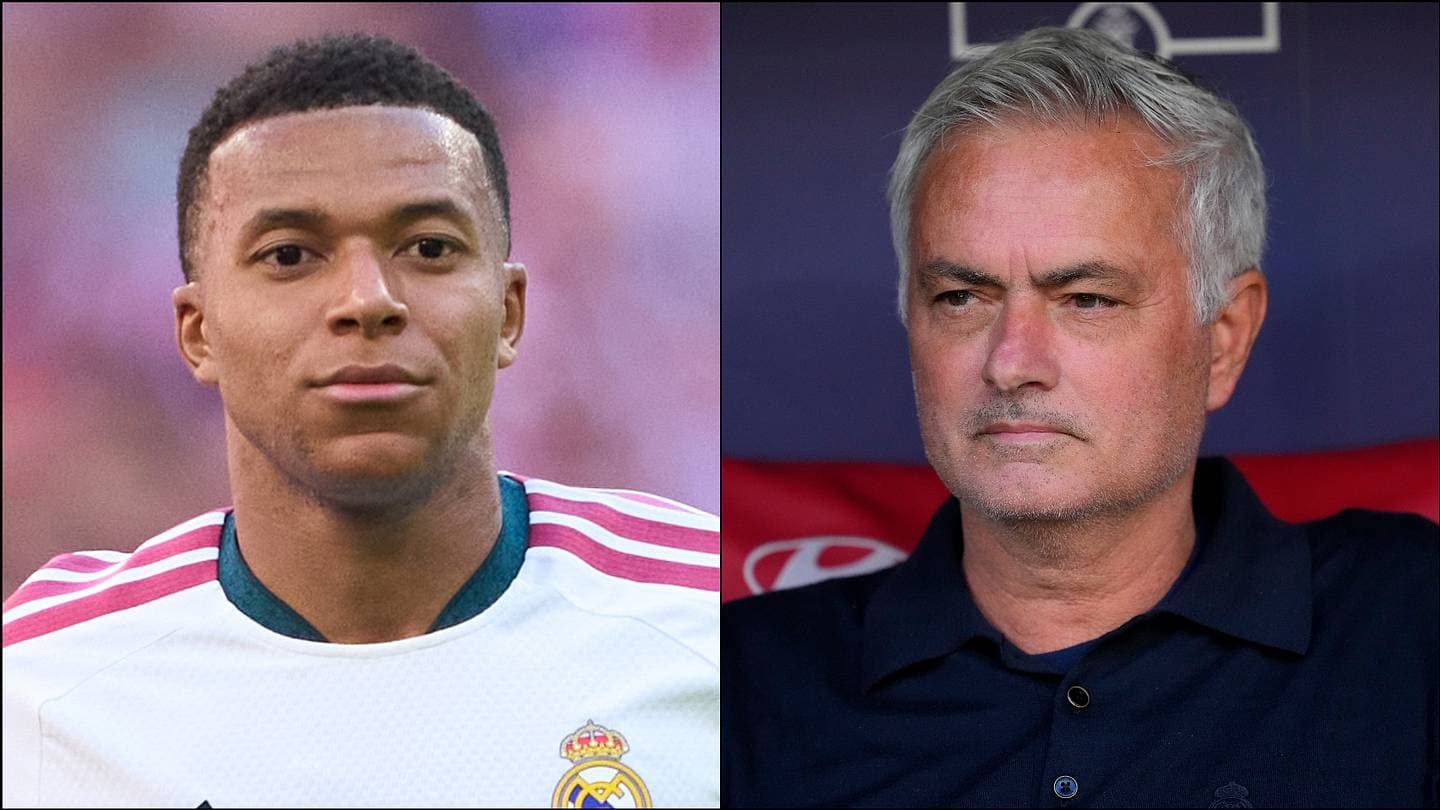
Morgan Rogers walked into Stamford Bridge as the most expensive British footballer of all time and immediately lit the fuse. £117 million from Aston Villa to Chelsea, a record-breaking move, and a line at his unveiling that cut straight through north London: he was joining "the biggest club in London".
Arsenal fans heard it. So did Mikel Arteta, after months of noise that Rogers had been one of his primary targets. Rogers called Chelsea the "perfect" fit for his game. On paper, though, Arsenal would have been the safer bet by a distance.
Leaving a rising Aston Villa side with Champions League football to join the new Premier League champions would have been a clear step up. No one could have argued with that. Instead, Rogers has thrown himself into another Chelsea reboot under the polarising BlueCo ownership, this time with Xabi Alonso fronting the project and no European football to soften the landing.
The lighter schedule might help Chelsea as they try to shake off last season’s 10th-place finish, but Alonso is not a magician. The squad has already taken a hit. Marc Cucurella has gone to Real Madrid. Enzo Fernandez could yet follow him out of the door. Lose both and Chelsea’s structure, especially in midfield, starts to look fragile.
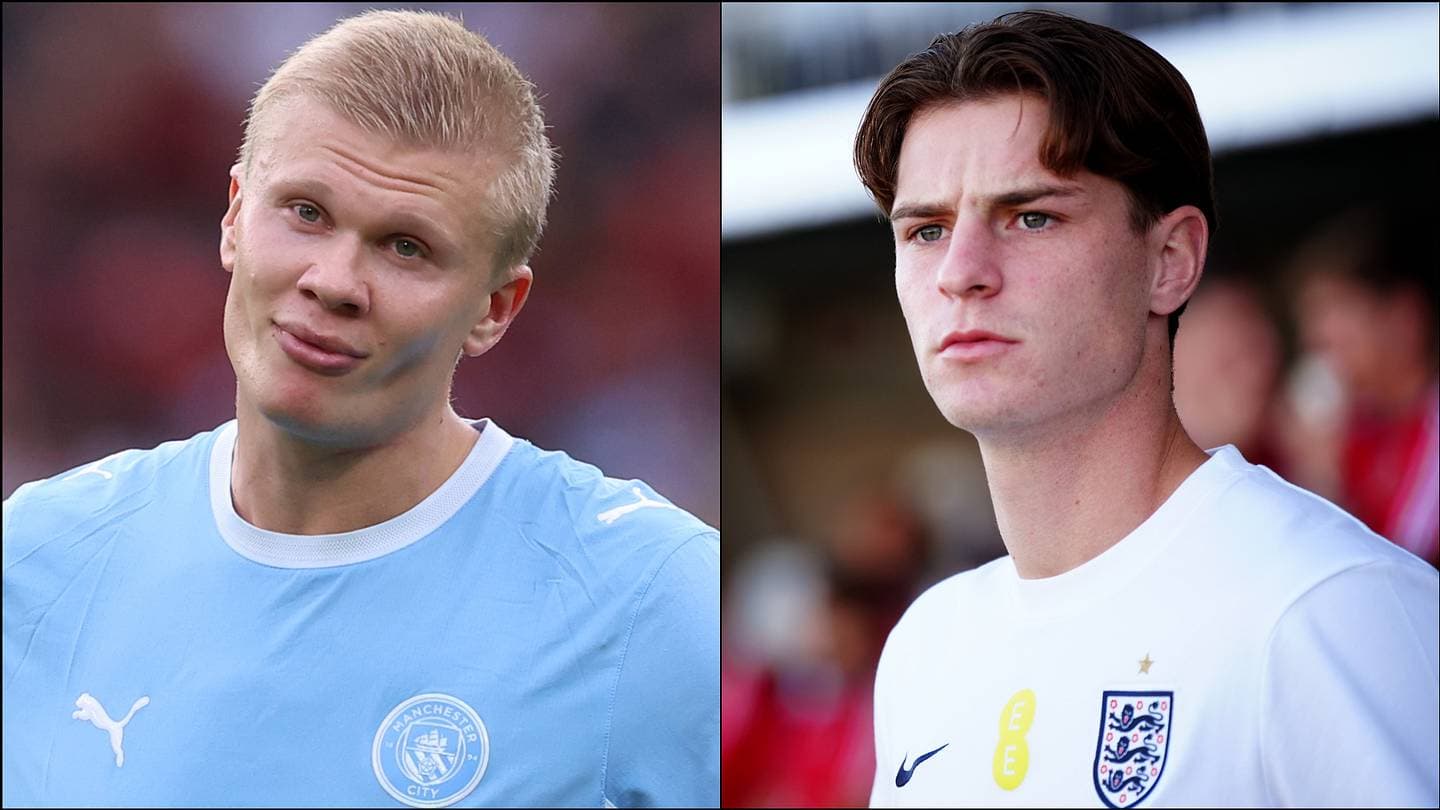
It is hardly the stable platform a £117m signing needs. Nor is it clear how Alonso intends to marry Rogers and Cole Palmer in the same XI without clogging up the middle of the pitch. Rogers thrives as a No.10, floating between the lines, yet he may find himself shunted wide if Alonso decides Palmer is the man to build around. In that scenario, Rogers’ influence is almost certain to dip from the levels he hit under Unai Emery.
The stylistic shift could be just as jarring. Rogers has not grown up in a possession-heavy side asked to unpick low blocks week after week. Alonso will demand control of the ball, structure, and patience. That will inevitably curb some of Rogers’ instinctive chaos. At Villa, Emery turned him into a devastating counter-attacking outlet, given grass to attack and space to exploit. That space will shrink at Chelsea.
Then there’s the weight of the fee. At 23, Rogers is walking in as the most expensive British player in history, expected to transform a club that has been drifting. If he doesn’t ignite immediately, the pressure will come hard and fast. For all his talent, he is not the kind of singular force who suddenly drags Chelsea back into the title conversation on his own.
Carrick’s United left short
While Chelsea gamble big, Manchester United are trying to do it on the cheap. Michael Carrick earned his permanent role with a third-place finish and a return to the Champions League. That should have been the cue for a serious summer push, backed by serious money.
Instead, INEOS have tightened the tap. Just £75m has gone on Andrey Santos from Chelsea and Youri Tielemans from Aston Villa. Two smart additions, but nowhere near enough for a squad that looked thin even before the fixtures piled up.
United want to compete for the top four again and make a dent in Europe. The reality is brutal: they do not have the depth. Casemiro’s departure has ripped a huge hole in midfield. Mason Mount is still battling to stay fit. Manuel Ugarte is coming back from an ACL injury. Another midfielder is a necessity, not a luxury.
The problems don’t stop there. Across the back line, the options are stretched. Up front, United may soon be left with only Benjamin Sesko as a recognised No.9, with Joshua Zirkzee edging closer to Serie A. One injury, one suspension, and the whole plan creaks.
A slow start is a real possibility. If results slide, the fragile confidence that Carrick helped rebuild could evaporate. He won 12 of his first 17 games in charge, leaning on individual brilliance and a tightly drilled defence, but the football often remained cautious, the build-up play laboured and uncomfortable.
That approach will not carry United through a season of three-games-a-week football. If the campaign is already burning by early December, Carrick could find himself next in the firing line, with INEOS hunting for a fourth head coach in a miserable two-and-a-half-year spell.
Arsenal’s window of dominance
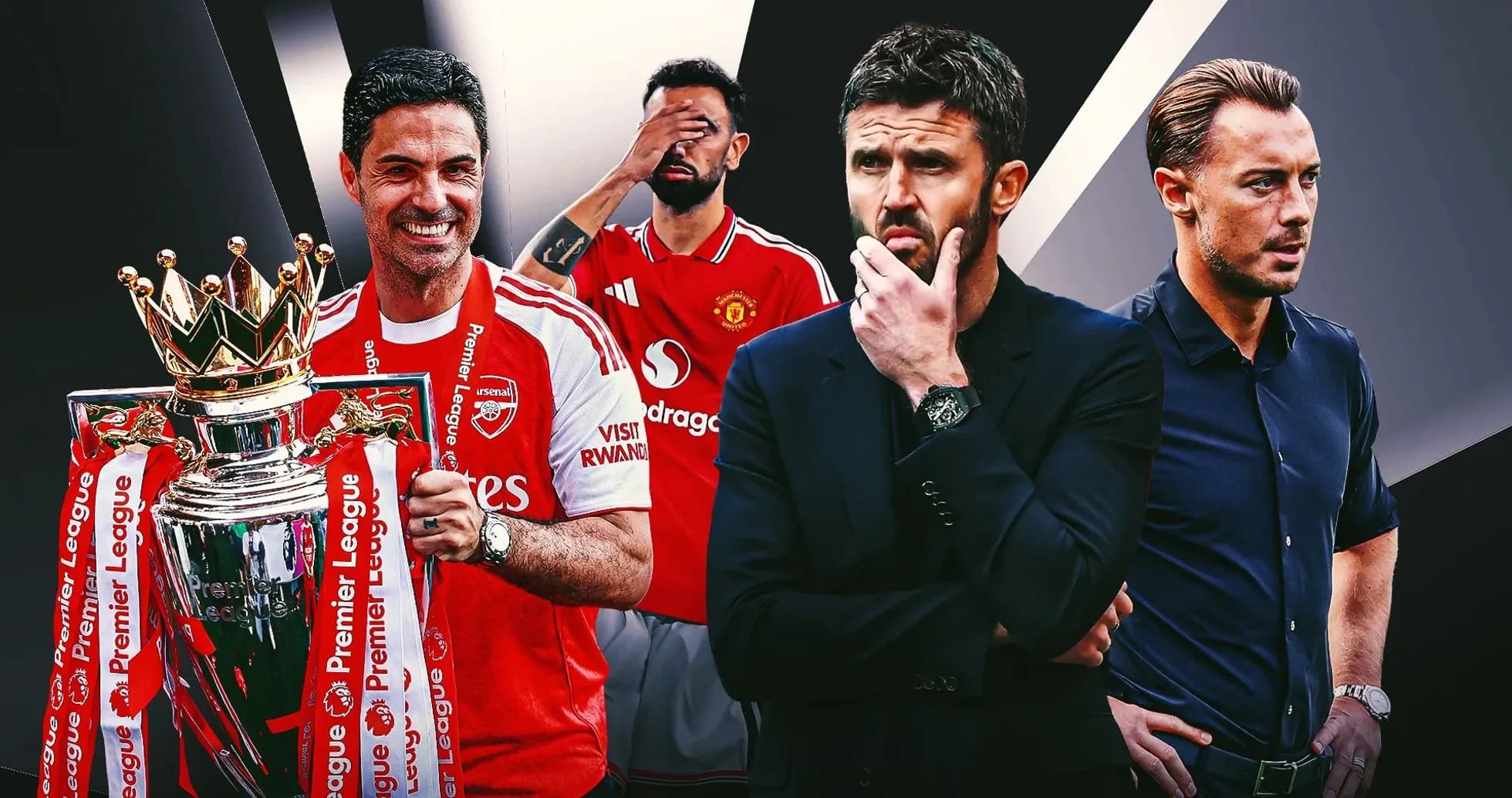
Arsenal have spent years chasing, learning, falling short. Last season they finally finished the job. A seven-point cushion over Manchester City delivered the 2025-26 Premier League title and banished the ghosts of three straight runners-up finishes.
That breakthrough was more than a medal. It was a psychological shift. Arteta’s group now know how to finish a race, not just run alongside the leaders. They start this season as favourites, and not just by reputation. Their rivals have stepped backwards.
Liverpool’s defence looks threadbare, a major obstacle to repeating their 2024-25 triumph. United lack the squad to cope with a harsher schedule. Aston Villa have chosen caution in the market. Chelsea and Tottenham are locked into rebuilding cycles.
Only City stand between Arsenal and something approaching a mini-era. Yet even at the Etihad, the ground is moving. Pep Guardiola has gone. So have Bernardo Silva and John Stones, two pillars of his dynasty. Rodri, the 2024 Ballon d’Or winner and the heartbeat of the side, has joined Barcelona for £65m.
Losing Rodri is a body blow. He drove City forward, protected their defence and set standards in the dressing room. City have responded by spending £116m on Elliot Anderson, but he walks into a dressing room in transition, not a machine at full power.
The gap was clear at Wembley. Arsenal dismantled City 3-0 in the Community Shield, a statement win that left Enzo Maresca with a long list of problems to solve. Arteta, by contrast, has continuity, clarity and arguably the deepest squad in the division, now strengthened further by the arrival of all-action Brazilian midfielder Bruno Guimaraes from Newcastle.
Unless Arsenal implode or are hit by an injury crisis unlike anything seen in recent years, the trophy should still be at the Emirates in 2027.
Fulham roll the dice on Arbeloa
At Craven Cottage, Fulham have chosen risk over reassurance. Marco Silva walked away in June after five highly successful years, heading home to take over from Jose Mourinho at Benfica. Mourinho, in turn, returned to Real Madrid, where Alvaro Arbeloa’s turbulent six-month spell ended abruptly.
Fulham then completed the circle. Arbeloa, sacked by Madrid, handed a three-year deal in west London.
On the surface, there’s romance to it. Arbeloa learned under Mourinho and Carlo Ancelotti as a player, and his commitment to youth during his time with both Real’s senior team and Castilla should encourage Fulham’s academy prospects.
Strip away the sentiment, though, and the alarm bells ring. Silva kept Fulham competitive on a modest budget with a pragmatic 4-2-3-1 built on defensive discipline. Arbeloa wants something different: a higher line, more aggression, more risk. With Fulham’s resources, that could be fatal.
Questions over his tactical depth and man-management linger from his Madrid stint, where dressing-room friction eroded his authority. Craven Cottage will not bring the same glare, but pressure has a way of finding managers when results turn.
Arbeloa has brought Gonzalo Garcia and César Palacios with him from Madrid, and Fulham have secured teenage forward Jonah Kusi-Asare permanently from Bayern Munich after a successful loan. It is not enough. Not when Harry Wilson, last season’s leading scorer and creator, has not been replaced. The creative void is glaring.
The fixture list offers no mercy. Chelsea, Liverpool and Manchester United all arrive in Fulham’s first five games. A slide towards the bottom three feels almost baked in, and Arbeloa is a strong candidate to be the first managerial casualty of 2026-27.
Newcastle’s fall from euphoria to fear
No club has flipped its mood faster than Newcastle United. Fifteen months ago, they lifted the League Cup after beating Liverpool, ending a 70-year wait for major domestic silverware. They backed it up with another Champions League qualification. Eddie Howe, adored on Tyneside, seemed to have time and trust from the Saudi-backed owners.
That optimism has evaporated. The spine of the team has been ripped out. Alexander Isak, Anthony Gordon, Sandro Tonali and Bruno Guimaraes have all left St James’ Park. None has been adequately replaced. Of the five signings made in the current window, only one is over 20. Big-name targets have looked elsewhere.
Howe has gone too, deciding after five years that his cycle was over. Newcastle’s response was not to go for an established European heavyweight, but to appoint Matthias Jaissle, the German coach who has spent the last three years at Al-Ahli in the Saudi Pro League.
Jaissle likes front-foot football, much like Howe. Newcastle CEO David Hopkinson has called him a "rock star". Right now, though, he looks more like the frontman of a band missing half its instruments. The team is still reeling from a 12th-place finish, confidence has drained away, and the squad has not been rebuilt with any urgency.
There is still quality in the dressing room, but not enough certainty. Jaissle has had little time to impose his ideas. The ownership, once hailed as saviours, have alienated large sections of the fanbase with a series of unpopular decisions. The atmosphere around the club has turned sour.
Relegation with these resources would be a catastrophe, yet Newcastle have already gone down twice this century. In the current climate of chaos, anyone who thinks it cannot happen again is taking a dangerous gamble of their own.