Morocco Defeats Netherlands in World Cup Thriller
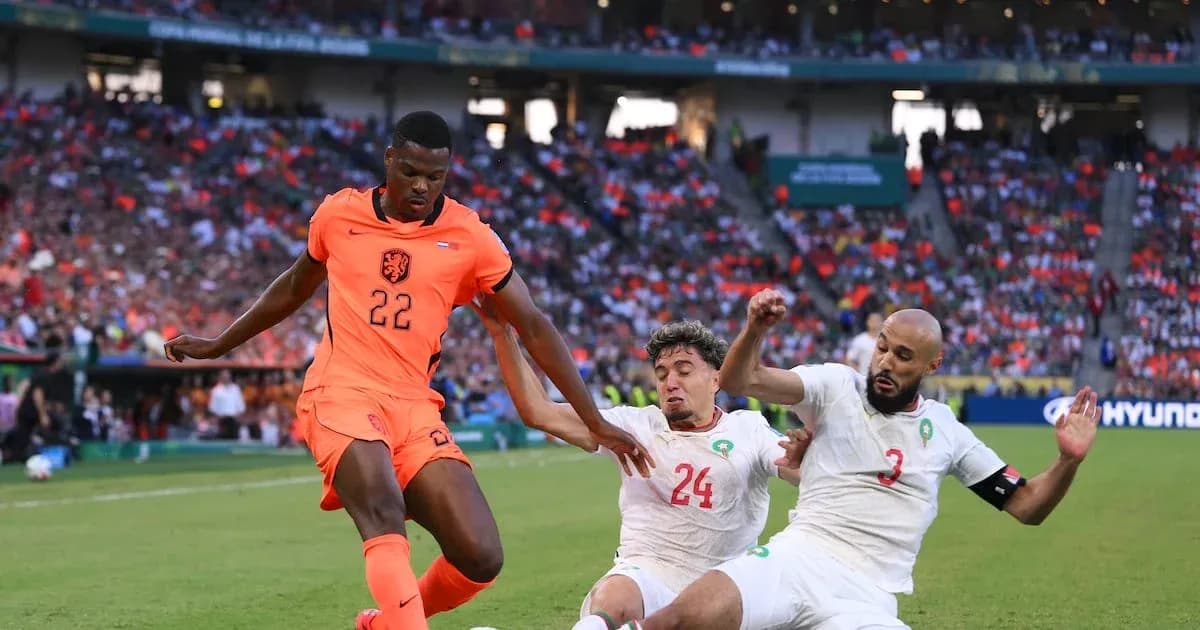
The final whistle of normal time had barely faded when Ismael Saibari took off, chased by a blur of red shirts. They caught him, then lost each other in a tangle of limbs and noise. Morocco had dragged themselves back from the brink against the Netherlands and, in doing so, kept alive the feeling that they might just be ready to gatecrash the latter stages of a World Cup all over again.
Minutes earlier, another pile-on had told a very different story.
Gakpo’s goal, and a grief that hung over everything
When Cody Gakpo slammed the Netherlands into a 72nd-minute lead, the celebration was wild but strangely tender. Orange shirts streamed off the bench, swarming him in front of the Dutch support. It was joy, yes. It was also protection.
Gakpo had chosen to play despite the devastating news that he and his partner had lost their unborn son. As he walked back to the centre circle, he pointed to the sky, tears in his eyes, Denzel Dumfries wrapping an arm around him. For a moment, football felt like it might offer him something back.
In another version of this night, that goal stands as the winner, the easy narrative of redemption writing itself. But football does not exist to complete story arcs. It keeps its own counsel. It can be breathtakingly cruel.
This time, it was.
Diop’s late strike rips up the script
The clock had just ticked into added time when Morocco finally found the moment their pressure had promised. Chemsdine Talbi, on from the bench, shifted the ball onto his right and shaped a gorgeous cross to the far post. Issa Diop rose, met it full-blooded, and buried his header.
1-1. Fully deserved. Dutch devastation etched on faces all over the pitch.
From there, the game staggered into extra time, where the tension thickened but the football thinned. Bart Verbruggen produced one outstanding save to deny Soufiane Rahimi, stretching the contest to the penalty spot. Nerves would decide it.
They did.
Both sides missed one each before the night twisted again. Verbruggen got to Rahimi’s penalty, appeared to have saved it, only for the ball to spin agonisingly off his trailing heel and into the net. Ronald Koeman would later point to that as the sliding-doors moment. Quinten Timber then dragged his effort horribly wide. Achraf Hakimi clipped the post. Yassine Bounou and Saibari finished the job.
Morocco 3–2 on penalties. Canada next. Europe’s giants shunted aside as Africa’s standard-bearers march on.
Koeman blinks first
Koeman will not escape the inquest. On paper, the Netherlands arrived with goals in them: seven in the group against Sweden and Japan, three more in a dead rubber with Tunisia. No side had scored more. Yet when the stakes rose, he did not trust that attacking verve.
Out went the familiar 4-3-3. Out went Tijjani Reijnders. In came a five-man back line, the plan clear: keep it tight, drag Morocco into a grind, win the margins.
The price was steep. Morocco saw 70% of the ball. The “ding-dong” many had expected never materialised. The Dutch barely laid a glove until just before half-time, when Micky van de Ven unleashed a thunderous drive that Bounou tipped over. By that stage, Verbruggen had already kept them level with sharp stops as Morocco began to stir.
Koeman, unapologetic afterwards, argued the approach was justified against a higher-calibre opponent. For a while, the scoreline backed him up. The performance did not.
Heat, needle and a game on edge
From the first whistle this was spiky, a contest loaded with more than just knockout jeopardy. The deep ties between the countries crackled around the stadium. Jan Paul van Hecke spent the first half as a magnet for trouble, taking three heavy blows, his head bloodied by the third.
The challenges never really softened. Nor did the mood in the stands. Local fans delighted in reminding the Netherlands of another World Cup flashpoint: 12 years to the day since the late penalty against Mexico, won by a theatrical Arjen Robben tumble. Every Dutch touch early on drew a chorus of boos, Moroccan supporters happily joined by neutrals with long memories.
On the pitch, Morocco probed but initially lacked their usual fluency. Verbruggen produced acrobatic saves in quick succession from Neil El Aynaoui and Hakimi, yet Koeman’s low block clogged the central channels and frustrated the Atlas Lions for long stretches.
That changed after the break.
Hakimi began to surge, picking clever underlapping runs, repeatedly asking questions. On one of them, Van de Ven had to throw himself into a crunching last-ditch tackle. The Dutch lost all semblance of control. Morocco upped the tempo. The game tilted.
A hydration break that changed everything
Then came the pause.
One of Fifa’s much-discussed hydration breaks finally left a fingerprint on a major knockout tie. With Morocco dominant midway through the second half, the stoppage gave Koeman the window he craved. On came Wout Weghorst for the ineffective Brian Brobbey. The battering ram, rolled out on schedule.
It worked instantly. Seconds after the restart, Verbruggen launched long, Weghorst flicked on, and Summerville raced through. As he was challenged, he hooked the ball across to Gakpo. One touch, one emphatic finish. The Dutch bench exploded. The emotion around Gakpo’s goal made it feel like destiny.
For a brief spell, it looked as if Koeman’s rope-a-dope might carry the Netherlands through, just as it had taken them to the final in 2010. They sat deep, absorbed pressure, waited for Morocco to run out of time.
Diop tore that plan up with one leap at the back post.
Morocco’s nerve, Europe’s warning
Extra time offered little beyond frayed legs and fraying tempers. Verbruggen’s save from Rahimi stood out, but both teams knew what was coming. Twelve yards, one after another, until someone cracked.
Enough did. Enough, crucially, wore orange.
When Bounou finally made his decisive intervention and Saibari sealed it, Morocco’s players sprinted towards their fans, their roar echoing around the stadium. A bleak day for Europe’s heavyweights had opened a wide door for Africa’s best.
Canada await. Morocco are still running. How far can they go this time?