New Zealand Withdraws Support for FIFA President Infantino
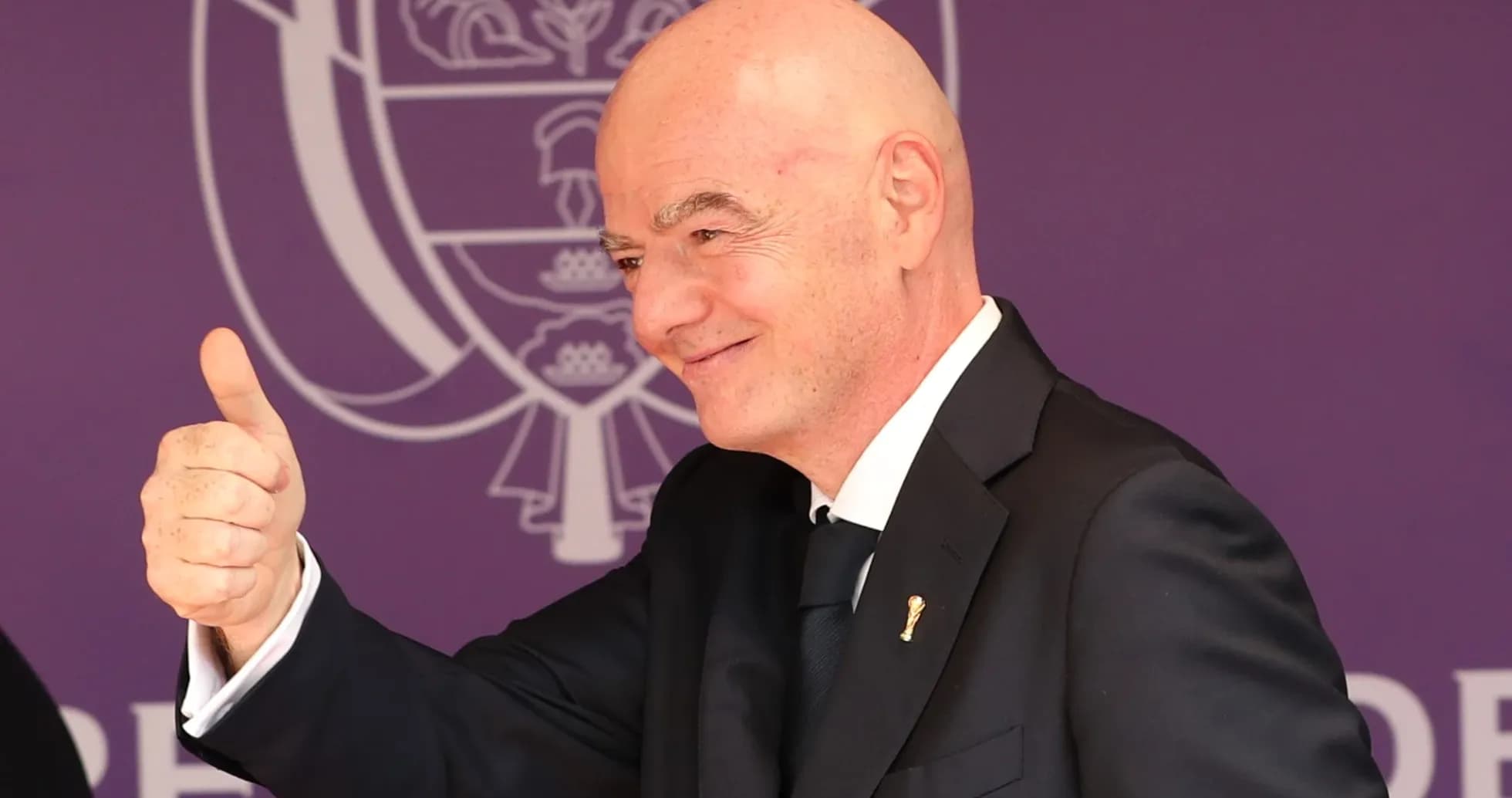
New Zealand has broken ranks with FIFA President Gianni Infantino, pulling its support for his re-election bid and demanding an independent investigation into his abandoned plan to sell a slice of football’s commercial future to private investors.
At the same time, the country’s own regional confederation is still standing by FIFA’s leadership.
The split lays bare a widening fault line in the global game.
New Zealand walks away
Infantino is seeking a fourth term at the helm of world football at next year’s FIFA Congress. He still has the formal backing of Africa and South America, powerful voting blocs that have already nailed their colours to his mast.
New Zealand is heading in the opposite direction.
The only Oceania Football Confederation (OFC) nation to qualify for this year’s World Cup announced on Friday it had withdrawn its support for Infantino. The move comes after the furious backlash to his proposal to carve out FIFA’s commercial rights and sell a 20 percent stake to private investors, a deal expected to raise about $4.2bn.
New Zealand Football (NZF) Chief Executive Andrew Pragnell made clear the issue is no longer just about one proposal.
“We’ve called for an independent review specifically because what we don’t want to see is a sort of in-house quick washover of this,” Pragnell told Reuters.
“An independent review is something else that has been called for by other confederations that will help restore some of the trust.”
For NZF, trust in FIFA’s leadership has been damaged. Only an external investigation, they argue, can repair it.
A region divided
While New Zealand is pushing back, its own confederation is not ready to turn on Infantino.
In a statement, the OFC said it welcomed FIFA’s decision to withdraw the controversial proposal and praised the current regime for what it sees as tangible gains in the Pacific.
“OFC recognises the progress achieved over the last decade in advancing football development in Oceania under FIFA’s leadership and encourages FIFA to use the review as an opportunity to identify and implement any changes that may be necessary,” it said.
The message is clear: Oceania’s umbrella body wants reform, but not revolution.
That cautious tone contrasts sharply with the open revolt led by three heavyweight confederations – UEFA in Europe, the Asian Football Confederation (AFC) and CONCACAF, which covers North and Central America and the Caribbean. All three have demanded a review of Infantino’s leadership and slammed his handling of the private investment plan.
Between them, those three confederations represent 136 of FIFA’s 211 member associations. They will all have a vote when the presidential election comes around in March.
The money, the deal, the backlash
At the heart of the storm is the now-scrapped FIFA Forward Enterprise proposal.
Swiss-born Infantino had pushed to spin off the commercial rights to competitions such as the World Cup, offering 20 percent to investors in exchange for a huge cash injection. The deal came with a sweetener: a $20m grant for each member association for the next funding cycle, with the promise that figure could double if the agreement went through.
The backlash was immediate and ferocious.
After a crisis meeting in Morocco last week, FIFA apologised to its 211 members for how the proposal was handled. The organisation withdrew the plan and, publicly at least, insisted its leadership still had “full support” for Infantino.
Behind that statement, the politics look far more complicated.
Six heads of Arab national football associations, including Qatar and 2030 World Cup cohost Morocco, issued a firm show of loyalty on Thursday, praising Infantino’s “sustained efforts to advance football globally”.
The Confederation of African Football’s executive committee also unanimously confirmed its support. But unanimity in the boardroom does not guarantee all 54 African associations will vote the same way when the ballot boxes open.
Who knew what?
For Pragnell and others, shelving the proposal is not enough. They want answers.
He said any independent review into FIFA Forward Enterprise must examine how decisions were taken, who oversaw the process and which figures were involved in shaping the deal.
Central to that is the planned role of Thrive Capital, an investment firm with close familial links to former US President Donald Trump. The review, Pragnell argued, needs to spell out why that firm was lined up to play a leading role.
“I think the scope needs to be considered really carefully, but what’s most important is that all confederations should agree on the scope, and it needs to get under way with urgency,” he told Reuters.
Australia, another AFC member, has also called for an independent review, aligning itself with the Asian bloc’s stance on the investigation, though it has stopped short of publicly taking a position on Infantino’s leadership itself.
“Based on what we’ve seen, including [Australia’s] commitment to the AFC statement, we’re strongly aligned,” Pragnell said.
The pressure is mounting from multiple directions. Infantino still has strong allies and significant institutional backing. But with key regions demanding scrutiny and one of Oceania’s leading voices breaking ranks, the next few months will test not just his grip on power, but the way FIFA chooses to govern the game it controls.