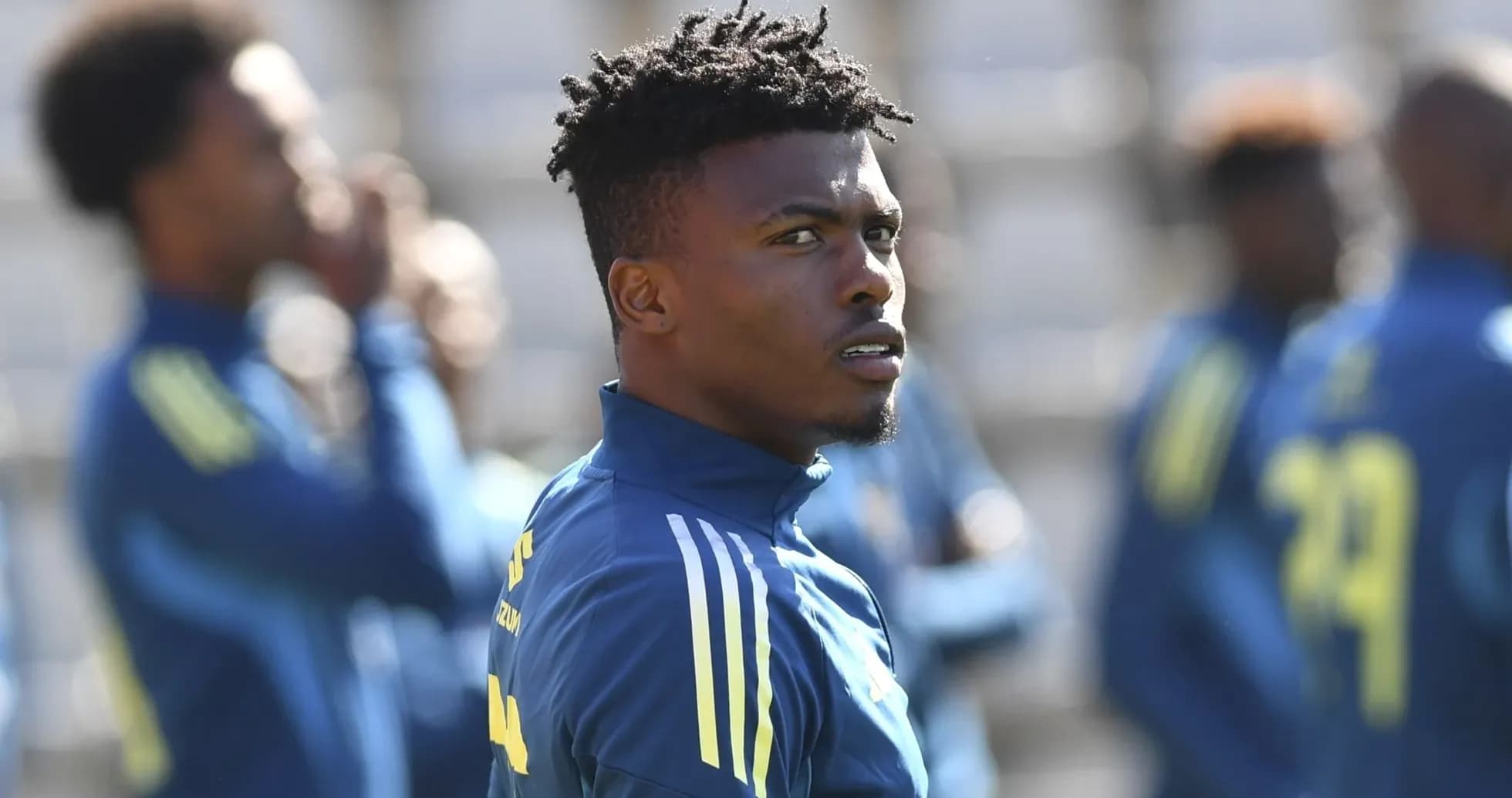
Orlando Pirates’ New Left-Back Neo Rapoo Joins the Family
Abdeslam Ouaddou has not been at Orlando Pirates long, but he already sounds like a man who understands the club’s heartbeat.
On Tuesday afternoon, as he faced the media, the Moroccan coach barely spoke about systems or formations at first. He spoke about people. About villages. About stories.
This is the story of Pirates
“I think you know better than me the club of Orlando Pirates,” he began, almost conceding that the institution is bigger than any one coach.
What followed was a reminder of what the Soweto giants believe they stand for.
“They are very involved in the social matter and what I like is, they give the platform to local players. They can scout them from far away from Johannesburg. Sometimes they can find a player in the village and it's the beauty of football and they make them grow, grow, grow until they send them abroad.”
For Ouaddou, names like Relebohile Mofokeng and Mbekezeli Mbokazi are not just players on a team sheet. They are proof of concept.
“For me, the story of [Relebohile] Mofokeng, the story of [Mbekezeli] Mbokazi and the story of other players to be at the World Cup and to see them playing at such a high level. This is the story of Pirates, and they continue like that.”
Into that lineage now steps Neo Rapoo.
Rapoo’s rise into a demanding environment
Rapoo is not yet a star. Not yet a World Cup name. But he is already central to the way Ouaddou talks about the club’s future.
The young left-back arrives from Siwelele FC, having been schooled in the SuperSport United development structures. On paper, he is one more prospect in a squad full of them. On the training pitch, during a gruelling pre-season, he has been something more: a problem for established players.
He is fighting for minutes against Deon Hotto and Nkosikhona Ndaba, two players who understand exactly how unforgiving the full-back role can be in a high-intensity system. Ouaddou’s model demands that defenders run, repeat, overlap, combine, and still defend with conviction. There is no hiding place.
So far, Rapoo has not looked for one.
The coach’s admiration is clear.
“Rapoo is part of this process, like the other players, young players. I think you have to understand Pirates is a family,” he said.
“I felt this feeling the first day that I signed for that club and from the board inside the club you can see this kindness. They take care about you, and they want you to be successful, whoever came in the club.”
That sense of “family” is not a throwaway line. It underpins how youngsters like Rapoo and Ndaba are being eased – and pushed – into the senior environment.
Seniors who fight and still make space
Ouaddou played 17 years of professional football across Europe and Africa. He has seen dressing rooms where new arrivals are treated as threats, not teammates.
At Pirates, he has found something different.
“The senior players, they have this legacy. They have this legacy and they are honest people,” he explained.
“Because I’ve been playing football for 17 years and I can tell you that sometimes it not the case because when there are new players coming, they are coming, to take positions. But here, the senior players, they're fighting to keep their position, which is good for me. And in the same times, they welcome them in the club and they help them to set them in the club…”
That duality is rare: veterans battling to protect their own spots while actively preparing the players who might one day take them.
For Rapoo and Ndaba, it is gold. They are being challenged and protected in the same breath.
“So Rapoo is one of them,” Ouaddou added. “I see him really the next with the Nkosinkhona [Ndaba] the next international players.”
The bar has been set. International football is not a dream whispered in corridors; it is an expectation voiced in public.
Built for the modern game
Ouaddou’s admiration is not based on sentiment alone. It is tactical.
He is clear about what he wants from his full-backs in this era of high-speed, high-risk football. They must play high, attack with conviction, and still find the legs to recover. They must be as comfortable combining in the final third as they are defending in their own.
“They are full of quality, in terms of capacity to repeat efforts, and if you see our game model it's very demanding,” he said of Rapoo and Ndaba.
“They're able to combine in the last third. They're playing high. They're able to score, they're able to give you a fantastic cross…”
Then comes the detail that separates Rapoo from the pack.
“The particularity of Rapoo is somebody who is able to be efficient in the set pieces. So, I think he will bring his competences to our group, as you know we have a lot of games. I'm sure he will be successful and overall, he is a top man and very professional.”
In a season where Pirates are expected to compete on four fronts, those “competences” will matter. Rotation will not be a luxury; it will be survival. High-energy full-backs who can defend, create, and decide games from dead-ball situations are no longer a bonus. They are a requirement.
Rapoo now stands at the start of a road that players like Mofokeng have already travelled. From development structures and lesser-known clubs, through the cauldron of the Soweto giants, and, if Ouaddou is right, on to the international stage.
For Orlando Pirates, it is not just another signing. It is another chapter in a story they believe defines them: finding a player in a village, helping him “grow, grow, grow” – and seeing how far he can really go.