Oviedo vs Villarreal: Tactical Clash in La Liga
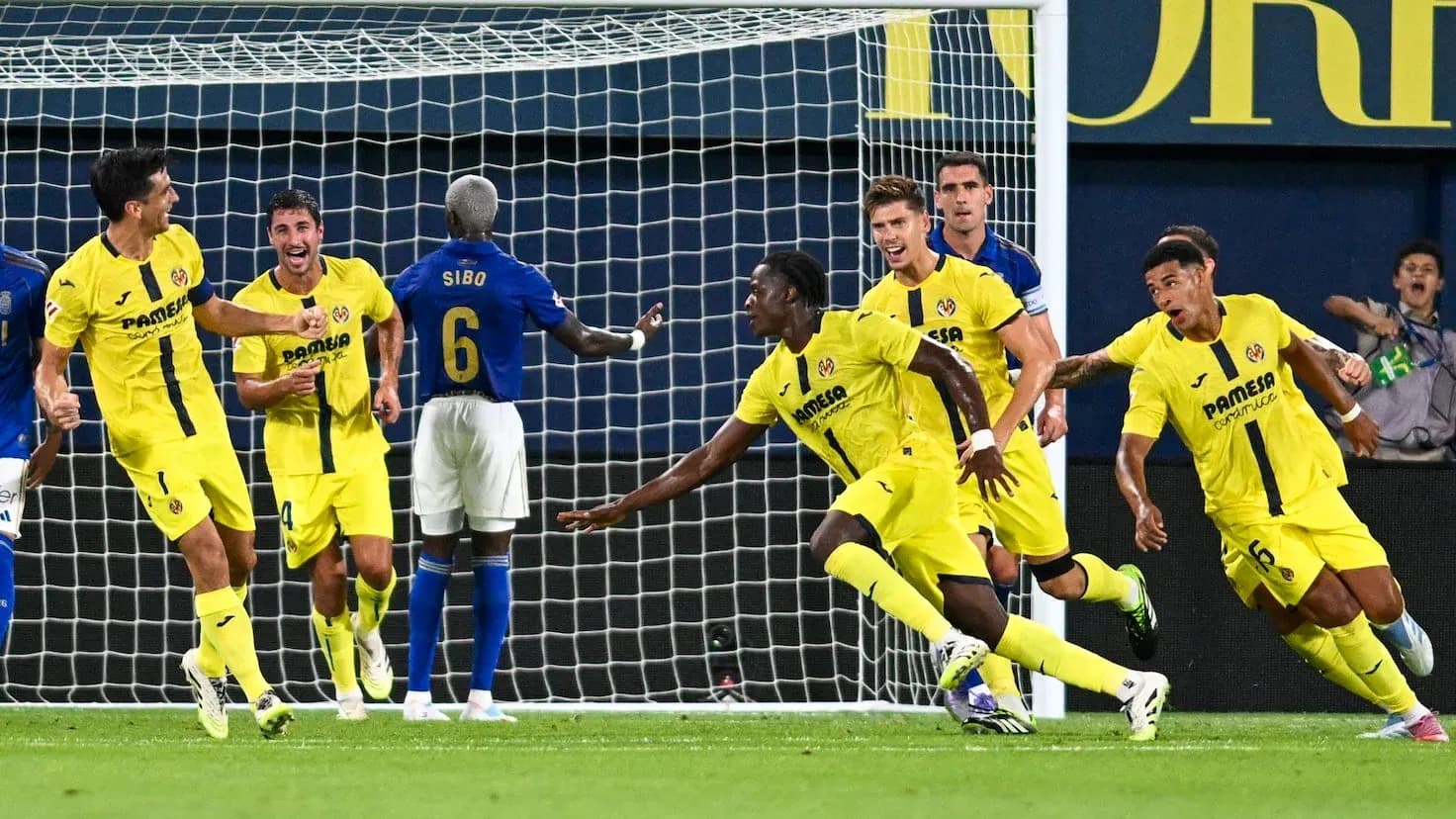
The Nuevo Carlos Tartiere had the feel of a survival trench rather than a mid‑table stroll. Bottom‑placed Oviedo, 20th in La Liga with 28 points and a goal difference of -24 (25 scored, 49 conceded in total), welcomed a Villarreal side sitting 3rd on 62 points, their +20 goal difference built on one of the division’s most fluid attacks. On paper this Regular Season – 33 fixture should have been a procession for the visitors. The 1–1 final score told a very different story about structure, risk, and how to bend a game’s rhythm to your needs.
I. The Big Picture – Two Identities Colliding
Oviedo’s seasonal DNA is stark. In total this campaign they average just 0.8 goals for per match, and at home that drops to 0.5. Their 4-2-3-1 under Guillermo Almada Alves Jorge is less about flowing combinations and more about compressing space, surviving long enough to turn the match into a grind. Their goals arrive in bursts rather than waves: 32.00% of their total goals have come between 31-45 minutes, with another 20.00% between 46-60. When they do score, it tends to be around half-time, when pressing triggers and second balls can tilt their way.
Villarreal, by contrast, live in the open field. In total this season they score 1.8 goals per match, with 2.3 at home and 1.4 on their travels. Marcelino’s 4-4-2 is built on verticality and timing: 24.14% of their goals arrive in the 31-45 window, and 20.69% between 46-60, matching Oviedo’s offensive spikes with their own. The danger never really fades; 13.79% of their goals come from 61-75 and another 13.79% from 76-90, ensuring opponents can never coast through the final half-hour.
Yet Villarreal’s defensive profile contains a late-game fault line. On their travels they concede 1.4 goals per match, and overall 30.56% of their goals against come in the 76-90 range – a pronounced vulnerability just as Oviedo’s desperation typically peaks.
II. Tactical Voids – Who Was Missing, What Was Lost
Both squads arrived compromised. Oviedo were without L. Dendoncker (injury), N. Fonseca (yellow-card suspension), A. Fores (injury) and L. Ilic (Achilles tendon injury). For a side already reliant on compactness, that stripped depth from the spine and narrowed Almada’s options to change the midfield profile from the bench.
Villarreal’s absentees cut into their defensive and rotational stability. P. Cabanes and L. Costa (both knee injuries) and J. Foyth (Achilles tendon injury) removed experienced options in the back line and wide channels, while S. Comesaña – out through yellow-card accumulation – deprived Marcelino of his primary midfield enforcer and one of La Liga’s most balanced two-way players. Comesaña’s season line (43 tackles, and crucially 14 blocked shots) underlines what was missing: a specialist at closing lanes in front of the centre-backs.
The disciplinary backdrop only heightened the tension. In total this campaign Oviedo’s yellow-card profile is spread but spikes between 31-45 and 46-60 minutes (both 19.18%), then 61-75 at 20.55%. Their red cards show a worrying late-game tilt: 37.50% between 76-90 and 25.00% between 91-105. Villarreal, meanwhile, lean into aggression late as well: 22.86% of their yellows fall between 61-75, and 25.71% between 76-90, with 66.67% of their reds also coming in that closing quarter-hour. This was always likely to be a match where composure would be as decisive as quality.
III. Key Matchups – Hunter vs Shield, Engine Room vs Enforcer
The clearest “Hunter vs Shield” duel was Federico Viñas against Villarreal’s back four. Viñas, Oviedo’s attacking reference, came into this game with 9 league goals and 1 assist, having taken 41 shots with 21 on target. He is not just a finisher but a disruptive presence: 425 total duels contested, 224 won, and 61 fouls drawn in total this campaign. He plays on the edge – 4 yellows, 1 yellow-red and 2 straight reds – but that volatility is also Oviedo’s emotional fuel.
Across from him, Villarreal entrusted Á. Santiago Mouriño with the heart of their defensive line. Mouriño’s numbers are those of a proactive stopper: 95 tackles, 27 interceptions, and 9 successful blocked shots, all wrapped in a card record of 9 yellows and 1 yellow-red. His job against Oviedo’s lone striker was not only to win first contact but to prevent second-phase chaos around the box, especially given Villarreal’s tendency to wobble late, when 30.56% of their goals against arrive.
Behind Viñas, Oviedo’s double pivot of K. Sibo and S. Colombatto had to fight a positional war with Dani Parejo and Pape Gueye. Parejo remains the metronome, while Gueye provides the legs and cover that Comesaña would normally share. Without Comesaña’s 14 blocked shots and 24 interceptions, Villarreal’s midfield shield was subtly thinner, inviting Oviedo’s No.10 band – I. Chaira, A. Reina and T. Fernández – to drift into pockets and combine.
On the other side of the ball, Villarreal’s attacking variety was evident even from the bench. G. Mikautadze, with 9 goals and 5 assists, is one of La Liga’s most efficient forwards: 43 shots, 25 on target, 24 key passes, and 58 dribble attempts with 27 successes. A. Moleiro adds another 9 goals and 4 assists from midfield, plus 31 key passes and 53 dribbles attempted. Even when they do not start, their presence as substitutes changes how a back line must manage depth and half-spaces.
Oviedo’s back four of N. Vidal, E. Bailly, D. Calvo and J. Lopez were therefore tasked with more than simple marking. They had to compress the central corridor where Mikautadze and Moleiro like to receive, while trusting K. Sibo to screen Parejo’s vertical passes. With Oviedo conceding 26.53% of their goals between 76-90 minutes, the late phases were always likely to be a test of Bailly’s concentration and leadership.
IV. Statistical Prognosis – xG Shape and Defensive Solidity
Heading into this game, the numbers pointed clearly toward Villarreal control. In total this season they have failed to score in only 5 of 32 matches, and they have produced 57 goals across those 32 fixtures, suggesting a robust xG profile that regularly pushes above the 1.5 mark. Their under/over splits reinforce that: they have gone over 1.5 goals in 19 matches, and over 2.5 in 7.
Oviedo, by contrast, have failed to score in 16 of 32 games in total. Their under/over profile is stark: only 6 matches over 1.5 goals scored, and just 3 over 2.5. The most plausible xG map before kick-off had Villarreal generating the higher volume and quality of chances, particularly around the 31-60 minute band where both teams’ offensive curves rise, while Oviedo would look to compress the shot zones and lean on A. Escandell’s goalkeeping.
Yet Villarreal’s defensive data always left the door ajar. They concede in total 1.2 goals per match, but the distribution is revealing: 22.22% of those goals arrive between 46-60 minutes and 30.56% between 76-90. Those late collapses mirror Oviedo’s own struggles (26.53% conceded in the 76-90 range), hinting at a finale shaped by fatigue, risk-taking, and set-piece volatility rather than pure pattern play.
The 1–1 draw ultimately fits that statistical tension. Villarreal’s superior attacking machinery could not fully break a low‑scoring but stubborn Oviedo side, whose season-long habit of clinging on at home – 8 goals scored and 15 conceded in 16 matches at the Nuevo Carlos Tartiere – again forced a heavyweight into a narrow contest. From a tactical lens, this was less an upset than an illustration of how structure, discipline, and a single relentless focal point like Viñas can drag even a Champions League-chasing side into the trenches.