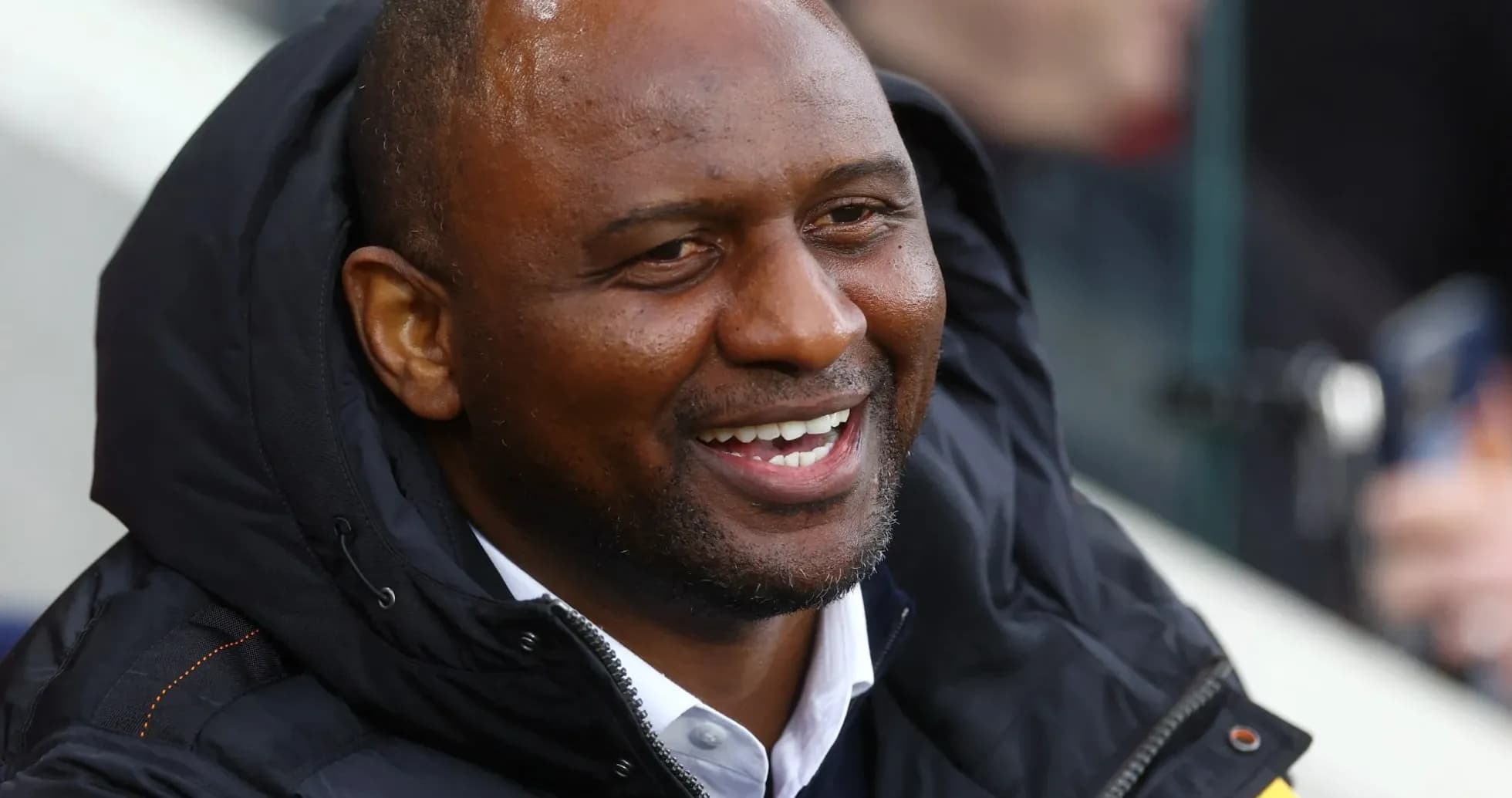
Patrick Vieira Takes Charge of Senegal's National Team
Patrick Vieira is going back to where it all began – but in a very different role.
Born in Dakar, raised as a World Cup winner with France, the former Arsenal and Inter Milan midfielder has been appointed head coach of Senegal’s national team, replacing Pape Thiaw. The Senegalese Football Federation (FSF) announced the move as a “strategic” step designed to match the country’s lofty ambitions.
It is a powerful full circle. The boy from the Senegalese capital, who chose Les Bleus and lifted the World Cup in 1998, now steps into the dugout of the nation of his birth.
A new era after a chaotic crown
Vieira, 50, inherits a team still dealing with the fallout of one of the strangest Africa Cup of Nations title stories in history.
Thiaw led Senegal to glory at the 2025 Africa Cup of Nations – only to see the trophy stripped and handed to Morocco after a dramatic mid-game walk-off by Senegal’s players and staff. What should have been a defining triumph turned into a controversy that stained the achievement and unsettled the project.
The pressure only grew at the World Cup. Thiaw’s side failed to escape the Round of 32 at the FIFA World Cup 2026, their campaign ending with a 3-2 defeat to Belgium. Criticism followed, then dismissal. The FSF has now turned to one of the most decorated midfielders of his generation to reset the direction.
From Dakar to the world – and back
Vieira’s playing journey is well known, but it matters here because of what Senegal hope he brings.
He started in France with Cannes, then moved to Serie A and AC Milan, before Arsene Wenger pulled him into the heart of his great Arsenal revolution. In North London, Vieira became the embodiment of the club’s steel and swagger, winning three Premier League titles between 1996 and 2005 and captaining the famous “Invincibles”.
After Arsenal, he added spells at Juventus and then Inter in Italy, collecting more silverware, before closing his playing career at Manchester City in 2011.
On the international stage, he chose France and never looked back: a World Cup winner in 1998, a European champion at Euro 2000, and more than 100 caps for his adopted country. Few new African national team coaches arrive with that kind of medal collection.
The FSF clearly believes that pedigree can anchor a “high-level technical set-up” and drag Senegal back into the continental and global elite.
Building a coaching identity
Vieira’s coaching career has been a steady climb through contrasting environments.
He started in Major League Soccer with New York City FC in 2016, learning to manage in a league built on parity and travel. Nice brought him back to France in 2018, giving him a first taste of the pressure cooker in Ligue 1.
Then came the Premier League again, this time on the touchline with Crystal Palace. After that, shorter spells at Strasbourg and Genoa added more experience in two demanding European leagues.
None of those jobs were straightforward. All of them sharpened his ideas about structure, pressing, and how to manage dressing rooms packed with different personalities and expectations. Senegal will test whether those ideas can translate to the unique rhythms of international football – and to the emotional pull of coaching the country of his birth.
What comes next for Senegal
For now, the FSF is keeping some details under wraps. “The date of the official presentation and the next steps in [Vieira’s] installation will be the subject of a subsequent announcement,” its statement on X said.
The clock is already ticking.
Senegal’s next competitive games arrive in the 2027 AFCON Qualifiers during the upcoming FIFA international window from September 21 to October 6, 2026. The Confederation of African Football has not yet released the fixture schedule, but the draw is done: Senegal will face Mozambique, Sudan and Ethiopia.
It is not the toughest group on paper. It is also exactly the kind of section where a new coach is judged immediately. Drop points, and the questions start. Dominate it, and Vieira buys time to shape a team in his image.
He will walk into a squad still scarred by a lost title and a World Cup disappointment, but also one rich in talent and expectation. The FSF has made its move. Now comes the real test: can Patrick Vieira turn a turbulent powerhouse into a ruthless contender again?