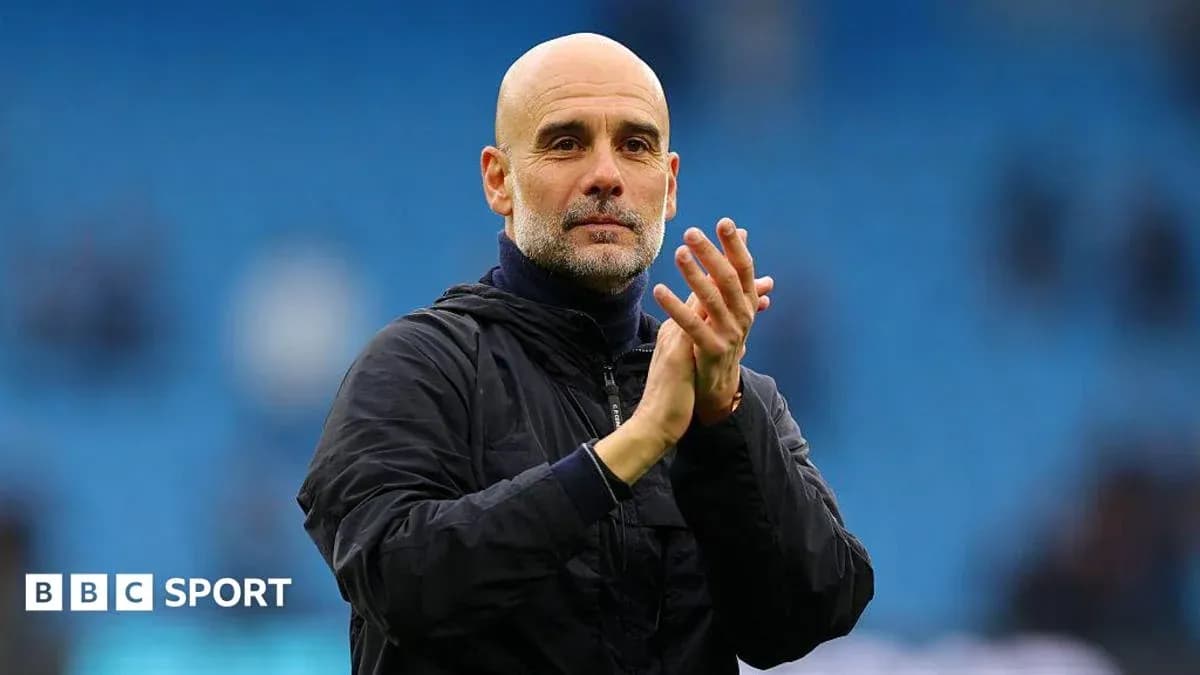
Pep Guardiola in Talks for Italy Head Coach Role
Pep Guardiola has held talks about becoming Italy’s next head coach, Italian Football Federation (FIGC) president Giovanni Malagò has confirmed, opening the door to one of the most audacious appointments in the Azzurri’s history.
Guardiola walked away from Manchester City this summer after a decade that reshaped English football. Six Premier League titles, three FA Cups, five League Cups and the long-awaited Champions League trophy turned City into a machine and burnished his reputation as the defining coach of his generation.
Now, Italy are knocking.
A vacancy with scars
The Azzurri have been without a head coach since Gennaro Gattuso resigned in April, a resignation steeped in frustration after Italy failed to qualify for a third consecutive World Cup. For a four-time world champion, the stain runs deep. This is not just a vacancy; it is a crisis of identity.
Sky Italia first revealed on Monday that the FIGC had made contact with the 55-year-old Spaniard. That story has now moved from rumour to reality.
Speaking to Italian digital sports outlet Cronache di spogliatoio, Malagò confirmed that talks had taken place and hinted that the federation is ready to bend its own rules to lure Guardiola.
“[Financial] Exceptions have been made, exceptions that for example may concern the name that is so overbearing in these hours: Pep Guardiola,” Malagò said. “Exceptions for obvious reasons that I am not here to explain, but it is not certain that this thing will go through.”
The message is clear: Italy know they are dealing with a coach who sits in a different financial stratosphere, and they are at least willing to explore how far they can stretch.
BBC Sport has contacted the FIGC for further comment.
Not just Pep on the list
Guardiola is not the only name in the frame. Another former Manchester City manager, Roberto Mancini, is under consideration. Mancini, of course, guided Italy to Euro 2020 glory five years ago, restoring pride and style before his own turbulent exit from the national setup.
Also in the conversation is Andrea Pirlo, the former Azzurri midfielder who currently manages Dubai United. His coaching career is still in its formative stages, but his name carries weight in Italian football’s corridors of power.
Asked whether Guardiola, Mancini and Pirlo were the only candidates, Malagò was firm: “Absolutely not. We think about a certain profile and certainly these names fall into that category.”
The FIGC, then, are working from a template: a strong footballing identity, international experience or pedigree, and the charisma to handle the pressure of reviving a fallen giant.
Breaking with tradition
If Guardiola were to accept, he would step into a role almost exclusively reserved for Italians. Across the history of the men’s national team, foreign influence has been the rare exception rather than the rule.
Hungarian coach Lajos Czeizler served as part of a technical committee in the 1950s. In the following decade, legendary Argentine Helenio Herrera briefly shared the reins with Italian Ferruccio Valcareggi. Those are the only two instances of non-Italians holding a significant role with the Azzurri.
Guardiola would be something else entirely: a foreigner not in the shadows or in a shared role, but the clear, undisputed leader of the project.
He has never coached in Italy, but the country is not unfamiliar territory. Guardiola speaks fluent Italian and spent two seasons in Serie A between 2001 and 2003, with two spells at Brescia and one at Roma. He knows the culture, the scrutiny, the tactical obsession that shapes Italian football discourse.
From exhaustion to temptation
When his spell at City ended in May, Guardiola sounded like a man ready to disappear from the touchline for a while.
“I am so tired. Seriously, I am so tired,” he admitted as he reflected on his decade in Manchester. He spoke of “unbeatable” memories from Barcelona and Bayern Munich, but insisted that the “luggage of memories” from his 10 years at City outweighed everything else.
Those comments suggested a sabbatical, a pause, a reset.
If he does take the Italy job, that break would be brief. It would mark a rapid re-entry into the game, this time with the weight of a nation still reeling from repeated World Cup failures and desperate for a new direction.
A seismic decision looms
For the FIGC, this is about more than a high-profile name. It is about whether Italy are ready to entrust their footballing soul to an outsider whose philosophy has dominated club football for nearly two decades.
Do they go back to what they know with Mancini? Do they gamble on Pirlo’s potential? Or do they rip up convention and hand the keys to Pep Guardiola, asking him to rebuild a national team the way he rebuilt clubs?
The talks have started. The financial “exceptions” are on the table. The question now is whether Italy are prepared to cross a line they have almost never dared to approach—and whether Guardiola, tired but still towering over the modern game, wants to lead one of football’s great sleeping giants back into the light.