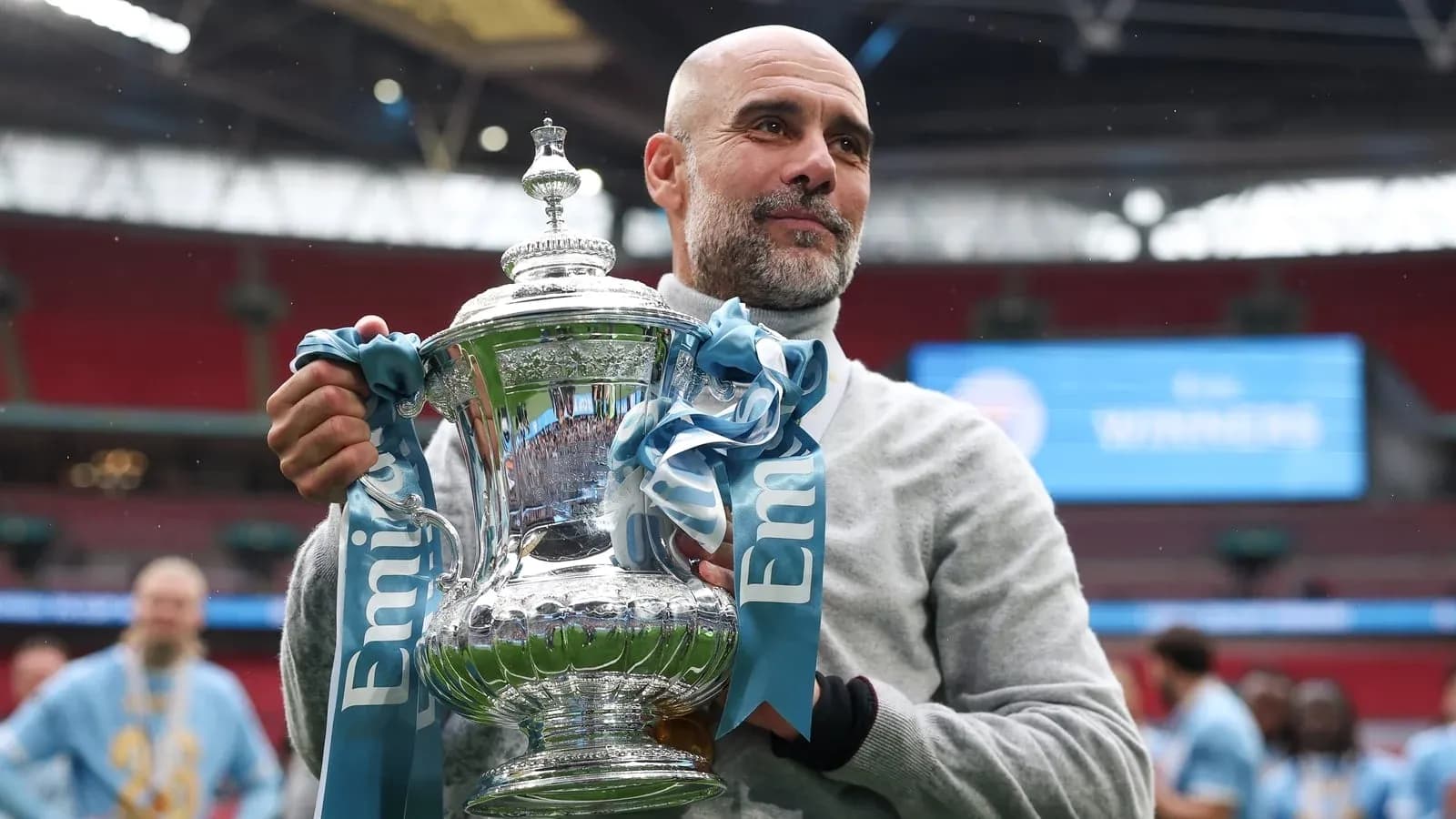
Pep Guardiola to Leave Manchester City After Dominating Decade
The greatest era Manchester City have ever known now has an end date. Pep Guardiola will walk away at the end of the season, with Sunday’s Premier League meeting with Aston Villa confirmed as his final match in charge.
Ten years. Twenty trophies. A spell of control so complete that it bent English football around it. And now it stops.
A Reign Like No Other
City’s announcement closes days of mounting speculation, but it also draws a line under one of the most formidable managerial tenures the English game has seen.
Since arriving in 2016, the 55-year-old has turned City into a machine. Six Premier League titles. A long‑awaited Champions League. Three FA Cups. Five Carabao Cups. The Club World Cup. Season after season, the same conclusion: Guardiola’s City outlasted, out-thought and outplayed almost everyone.
There were landmark campaigns that changed the temperature of the league. The 100-point season in 2018, a brutal demonstration of relentlessness. The domestic treble in 2019, something no English men’s side had ever done. The treble of Premier League, FA Cup and Champions League in 2023, the crowning achievement of his time in Manchester.
This year, he still leaves with silverware in his hands. A domestic cup double is already secured, and the chase for a seventh league title only died on Tuesday night, when a 1-1 draw at Bournemouth finally took the race out of City’s control.
“I Know It’s My Time”
Guardiola chose to explain his departure in his own way, with a long farewell message that mixed humour, nostalgia and a pointed refusal to offer a simple reason.
He went back to the very start. “When I arrived, my first interview was with Noel Gallagher,” he recalled. “I walked out thinking, ‘OK… Noel is here? This will be fun. And what a time we have had together.”
Then came the line that will echo around the blue half of Manchester for some time. “Don’t ask me the reasons I’m leaving. There is no reason, but deep inside, I know it’s my time.
“Nothing is eternal, if it was, I would be here. Eternal will be the feeling, the people, the memories, the love I have for my Manchester City.”
He signed off in typically unfiltered fashion. “Noel… I was right. It has been so f****** fun. Love you all.”
From Barcelona to Bavaria to Manchester
When City landed Guardiola a decade ago, it felt like a coup. It was.
He arrived already carrying a heavyweight résumé: two Champions League titles and three LaLiga crowns with Barcelona, three Bundesliga titles with Bayern Munich. He was the coach everyone else in Europe wanted, the man who had reshaped the modern game with his Barcelona side.
In Manchester, he built something different but just as ruthless. The artistry stayed, the control stayed, but the team hardened. The Premier League demanded it. City responded by setting standards that forced rivals to rip up plans and start again.
What Comes After Pep?
Guardiola’s contract had been due to run until the summer of 2027. Instead, club and manager have agreed to cut it short by a year. The decision leaves City facing the one question they have managed to avoid for a decade: what does life after Pep look like?
The early favourite to answer that is a familiar face. Enzo Maresca, once Guardiola’s assistant at City and most recently in charge at Chelsea until his departure in January, is being tipped as the leading candidate to succeed him. The Italian knows the structure, understands the footballing blueprint and carries the trust of people inside the club. Whether that is enough to follow a figure of Guardiola’s size is another matter entirely.
Guardiola, though, will not disappear from the City orbit. He will move into a role as a global ambassador for City Football Group, a position that keeps his influence close even as someone else steps into the technical area.
City chief executive Ferran Soriano captured the scale of what is being left behind. “Pep’s legacy is extraordinary and its true impact will be better assessed by Manchester City historians of the future,” he said.
The historians will have plenty to sift through: records, trophies, tactical innovations, and a decade in which one man defined what Manchester City were. On Sunday, against Aston Villa, he walks out at the Etihad for the last time as their manager.
What follows may still be successful. It may even be spectacular. But it will be something else. And that, for the first time in ten years, is the great unknown hanging over Manchester City.