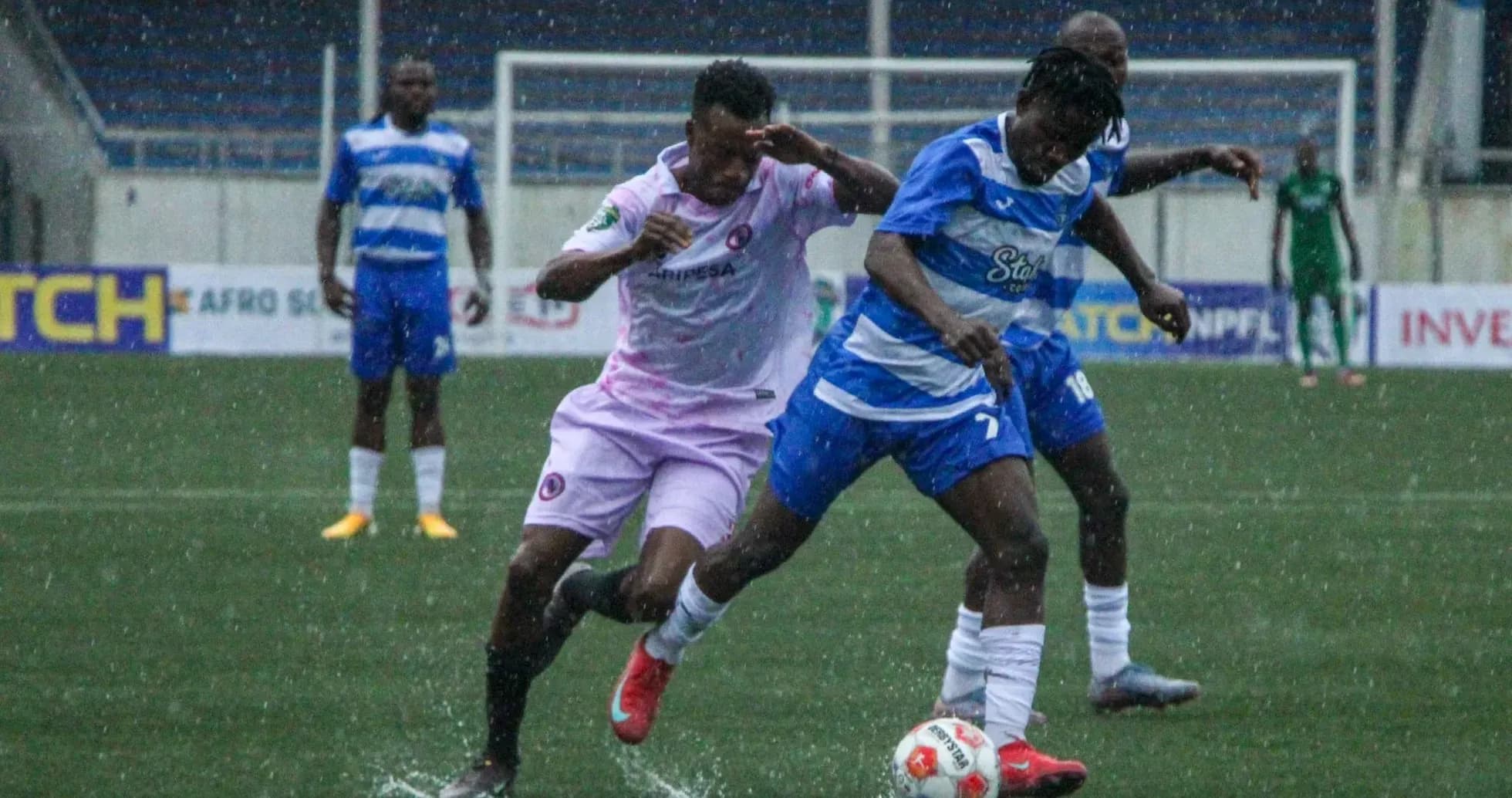
Plateau United Triumphs Over Shooting Stars in NPFL Showdown
Rwang Pam Stadium had the feel of an early‑season checkpoint rather than a routine league date. In NPFL Regular Season - 4, Plateau United and Shooting Stars both arrived with small but telling sample sizes, their identities already sketched out in numbers and now fleshed out in a 3–1 home win that said as much about structure as it did about spirit.
Plateau United's Season
Heading into this game, Plateau United’s season had been defined by a sharp split between fortress and frontier. Overall they had played 4 matches, taking 7 points with a goal difference of +1, scoring 5 and conceding 4. At home they were perfect: 2 wins from 2, 4 goals for and just 1 against. On their travels, by contrast, they had yet to win, with 1 draw and 1 defeat, 1 goal scored and 3 conceded. The statistical DNA was clear: at home they averaged 2.0 goals for and only 0.5 against, an assertive, front‑foot side that trusted its attacking patterns in Jos.
Shooting Stars Overview
Shooting Stars arrived as something of an unknown quantity in terms of volume, but not in terms of volatility. With only 2 matches played overall, they had 3 points, 3 goals for and 4 against, leaving them on a goal difference of -1. At home they had won 2–1; away they had already suffered a 3–1 defeat. Their overall scoring rate of 1.5 goals per game was promising, but the 2.0 goals conceded on average pointed to a back line still learning to suffer together.
Minute-by-Minute Profiles
The minute‑by‑minute profiles set up a fascinating clash of rhythms. Plateau United’s goals were spread almost unnervingly evenly: 20.00% of their total output in each of the 16–30, 31–45, 46–60, 61–75 and 76–90 minute bands. They did not explode at any single moment; they simply kept asking questions. Defensively, though, they were fragile early: 50.00% of their goals conceded had come in the opening 0–15 minutes, another 25.00% between 31–45, and 25.00% late from 76–90.
Shooting Stars were the mirror image in attack. Fully 66.67% of their goals arrived in the first 0–15 minutes, with the remaining 33.33% coming between 31–45. After the break, their attacking threat had effectively vanished in the numbers. Yet defensively they were stretched thin across the second half: 25.00% of their goals conceded in each of the 16–30, 46–60, 61–75 and 76–90 bands. This was a team that started like a sprint and defended like a side slowly running out of legs.
First Half Analysis
The first half in Jos followed the script. Shooting Stars’ early‑phase sharpness, embodied by the vertical runs of S. Ibrahim and the work between the lines from L. Emmanuel, translated into a 1–0 half‑time lead. With E. Godgift in goal and a back line featuring D. Sholumade and D. Ojietefian, they were compact and aggressive, leaning into that early‑goal profile that had already given them 2 strikes in the opening 15 minutes of matches this season.
Plateau United, however, are built for the long game at home. Coach Sola Adegun’s starting XI told its own story. In O. Okiemute they had a goalkeeper comfortable behind a defence that could squeeze up the pitch. The outfield unit, led by the likes of I. Utin and M. Andrew at the back, and a midfield spine including D. Ojo, S. Nenrot and the industrious J. Okechukwu, was designed less for chaos and more for sustained pressure. The wide and advanced roles of S. Jackson, J. Ibrahim and D. Isaiah provided constant running lanes rather than single knockout blows.
Second Half Dynamics
The second half became a slow suffocation. Plateau United’s season‑long pattern of scoring in every 15‑minute block from 16–90 began to surface. The home side did not need a specific “window” to hurt Shooting Stars; they simply kept turning the screw. The visitors, whose defensive concessions were already evenly scattered across all second‑half intervals, found themselves under waves of pressure that the numbers had quietly predicted.
Substitutes like J. Amah, R. Aniako, V. Tchadienne and P. Samson gave Adegun fresh legs and renewed intensity, while further options such as I. Abdallah, M. Wisdom, G. Monday, S. Mancha and J. Ambrose underlined the depth on Plateau United’s bench. Each change was less about altering the system and more about preserving the tempo: [IN] replaced [OUT] as like‑for‑like energy swaps rather than tactical gambles.
Shooting Stars Bench and Issues
For Shooting Stars, the bench of M. Lawal, M. Aliyu, J. Apaingolo, A. Dalhatu, K. Nweke, J. Atule, D. Akinola, Ridwan and Q. Adegoke offered different profiles, but the underlying structural issue remained. This is a side that has yet to keep a clean sheet, home or away, and has conceded 4 goals in just 2 matches overall. The red‑card pattern – with 100.00% of their dismissals coming in the 76–90 window – and yellow cards clustered between 16–30, 46–60 and 76–90, paints a picture of a team that defends on the edge and often tips over it as fatigue and pressure mount.
Discipline and Tactical Tone
Discipline, too, shaped the tactical tone. Plateau United’s yellows are concentrated late, with 42.86% shown between 61–75 and 28.57% from 76–90. They push harder as the game wears on, trusting their home solidity and perhaps willing to take tactical fouls to manage transitions. Shooting Stars, by contrast, scatter their cautions across key middle and late phases and have already seen one red in the dying minutes of a match. That late‑game volatility is a dangerous mix with their tendency to concede in every second‑half band.
Match Outcome and Analysis
From a “Hunter vs Shield” perspective, Plateau United’s home attack – 4 goals in 2 matches, 2.0 per game – faced a Shooting Stars away defence that had already shipped 3 goals in their only road outing, with an away average of 3.0 goals conceded. It was a mismatch that played out exactly as the numbers hinted once the initial away surge faded. The “Engine Room” duel was won by Plateau’s midfield trio; they controlled the rhythm against an away side whose overall average of 2.0 goals conceded per match left their back line constantly exposed.
Statistically, the prognosis after this 3–1 scoreline is that Plateau United will continue to be one of the NPFL’s most reliable home sides: difficult to break early, relentless in their attacking repetition, and tactically mature enough to manage games through the full 90. Shooting Stars, meanwhile, must solve their structural leak at the back and their over‑reliance on blistering starts. Their penalty record – 1 taken, 1 missed, 0% conversion – is a small but telling detail of a team still searching for composure in decisive moments.
Following this result, the story of Jos is clear: Plateau United are building a fortress on sustained pressure and depth, while Shooting Stars remain a dangerous but unbalanced opponent, capable of striking first yet struggling to withstand the long, grinding battles that define an NPFL season.