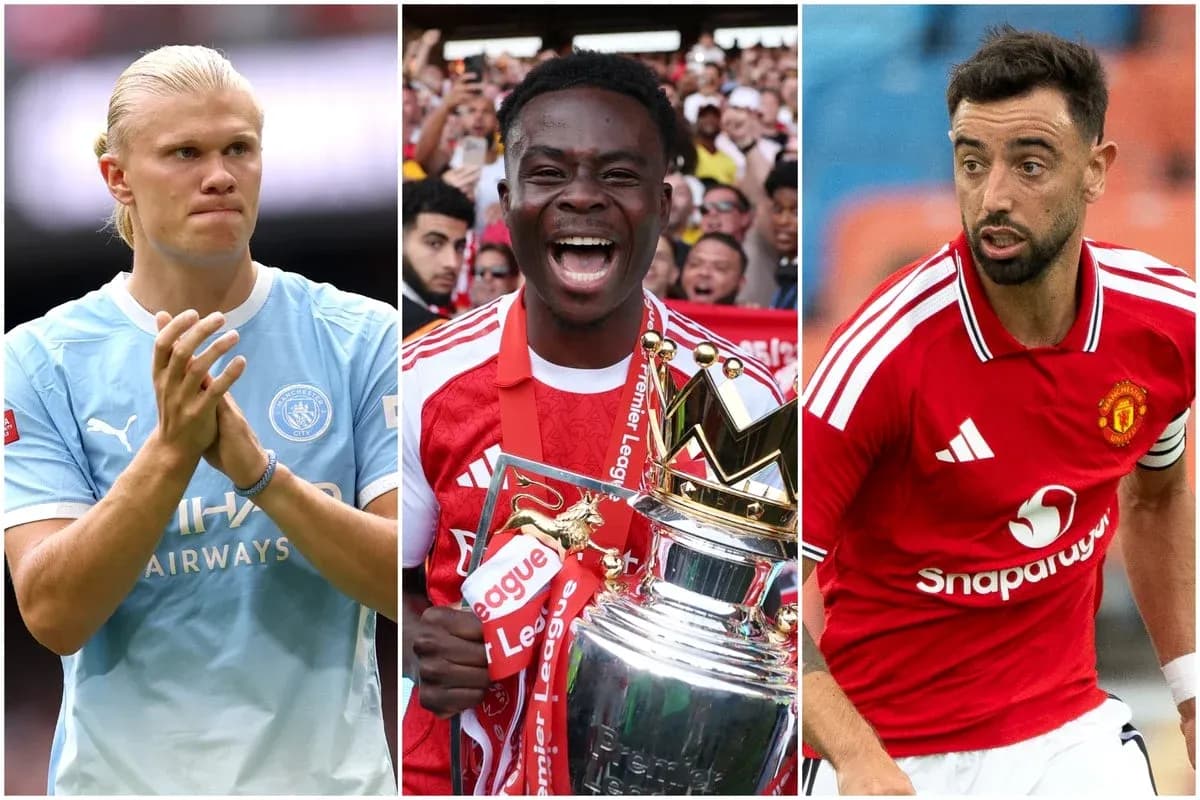
Premier League 2023-24: Arsenal Defending Champions and New Challenges
A new Premier League season starts on Friday with a strange, almost disorientating reality: Arsenal are the defending champions, and Pep Guardiola is no longer in the division he ruled for a decade.
For the first time in 22 years, Arsenal begin a campaign with a target on their back. Mikel Arteta, now the longest-serving manager in the league, presides over one of the few islands of stability in a top flight that has been ripped up and rearranged over the summer. Nine clubs have changed managers. Two more, Manchester United and Tottenham, are about to discover what a full season under Michael Carrick and Roberto De Zerbi really looks like. Liverpool have turned to Andoni Iraola. Chelsea have handed the keys to Xabi Alonso.
Coventry City, Ipswich Town and Hull City step up from the Championship, replacing West Ham, Burnley and Wolves, and will be eyeing Sunderland’s remarkable run to European qualification as proof that a newly promoted side no longer has to creep in quietly.
This is how the season might fall.
Hull City – straight back down?
Last season: Promoted via play-offs
Hull’s return to the Premier League is one of the great statistical oddities of recent years. Opta’s expected-points model had Sergej Jakirovic’s side 23rd in the Championship. They should have been fighting relegation to League One, not walking out at Wembley and beating Middlesbrough to go up – aided by Southampton’s expulsion.
They rode the numbers once. Doing it again at this level feels a different task entirely. The summer churn has been frantic, with plenty of ins and outs, but bookmakers have them as relegation favourites and it is hard to argue. Hull are back, and that in itself is a story. The worry is how long they stay.
Ipswich Town – back quickly, but are they better?
Last season: Championship runners-up
Ipswich have their shot at redemption after a relegation in 2024-25 that barely left a mark on the memory. The reset has been sharp. No longer just raiding the Championship, they have gone wider, smashing their transfer record on Toulouse striker Emersonn and landing Daizen Maeda from Celtic.
Gary O’Neil, back in the top flight after spells with Bournemouth and Wolves, inherits the project from Kieran McKenna, who walked away citing burnout after three promotions and a relegation in four breathless seasons – and perhaps sensing the scale of what was coming. Ipswich have spent. They have gambled. O’Neil still has an enormous rebuild on his hands.
Coventry City – emotion meets reality
Last season: Championship winners
Among the promoted trio, Coventry carry the strongest tailwind. A 25-year exile from the Premier League ended under Frank Lampard, whose unexpected promotion campaign lit up the Championship and dragged a bruised club back into the light.
Now comes the hard part. Sunderland showed last season that ambition in the market can change the story, and Coventry have tried to follow that path. They have twice broken their transfer record, including a £26m deal for 20-year-old midfielder Caleb Yirenkyi. The real coup, though, is keeping Lampard. After sackings at Chelsea and Everton, he has another crack at the Premier League. The romance of last season won’t save them, but it might just fuel them.
Fulham – Silva gone, nerves rising
Last season: 11th
There is an uneasy air around Craven Cottage. Marco Silva’s five-year stint steadied and then elevated Fulham; his departure has reopened old doubts. In his place comes Alvaro Arbeloa, the former Liverpool defender whose brief, combustible caretaker spell at Real Madrid left an impression but not much clarity.
Arbeloa has raided his old club for striker Gonzalo Garcia and midfielder Cesar Palacios, two young talents who will be asked to grow up quickly. Fulham have also lost player of the season Harry Wilson and Raul Jimenez at the end of their contracts. The fixture list is unforgiving: Chelsea, Liverpool and Manchester United all arrive in the opening five games. Arbeloa needs a fast start or that anxious murmur could turn into something darker.
Newcastle United – from project to fire-fight?
Last season: 12th
Eighteen months ago, Newcastle were lifting the Carabao Cup and plotting Champions League nights as the vanguard of Saudi ambition. That feels a long time ago. Alexander Isak, Anthony Gordon, Bruno Guimaraes, Sandro Tonali – all gone. Eddie Howe, the architect of their resurgence, gone too.
Into the wreckage steps Matthias Jaissle, fresh from Red Bull Salzburg and Al-Ahli, with a brief to rebuild on the fly. Newcastle’s recruitment has skewed young, aimed at the future, but replacing a spine of established stars with potential is a huge risk. The talk of title challenges by 2030 has been replaced by something more basic: making sure they are not dragged into a relegation scrap.
Brighton – Europe again, questions again
Last season: 8th
Brighton’s first taste of Europe in 2023-24 came at a cost. The Seagulls slid back into mid-table while juggling the demands of Thursday nights. Fabian Hürzeler now faces a similar balancing act as Brighton embark on a Conference League campaign that bookmakers expect them to take very seriously.
The chance to win a first major trophy is real. So is the danger of domestic slippage. Record signing Luka Vuskovic has been brought in to stiffen the defence, but Danny Welbeck’s move to Chelsea leaves a hole in attack. The burden on Kaoru Mitoma and Yankuba Minteh has grown – and both are injured as the season kicks off. Brighton will again be clever and brave. Whether that is enough across two fronts is another matter.
Everton – steady, but stuck?
Last season: 13th
David Moyes’s return has done what it said on the tin. Everton are organised, awkward and, crucially, safe. They also look in danger of treading water. Last season they flirted with a push for Europe before fading badly. It feels like a template.
Defensively, they should remain robust. The problem is still at the other end. Beto and Thierno Barry have yet to convince as reliable sources of goals. Keeping Iliman Ndiaye would be a significant boost, a sprinkling of quality in the final third, but the ceiling for this squad appears clear: mid-table, with little margin for error.
Crystal Palace – after the glory, the rebuild
Last season: 15th
Crystal Palace spent last season living in a strange dual reality: domestic struggles on one hand, Conference League glory on the other under Oliver Glasner. That story is over. Pierre Sage arrives from Lens with a reputation for sharp, progressive football after leading them to second in Ligue 1 and a French Cup triumph.
He looks a stylistic fit to follow Glasner’s work, but Palace know all about transition. Losing stars has become a way of life. In defence, the churn has been brutal: Marc Guehi and Maxence Lacroix have gone over the past year, and Daniel Muñoz may yet follow. Sage inherits a club that has tasted silverware and wants more, but must first patch up the back line.
Sunderland – second season, bigger stage
Last season: 7th
Sunderland’s first year back in the top flight was supposed to be about survival. Instead, Regis Le Bris carried them all the way into Europe, clinching qualification on the final day and rewriting expectations at the Stadium of Light.
Now comes the Thursday-Sunday grind. So far, the squad has not been overhauled to meet it. Veteran right-back Thomas Meunier has arrived on a free, and left-back Dayann Methalie has joined for £25.6m, but that is the extent of their business. It feels light. Yet Sunderland have already proved people wrong once, and the decision of captain Granit Xhaka to reject Chelsea and stay with the Black Cats sends a powerful message about where this club believes it is heading.
Nottingham Forest – chaos meets a serial winner
Last season: 16th
After a year of revolving doors – Nuno, Ange Postecoglou, Sean Dyche, Vítor Pereira – Nottingham Forest have turned to Oliver Glasner, fresh from two major trophies in two and a half years at Crystal Palace and once linked with the Manchester United job.
His appointment is a coup, a rare moment where Forest’s volatility has landed them a proven winner. Elliot Anderson has gone, but Morgan Gibbs-White remains the heartbeat, the player who dragged them away from the drop last season. Without European distractions and with Glasner likely to impose his preferred 3-4-3, Forest have a chance to stabilise and climb. The only caveat is the one that always applies under Evangelos Marinakis: expect the unexpected.
Brentford – identity, finally rewarded
Last season: 9th
Brentford are no longer the plucky survivors. Under Keith Andrews, they stepped out of that shadow last season, flirting with Europe and finishing comfortably in mid-table with a clear identity and a clear plan.
Igor Thiago’s 22 goals powered that surge, but the club has moved again, breaking its transfer record for midfielder Mamadou Sangare from Lens to offset Jordan Henderson’s move to Chelsea. Set-pieces will remain a weapon; efficiency will remain a mantra. For once, Brentford begin a season not looking over their shoulder, but glancing upwards.
Leeds United – from crisis to contenders?
Last season: 14th
Everything turned for Leeds after 1 December. From that point, under Daniel Farke, their form would have put them seventh over a full season. It doesn’t count in the table, but it does change the mood.
The summer has been targeted and sensible. James Trafford arrives to solve the long-standing goalkeeper issue. Harry Wilson joins on a free from Fulham to add guile in midfield. Towering centre-back Tarik Muharemovic strengthens an already solid spine. If Dominic Calvert-Lewin can build on last season’s 14-goal revival, Leeds have every right to talk about the top half again.
Tottenham Hotspur – money spent, questions remain
Last season: 17th
Tottenham stared into the abyss on the final day last season and just about held their nerve. It had to shock the club into action. It did. Only Chelsea have spent more this summer.
De Zerbi has been backed heavily, especially in midfield. Sandro Tonali and Mateus Fernandes headline a £180m overhaul. At the back, Marcos Senesi, Jan Paul van Hecke and Andy Robertson look like shrewd, if unspectacular, fixes. More attacking reinforcements are expected before the window closes. De Zerbi now has full control and, crucially, no European football to clog the calendar. That should help. What it cannot do is magically erase all of last season’s flaws. Injuries remain a chronic issue and could yet drag Spurs back towards trouble if the squad is stretched again.
Bournemouth – Iraola gone, idea intact
Last season: 6th
Bournemouth’s rise under Andoni Iraola was one of last season’s quieter success stories, capped by a first-ever qualification for European competition. Losing him in the summer could have been a hammer blow. It hasn’t felt like one.
The Cherries have held on to almost everyone of note. Marcos Senesi’s free transfer to Tottenham is the only major departure. Alex Scott, Rayan and Junior Kroupi – sidelined early by a freak foot injury – are all still there. Marco Rose steps in with a high-pressing, high-intensity style that mirrors Iraola’s principles. An experienced operator, he should be well-equipped to steer Bournemouth through their debut Europa League campaign without sacrificing too much at home.
Aston Villa – Emery’s team, Emery’s test
Last season: 4th
Aston Villa are changing shape again. Morgan Rogers, Youri Tielemans and Lucas Digne have gone. Emi Martinez could yet follow. On paper, that is a serious loss of experience and quality from the Europa League-winning squad.
Yet Villa’s real strength lies in Unai Emery’s capacity to adapt. He has been backed to evolve the side, with Switzerland World Cup star Johan Manzambi arriving for a club-record £59.5m and Japan international goalkeeper Zion Suzuki joining the ranks. Alejandro Garnacho comes in on loan to add spark. Villa return to the Champions League for the second time in three seasons needing those signings to click quickly. Still, the constant remains: Emery is the star, and Villa will go as far as his solutions take them.
Liverpool – new ideas, old concerns
Last season: 5th
Anfield has a new voice on the touchline and a familiar tension in the air. The arrival of Andoni Iraola promises intensity and aggression, a style that should suit a Liverpool squad still built to run and press. The prospect of Alexander Isak and Florian Wirtz finally settling after awkward debut campaigns is enticing.
Yet the same fault lines from Arne Slot’s final season remain. Depth is thin in attack and at full-back. The midfield still looks one injury away from imbalance. Jeremy Jacquet, the £55m centre-back signed in January, impressed in a friendly against Como, and Ronald Araujo has come in on loan, but at 35 Virgil van Dijk remains the pillar everything leans on. Liverpool’s pursuit of Bradley Barcola is dragging on, Hugo Ekitike is out for months, and Iraola starts with more questions than answers. Early goals from Isak and Wirtz would buy him time. He may need it.
Manchester United – Carrick’s next examination
Last season: 3rd
From the moment Michael Carrick replaced Ruben Amorim in January, no side in the league collected more points than Manchester United. Twelve wins from 18 games earned him a permanent two-year deal and, with it, a different kind of pressure.
This season brings a return to the Champions League and a far heavier schedule. United played 40 matches last term; this one could push close to 60. Rivals will have had time to study Carrick’s patterns, while he will have less time on the training ground to refine them. Bruno Fernandes remains the fulcrum and source of inspiration, but the squad behind him still looks thin for a genuine title push. The midfield has been bolstered by Andrey Santos from Chelsea and Youri Tielemans from Aston Villa after Casemiro’s departure, yet there is a lingering sense that United are a couple of signings short of turning last season’s surge into something more sustained.
Chelsea – chaos paused, Alonso in charge
Last season: 10th
Chelsea’s season of maximum turbulence – Liam Rosenior sacked after three months, the club’s worst league run since 1912 – has given way to something that looks, for once, like a plan. Xabi Alonso, still considered one of Europe’s brightest coaches after his Bundesliga title with Bayer Leverkusen, has been handed the chance to impose order on Stamford Bridge.
He has tools. Morgan Rogers is an expensive but gifted addition. Pairing him with a fit-again Cole Palmer, stung by missing the World Cup, could be devastating. Chelsea have no European football, giving Alonso time on the training ground that his peers will envy. The hierarchy have also shifted tack, moving for experience as well as youth: Jordan Henderson, 36, and Danny Welbeck, 35, arrive to steady a dressing room that has lurched from one extreme to another over four chaotic years. Alonso will have more authority than his predecessors. Now he has to show he can use it.
Manchester City – after Pep, the unknown
Last season: 2nd
No club faces a bigger adjustment than Manchester City. Ten years of Guardiola have defined not just a team, but an era. Now he has gone, and with him the midfield axis that underpinned so much of their success.
Enzo Maresca steps into the void with a huge in-tray. Rodri and Bernardo Silva have departed. Elliot Anderson has arrived for £116m after a standout World Cup with England, and 18-year-old Ayyoub Bouaddi – another breakout star of the tournament – could be asked to shoulder far more responsibility than his age suggests. City are also eyeing Enzo Fernandez from Chelsea for £120m as they scramble to rebuild the engine room.
They still have Erling Haaland, still have the defensive upgrades of Antoine Semenyo and Marc Guehi, and still have enough quality to be in the title conversation. But the stylistic shift from Guardiola to Maresca will be stark, and it comes at a time when the champions, Arsenal, are anything but unsettled.
Arsenal – the hunted, not the hunters
Last season: 1st
Arsenal enter the season from a position they have not known for a generation: on top, with everyone else plotting how to catch them. Arteta’s side have continuity, clarity and the confidence that comes from finally turning promise into silverware.
Around them, almost every rival has changed manager, ripped up a midfield, or both. Guardiola has gone. City are reinventing themselves. Liverpool are rebooting. Chelsea and Tottenham are mid-overhaul. Manchester United are stretching Carrick’s ideas over a full campaign. Aston Villa are reshaping around Emery’s latest evolution.
The Premier League has rarely felt this open, or this volatile. Arsenal stand as the benchmark. The question now is whether they can handle being the standard others measure themselves against – and whether this really is the start of a new era, or just a brief interruption to City’s rule.